A new US-brokered deal claims to sideline Iran and Hezbollah from Lebanon’s future—but leaves big questions about who really enforces the peace.
Story Snapshot
- Israel, Lebanon, and the US signed a framework that Rubio calls a “first step” toward peace.
- Lebanon says the deal will restore its sovereignty and end hostilities, letting families return home.
- Israeli officials stress “Iran is out, Hezbollah is out,” but the text and enforcement details remain secret.
- The ceasefire still depends on Hezbollah’s choices, raising doubts in a region with a long record of broken truces.
Rubio’s ‘first step’ framework: what was signed in Washington
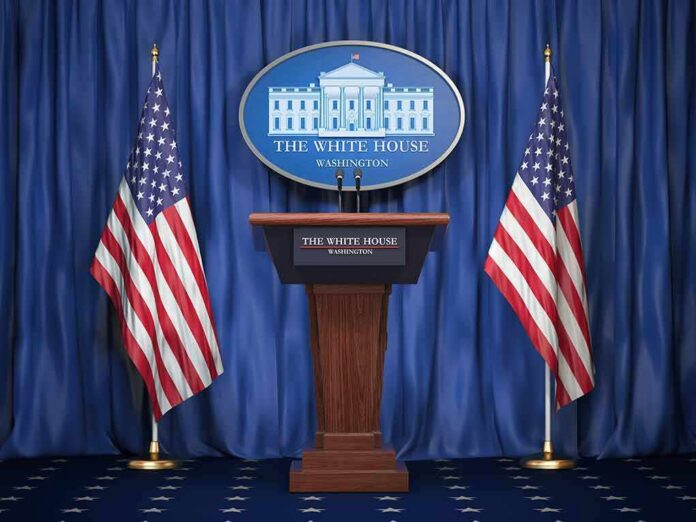
Secretary of State Marco Rubio stood in Washington with the Israeli and Lebanese ambassadors to announce a new trilateral framework agreement between the United States, Israel, and Lebanon.[1] The deal comes after months of fighting between Israel and the Iran-backed Hezbollah militia in southern Lebanon.[1] The agreement was signed by Yechiel Leiter, Israel’s ambassador to the United States, and Nada Hamadeh, Lebanon’s ambassador to the United States.[1] Rubio said the framework “begins to put in place a framework for lasting peace and security.”[5]
Lebanese ambassador Nada Hamadeh told the audience the deal is “a first step on the road to restoring Lebanese sovereignty and territorial integrity.”[5] She said it aims to secure “a permanent and final cessation of hostilities,” so Lebanese people can go back to their land and live in peace, security, and prosperity.[1] Israeli ambassador Yechiel Leiter said the final destination of the framework is “real peace,” with both countries living in security and each nation’s sovereignty respected and protected.[1] Both messages echo a larger Trump-era push for “peace through strength” in the Middle East.[19]
‘Iran is out, Hezbollah is out’—a major strategic shift or wishful thinking?
During the announcement, Leiter used language that caught many ears: in this “performance-based trilateral framework agreement, Iran is out, Hezbollah is out, and the road to peace between Israel and Lebanon is in.”[1] For a conservative audience, that message matters. It signals an effort to cut the leash that Iran holds on Lebanon through Hezbollah, a non-state militia that has long acted like a state within a state.[5] The joint statement backing this framework says future relations must be decided by the two sovereign governments, not by armed groups holding Lebanon’s future hostage.[3]
The security framework described in US and diplomatic summaries talks about dismantling non-state armed groups and blocking their return.[3] It also speaks of pilot zones where the Lebanese Armed Forces, the country’s regular army, would have exclusive control and no militias would be allowed.[3] If those terms are truly enforced, Iran’s proxy power in southern Lebanon could shrink. That would fit the Trump administration’s broader effort to erode Iran’s “unified fronts” strategy across Gaza, Lebanon, and other fronts.[20] But these are big “ifs” in a region where ceasefires are often signed, then slowly ignored.[22]
The fine print problem: secret text and a fragile, conditional ceasefire
Despite the bold claims, the public still has not seen the full written agreement.[1] Officials did not release the detailed text at the signing, and reporters only received a joint summary from the State Department.[1] That means we do not know exact timelines, penalties for violations, or funding levels for those pilot zones. We also do not see binding language that would force Hezbollah to leave key areas or stop firing. This lack of transparency invites doubt, especially for readers used to watching “frameworks” morph later into something softer.
The ceasefire piece is even more delicate. US and media summaries say Israel and Lebanon agreed to implement a ceasefire that is contingent on Hezbollah stopping all fire and evacuating its operatives from the South Litani sector.[1] Hezbollah is not a signatory and is not controlled by the Lebanese government.[3] So the success of the agreement rests on a militia that has a long record of ignoring Western pressure when it clashes with Iran’s interests.[11] Past ceasefires in similar conflicts fail more than 70 percent of the time when they depend on non-state actors with no clear enforcement or third-party verification.[1]
History warns us: ceasefires without teeth rarely protect civilians
For Americans who follow the region, this pattern is sadly familiar. Ceasefires between Israel and armed groups such as Hamas and Hezbollah are often announced with strong language, then slowly eroded by fresh rocket fire, cross-border raids, or disputed “security operations.”[23] A fact sheet on Israel’s history of ceasefires notes repeated breakdowns since 1949 when conditions were vague or enforcement was weak.[21] Global cases, from Nagorno-Karabakh to Gaza, show that early-phase clarity can hide later-phase fog that lets both sides push the limits.[17]
VIDEO | Washington DC: U.S. Secretary of State Marco Rubio announces signing of US-Israel-Lebanon trilateral framework agreement.
(Source: Third Party)
(Full video available on PTI Videos – https://t.co/n147TvrpG7) pic.twitter.com/skEGcoDzwC
— Press Trust of India (@PTI_News) June 26, 2026
In this new framework, Hezbollah and Iranian media have already pushed back, framing the deal as a United States–Israeli attempt to undermine Lebanese sovereignty and Iran’s regional influence.[11] They highlight ongoing violence and point to Israeli strikes even after previous ceasefire announcements, arguing that talk of “lasting peace” is empty.[18] At the same time, the Lebanese government has stayed quiet on the full text, holding no detailed public briefing.[12] That silence leaves space for confusion and gives rejectionist voices more room to shape the story.
Why this matters to US conservatives: sovereignty, strength, and honesty
For Trump supporters at home, the core question is simple: does this framework advance American security and constitutional values, or does it risk another vague foreign entanglement? On paper, the deal pushes goals conservatives support—national sovereignty, strong borders, weakening Iran’s terror network, and replacing militias with real armies.[3] It aligns with a broader push to back allies who fight Islamist militias instead of indulging “woke” global talk that treats terrorists and democracies as equal partners.
But caution is wise. Without a public, signed text, hard enforcement rules, or clear oversight, this agreement can feel like many past elite deals that promised “permanent cessation of hostilities” and delivered only brief pauses.[19] Conservatives who value limited government and clear accountability will want Congress to demand the full document, scrutinize any funding for Lebanese security forces, and ensure no hidden commitments drag America deeper into regional policing. Supporting Israel’s right to defend itself and backing Lebanon’s real sovereignty are good goals. They must be pursued with eyes open, demands for transparency, and a firm refusal to let unelected militias—or distant global institutions—dictate outcomes over elected governments and free peoples.
Sources:
[1] YouTube – Israel, Lebanon sign framework deal with US, Marco Rubio calls it …
[3] YouTube – Israel Lebanon Ceasefire Agreement Reached After US Trilateral …
[5] Web – Israeli and Lebanese officials confirm truce agreement after US …
[11] Web – Israel and Lebanon have agreed to start direct negotiations at a …
[12] YouTube – Hezbollah declares US-Iran agreement a ‘Big Victory …
[17] Web – #WATCH: Israel and Lebanon agree to implement ceasefire but say …
[18] Web – November 9, 2020, Trilateral Ceasefire Agreement
[19] Web – The Art of the Ceasefire | The New Yorker
[20] Web – Perry World House Q&A: The Middle East Ceasefire Agreement …
[21] Web – From October 7 to the Gaza Ceasefire: A Changed Middle East …
[22] Web – Fact Sheet: Israel’s History of Breaking Ceasefires | ALL RESOURCES
[23] Web – Ceasefires have a history of being frequently and cannily flouted …