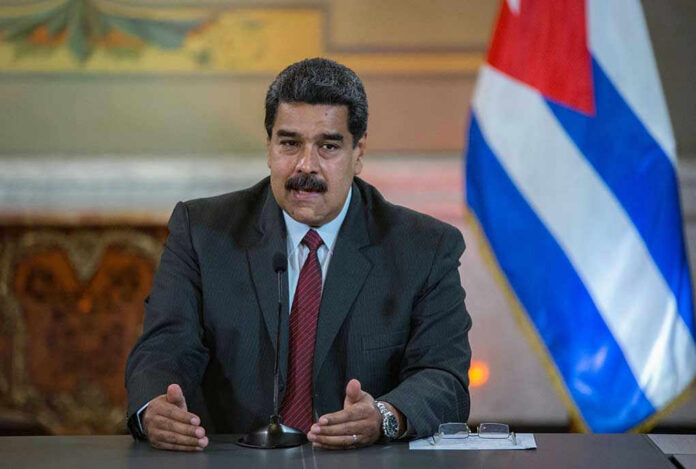
America now has a former foreign president back in a Manhattan courtroom, facing charges that he used an entire government to help flood the United States with cocaine.
Story Snapshot
- Ousted Venezuelan leader Nicolás Maduro is back in U.S. federal court on narco-terrorism and cocaine trafficking charges.
- Prosecutors say he turned state power into a cartel machine that moved tons of cocaine toward American communities.
- Maduro and his wife Cilia Flores insist they are innocent, calling themselves victims of a political “kidnapping.”
- The case tests how far Washington will go in using criminal law and military power against foreign leaders.
Maduro back before a U.S. judge on drug and narco-terror charges
Removed Venezuelan president Nicolás Maduro has returned to a federal courtroom in New York, where a judge is steering a complex case that could go to trial in June 2027. He and his wife, politician Cilia Flores, face four main charges, including narco-terrorism conspiracy, cocaine importation conspiracy, and weapons offenses tied to machine guns and explosive devices. Both have pleaded not guilty and repeat that they are “innocent,” even as they stand shackled before an American judge.
U.S. prosecutors say this is no ordinary drug case. They argue that, for about 25 years, Maduro and loyal officials used Venezuela’s military, police, and state resources to protect and move huge cocaine shipments headed for the United States. The indictment claims he gave traffickers diplomatic passports, safe access to airports, and even the presidential hangar for flights tied to drug money. In their view, Maduro turned a sovereign state into a criminal tool that helped poison American streets.
How the narco-terrorism conspiracy is described
The charges grow out of a 2020 Department of Justice indictment that first accused Maduro and fourteen officials of narco-terrorism and drug trafficking. U.S. officials say he partnered with armed groups such as the Revolutionary Armed Forces of Colombia (FARC) to ship cocaine north, trading weapons and protection for drug profits. Later filings describe a broader network linking Venezuelan insiders with violent cartels and gangs across Latin America, framing the case as a national security threat, not just a narcotics scheme.
In this newer superseding indictment, prosecutors paint Maduro as the “ringleader” of a cartel made up of senior Venezuelan officials. They allege he routed cocaine through Central American and Caribbean paths, ordered security forces to guard shipments, and allowed clandestine airstrips and official facilities to be used by traffickers. Some counts claim conspirators possessed and used machine guns and destructive devices to protect the drug business, tying the case to armed violence as well as addiction and crime in U.S. communities.
Maduro’s defense: denial, sovereignty, and deep-state claims
Maduro’s lawyers do not accept the government’s story, and he loudly rejects the charges in court. At his first appearance, he said he was still Venezuela’s president and called himself a “prisoner of war,” arguing that U.S. special forces illegally seized him in Caracas and flew him to New York. He and Flores both entered not-guilty pleas, preserving arguments about immunity as a sitting or former head of state and the legality of his capture.
Supporters of Maduro claim the case is really regime change dressed up as law enforcement, pushed by Washington to remove a hostile leader from an oil-rich country. That view taps into a wider frustration many Americans feel: powerful governments and elites use grand narratives—like “narco-terrorism”—to justify risky actions, while ordinary families keep dealing with drugs, crime, and economic strain at home. Critics on both the right and left see a deep-state pattern where legal tools and military power are deployed overseas while basic problems in U.S. cities remain unsolved.
Why this case matters for Americans on both sides
For conservatives worried about border chaos, cartel violence, and poison in their communities, the idea that a foreign president helped send thousands of tons of cocaine toward the United States confirms long-held fears. They see a federal government that failed for decades to stop the flow, now trying to catch up with a dramatic arrest and sweeping charges. The case also tests a tough narco-terrorism law that carries far harsher sentences than standard drug crimes and has rarely succeeded at trial.
For liberals angry about unchecked executive power and foreign interventions, the case raises different alarms. U.S. forces grabbed a foreign leader abroad, then U.S. courts claimed authority to judge him, even as questions linger about international law and sovereignty. Both sides can agree on one thing: the stakes are enormous. If the evidence is strong and the process fair, this could be a rare moment when a powerful figure is held to account. If not, it risks looking like another elite-driven gamble carried out in the name of the American people.
Sources:
insiderpaper.com, en.wikipedia.org, justice.gov, usatoday.com, theguardian.com, jurist.org, reuters.com, courthousenews.com, youtube.com, facebook.com