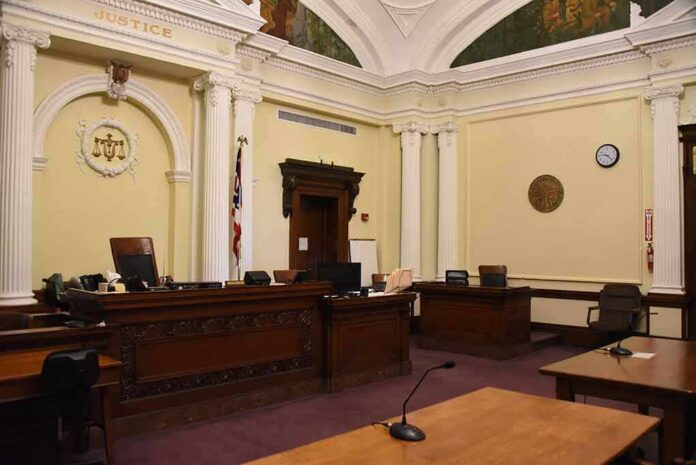
A Paris court opened a closed-door trial for Rohan Rane, who prosecutors say led an online ring that coerced girls into sexual acts and self-harm across several countries.
Story Snapshot
- Rohan Rane went on trial in Paris on charges tied to organized online abuse.
- Prosecutors allege coercion of underage girls into sexual acts and self-harm on chat platforms.
- Reported victims span the United States, the Netherlands, Britain, and Estonia.
- The court ordered closed-door proceedings due to the nature of the case.
What The Paris Trial Is About
French judges began hearing a case that centers on organized online abuse. Reporters say prosecutors accuse Rohan Rane, an Indian national, of leading a group that targeted underage girls on chat platforms. Charges cited in coverage include torture and acts of barbarity against minors, organized extortion, and the distribution of child sexual abuse material. Proceedings opened on October 5, 2026, at a Paris court. The court directed that the trial would not be open to the public.
Investigators described a pattern where young girls were allegedly coerced to perform sexual acts on camera and to harm themselves. Outlets report the group used pressure and threats to control victims. Reports also refer to an international footprint, with victims in the United States, the Netherlands, Britain, and Estonia, and alleged accomplices from several countries. These details place the case within a broader category of networked, cross-border exploitation seen in recent years.
Why The Case Is Being Tried Behind Closed Doors
French courts often limit public access in cases involving minors and sexual violence. Judges ordered this trial to proceed behind closed doors, citing the sensitivity of the allegations and the protection of civil parties. Reports indicate some lawyers for civil parties wanted more openness, but the panel maintained the restriction. This choice shields victim identities and traumatic details, yet it also reduces outside visibility into the evidence and courtroom exchanges.
Earlier in the process, a Paris court moved the case to the Assize Court, which handles the most serious crimes. That transfer signaled that prosecutors were pursuing aggravated charges and a potentially tougher sentence if there is a conviction. Coverage identifies Rane as 29 years old, who came to France as a business school student and later worked as a fitness coach. Investigators portrayed him as the group’s leader, a claim central to the prosecution theory.
How This Fits A Bigger Online Crime Pattern
This case reflects how online abuse often operates as a network rather than a single offender. Past enterprise-style prosecutions have shown that closed chat rooms, gatekeeping, and group rules can create a structure that spreads harm and hides leaders. Legal scholars describe this as treating the ring as an organized enterprise, where the group’s design—members, roles, and access control—becomes key evidence of the crime pattern. Cross-border claims add complexity, but they are common in internet-fueled cases.
Rohan Rane, alleged Indian leader of child abuse ring, goes on trial in Paris
The group is believed to have abused mostly underage girls in countries including the U.S., the Netherlands, Britain and Estonia pic.twitter.com/LXc9tAYm4C
— Bioclandestine (@Bioclandestine7) October 5, 2026
Coordination across countries also raises the stakes for law enforcement. Police and courts must link accounts, devices, and chat logs to real people in different jurisdictions. When victims are minors, privacy rules add further limits on what becomes public. In this Paris trial, press accounts show the main claims clearly: organized coercion, international reach, and severe harm to young girls. The verdict will turn on evidence the public may not see due to child protection rules.
Sources:
insiderpaper.com, rfi.fr, estrepublicain.fr, lemonde.fr