A New York federal judge gave an Iran-linked operative 27.5 years in prison for a foiled plot to arrange political assassinations on U.S. soil, underscoring how foreign threats and government failures collide in plain view.
Story Snapshot
- A jury convicted Asif Merchant in March 2026 of arranging political assassinations in the United States.
- A federal judge sentenced Merchant to 330 months for attempted terrorism transcending national boundaries and murder for hire.
- Undercover Federal Bureau of Investigation agents posed as hit men; prosecutors said Merchant paid $5,000 and mapped out a plan.
- Defense said Merchant acted under duress because of threats to his family and that the plot lacked real capability.
What The Court Decided And Why It Matters
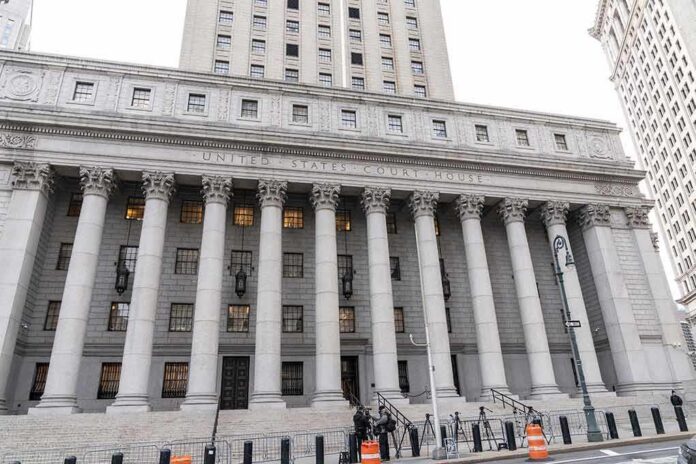
U.S. District Judge Eric Komitee sentenced Asif Merchant to 330 months after a jury found him guilty of traveling to the United States to arrange political assassinations, including a plan he believed could target President Trump. The Department of Justice said the plot qualified as attempted terrorism transcending national boundaries and murder for hire. Prosecutors framed Merchant as an Iranian intelligence agent, placing the case in a string of disrupted operations tied to Iran and aimed at American figures.
Prosecutors said Merchant met a cooperating witness, asked for criminals, and then dealt with two undercover Federal Bureau of Investigation agents who posed as hired killers. Evidence shown in court included a hotel-room video where Merchant sketched steps on a napkin, asked how the target would die, and looked up locations for Trump rallies. The government said he paid $5,000 as a down payment and discussed timing, distractions, and escape details, pointing to specific intent rather than loose talk.
What The Defense Claimed And What The Jury Rejected
Merchant’s lawyer argued he acted under duress. The defense said an intelligence figure from Iran’s Islamic Revolutionary Guard Corps threatened his family and pushed him into a mission he was not equipped to carry out. They said he expected U.S. authorities to stop it and hoped cooperation might help his immigration case. They also called the scheme incompetent from the start, given tight Secret Service protection of top officials, and said he was a disposable go-between, not a committed assassin.
The jury’s verdict and the sentence signaled the court’s view that intent and steps taken outweighed claims of coercion or incompetence. The Department of Justice has emphasized Iran’s linkage in public releases. But the record available to the public does not include a disclosed payment trail, a named handler, or documents that would independently prove command-and-control from Tehran. That gap does not undo the verdict; it does explain why debate over state direction will likely continue outside court.
Why This Case Hits Nerves Across The Spectrum
Americans on the right and left see a government that struggles to stop threats before harm. Here, investigators did intercept the plot. Yet many will ask why foreign services can fish for killers inside our borders at all. The case lands in a season of high distrust, culture fights, and worry about political violence. It also shows how often government stings, informants, and undercover work decide outcomes long before a real hit team forms.
BREAKING: Asif Merchant, convicted in an Iran-backed assassination plot he believed would ultimately target Donald Trump, was just sentenced to 27.5 YEARS in federal prison.
Prosecutors say Iran’s Revolutionary Guard recruited, trained and sent him to America. He tried to hire… pic.twitter.com/5jtDCQ8qVR
— The Moderate Case (@TheModerateCase) November 18, 2026
The broader pattern is more disruption than completed attacks. Recent years saw multiple cases tied to Iranian actors, including threats toward former national security officials, writers, and dissidents, many stopped in time. That track record cuts two ways: agencies are catching plots, but the drumbeat of attempts keeps rising anxiety. The public deserves more visibility into evidence after trials, including recordings and exhibits, to strengthen trust without exposing protected sources.
Sources:
pjmedia.com, reuters.com, justice.gov, sun-sentinel.com