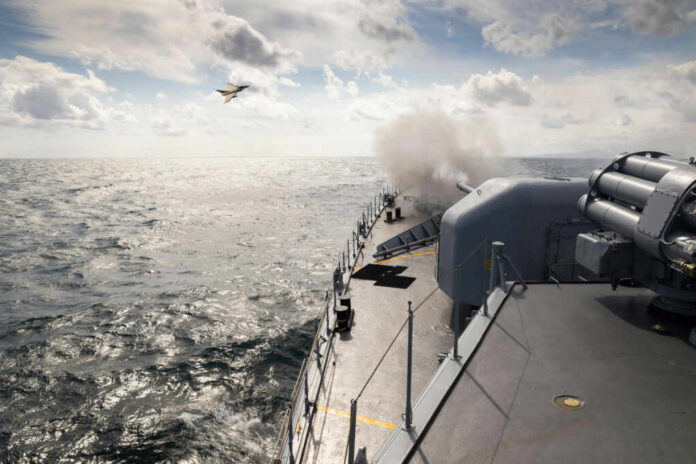
The USS Nimitz’s retirement in 2026 creates a dangerous “Nimitz Gap,” dropping U.S. naval power below the congressionally mandated 11 carriers at a time when America needs strength most under President Trump’s leadership.
Story Highlights
- USS Nimitz departed Bremerton on March 7-8, 2026, for final voyage to Norfolk, Virginia, ahead of May decommissioning after 50 years of service.
- Retirement leaves U.S. Navy with only 10 operational carriers until USS John F. Kennedy is ready, violating legal minimum during global tensions.
- Carrier sails around South America for Southern Seas exercises, too large for Panama Canal, highlighting logistical challenges.
- Decommissioning by Huntington Ingalls Industries will cost up to $1 billion and take a decade, straining resources needed for deterrence.
- Critics warn of strategic vulnerability as adversaries watch America’s temporary weakness in naval projection.
USS Nimitz Embarks on Final Voyage
The USS Nimitz (CVN-68), lead ship of its class, left Naval Base Kitsap in Bremerton, Washington, on March 7-8, 2026. This marks the start of its last cruise to Naval Station Norfolk, Virginia. Commissioned in 1975, the carrier served 50 years, basing primarily in the Pacific Northwest. Its final 2025 deployment spanned Asia and the Middle East, aiding the Iran-Israel ceasefire and strikes on Islamic State in Somalia. Now, it heads east without combat certification.
The Emerging Nimitz Gap Threatens Naval Readiness
U.S. law requires the Navy to maintain 11 operational aircraft carriers. The Nimitz retirement reduces this to 10 until the USS John F. Kennedy commissions in March 2027. Full operational readiness for Kennedy likely delays until 2029 after shake-out cruises. This gap arrives amid heightened global tensions, limiting Navy presence across theaters. Military analysts call it a critical vulnerability, pressuring operational tempo as demands rise from delayed construction.
Logistics and Decommissioning Process Underway
The massive carrier routes around South America’s tip, unable to transit the Panama Canal. It joins Southern Seas 2026 exercises in U.S. Southern Command before Norfolk arrival by April 16. Decommissioning starts in May 2026, handled by Huntington Ingalls Industries. Nuclear defueling and dismantling extend over a decade at up to $1 billion cost. This mirrors the USS Enterprise’s 2017 retirement but lacks a seamless Ford-class replacement. Naval Base Kitsap loses its key asset, impacting Pacific Northwest economy and strategy. Norfolk shoulders new burdens. Congress faces pressure to accelerate Kennedy or delay Nimitz exit to uphold the 11-carrier mandate.
The U.S. Navy Aircraft Carrier Crunch: Why the USS Nimitz’s 2026 Retirement Leaves a Dangerous Gap in U.S. Naval Powerhttps://t.co/XtVGEW7BJ5
— 19FortyFive (@19_forty_five) March 13, 2026
Strategic Risks in a Volatile World
President Trump’s administration inherits this gap from prior mismanagement, underscoring needs for fleet modernization without weakness. Critics argue the timeline creates unnecessary risks, as carriers project power essential for deterrence. Supporters see it as budget-efficient transition to advanced Ford-class. Affected communities include sailors reassigned and allies expecting U.S. naval support. The USS Nimitz Association plans a Norfolk reunion to honor the legend. This moment demands congressional action to protect American strength.
Sources:
USS Nimitz Begins Last Cruise Ahead of Decommissioning
Nimitz Gap: Retirement of Oldest Aircraft Carrier
U.S. Navy May Deploy USS Nimitz in Southern Seas 2026
USS Nimitz Returns Home Before Retirement
USS Nimitz Association Decommissioning Memo