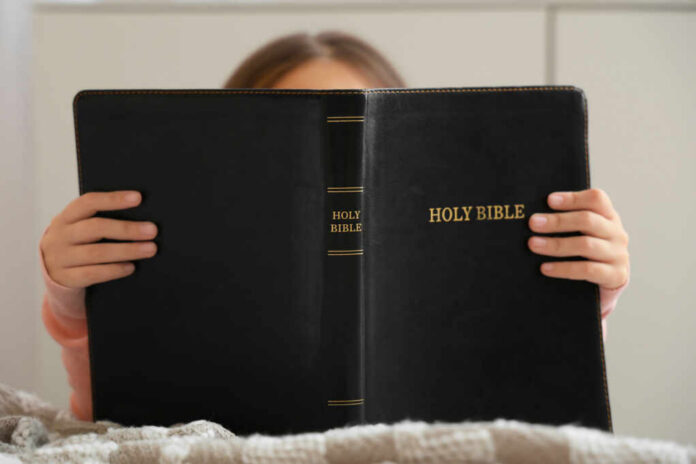
Texas public schools could soon mandate Bible stories like David and Goliath as required K-12 reading, thrusting conservative values into classrooms amid fierce church-state debates.
Story Highlights
- Texas State Board of Education (SBOE), with a 10-5 Republican majority, considers expansive K-12 reading lists featuring Bible passages exceeding state minimums.
- Proposals include Jonah and the whale, David and Goliath, and Corinthians selections, potentially on state tests affecting 5.4-5.5 million students.
- Public hearings drew testimony from parents, teachers, and religious leaders; SBOE delayed votes due to controversy, with final decision targeted for June 2026.
- Supporters champion foundational Western literature; critics decry religious favoritism, lack of diversity, and risks to parental rights in Texas’s pluralistic society.
Proposal Origins and Expansion
The Texas Legislature passed HB1605 in 2023, mandating at least one literary work per grade level in public schools. The Texas Education Agency then proposed lists far exceeding these minimums, incorporating dozens of Bible passages and stories across K-12 English curricula. This builds on the 2024 SBOE approval of a Bible-infused elementary curriculum. Supporters argue these texts form the bedrock of Western culture and American exceptionalism, essential for students’ historical literacy. The move reflects Republican-led efforts to restore traditional principles in education, countering years of perceived woke overreach that sidelined foundational narratives.
Public Hearings and Stakeholder Debate
Early 2026 public hearings featured hours of testimony from religious leaders, teachers, parents, and students. The Republican-majority SBOE advanced the lists, but controversy prompted delays after an initial vote planned for January 28, 2026. Texas Freedom Network warned the plan undermines teachers and endangers religious freedom, calling it a “one-size-fits-all” approach for a diverse state where one-third of residents are non-Christian. Interfaith groups like the Sikh Coalition and Baptist Joint Committee highlighted exclusions of non-Protestant traditions.
Opt-Outs, Test Pressures, and Criticisms
Parents can opt students out, but potential inclusion on state tests raises concerns over penalties for non-participants and schools. Critics, including historians and Democrats on the board, note underrepresentation of Hispanic and Black authors alongside Protestant Bible emphasis, blurring church-state lines. This echoes national trends like Ten Commandments displays in Republican states, often facing court challenges. Such mandates risk alienating diverse communities while fueling perceptions of elite overreach in public institutions.
Potential Impacts on Students and Schools
If approved, implementation could begin by 2030-2031, reshaping English and social studies for 5.5 million students. Short-term, expect heightened debates and opt-outs; long-term, a shift toward U.S.-centric, Christian-emphasized education. Economic effects remain minimal, though test outcomes could influence school funding. Both conservatives frustrated with globalist dilutions of heritage and liberals wary of welfare-eroding traditionalism share unease over government imposing uniformity, departing from local control and individual liberty.
Current Status and Broader Context
As of April 2026, proposals remain under review with no final approval; an initial vote looms soon, followed by a June 2026 decision. This Texas battleground mirrors nationwide pushes amid President Trump’s second term, where GOP congressional control advances America First priorities yet highlights federal failures to address core American Dream barriers. Shared bipartisan frustration grows over elites prioritizing power over practical solutions for hard-working families.
Sources:
Bible stories would be part of a new Texas public schools reading list, drawing attention
Texas considers required reading lists with Bible passages in schools