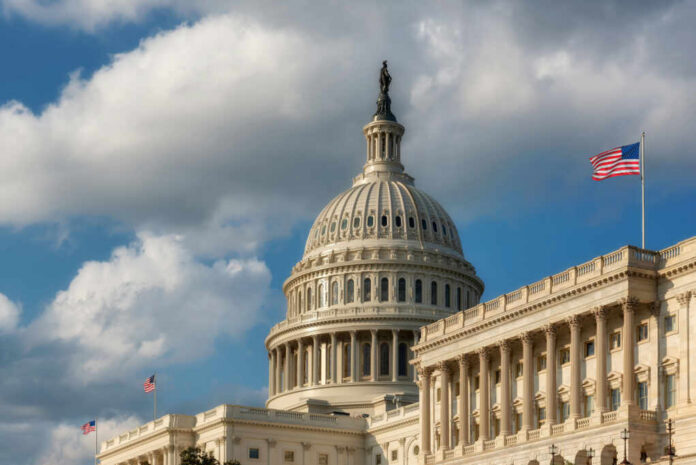
A fight over who gets honored in the U.S. Capitol just turned Jesse Jackson’s memorial into a national test of tradition versus political theater.
Quick Take
- House Speaker Mike Johnson denied the Jackson family’s request for Rev. Jesse Jackson to lie in honor in the Capitol Rotunda, citing long-standing precedent.
- Rep. Jonathan Jackson addressed the denial publicly and urged restraint, signaling he did not want his father’s services turned into a political brawl.
- Memorial events moved forward across Chicago, South Carolina, and Washington, D.C., centered on Rainbow PUSH and other venues rather than the Capitol.
- Recent examples show Capitol “lie in honor” requests for high-profile non-officials have been rejected, reflecting a tighter interpretation of who qualifies.
Speaker Johnson’s Denial Highlights a Narrower Standard for Capitol Honors
House Speaker Mike Johnson rejected the Jackson family’s request for Rev. Jesse Jackson to lie in honor at the U.S. Capitol Rotunda, and his office confirmed the decision in reporting that cited precedent limiting the honor primarily to military and government officials. That standard has existed for decades, but it has also become more contested as activists and political figures seek symbolic recognition. The denial effectively kept Jackson’s memorial plans outside the federal spotlight.
Supporters of the request pointed to Jackson’s national profile and to rare historical exceptions, including civil rights icon Rosa Parks, who lay in honor in 2005. Critics of expanding the practice argue that once Capitol honors become a routine consolation prize for celebrity politics, the tradition loses meaning and turns into a partisan scoreboard. Based on the available reporting, Johnson’s rationale was procedural rather than personal, even as emotions ran high.
Jonathan Jackson’s Public Comments Sought to De-Politicize a Politicized Moment
Rep. Jonathan Jackson, speaking publicly after the denial, described his role in advocating for the Capitol honor as an “uncomfortable position” and cautioned against turning the moment into a political weapon. Reports summarized his posture as deferential to history’s judgment rather than combative toward House leadership. That approach matters because the underlying dispute is inherently political: the Speaker has discretion, Congress sets traditions, and the public reads symbolism as affirmation or rejection.
The user’s premise frames his message as a “leave politics at the door” appeal. The research provided indicates that theme is largely inferred from his reluctance to escalate the controversy rather than presented as a single definitive quote. Even so, his public stance fit the practical reality of Washington: the Speaker’s decision was not reversed, and the family’s schedule pivoted to other venues. The reporting also noted that the Jackson family did not have much leverage in a GOP-led House.
Memorial Events Continued in Chicago, South Carolina, and Washington Without the Rotunda
Plans for public mourning proceeded with multiple stops. Reporting outlined Rev. Jesse Jackson lying in state at the Rainbow PUSH Coalition headquarters in Chicago on Feb. 27–28, followed by a lie-in-state at the South Carolina Statehouse on March 2. Additional formal services were scheduled in Washington, D.C., during the week of March 2–6, before events returned to Chicago for a March 6 “People’s Celebration” and a March 7 private “Homegoing Celebration.”
The shift away from the Capitol Rotunda placed the focus on institutions tied to Jackson’s career and community influence, particularly Rainbow PUSH. That also reduced the chance of a made-for-TV showdown in Congress—something many conservatives view as a familiar pattern, where national institutions are pressured to validate political movements through ceremony. The documented facts show the memorial became broader geographically, but not broader in federal endorsement, and those two things are not the same.
Precedent Disputes Keep Returning as Capitol Recognition Becomes a Political Flashpoint
Multiple reports pointed to other instances where Capitol honors were not granted to high-profile non-officials, including former Vice President Dick Cheney and conservative activist Charlie Kirk. Those examples were cited to show that the Jackson request was not uniquely singled out, but part of a more restrictive application of the tradition. In that sense, the dispute reads less like a one-off controversy and more like a boundary-setting fight over what Congress is willing to sanctify.
Here's Jesse Jackson's Son Asking Service Speakers to Leave Politics at the Door vs. What Happened Next https://t.co/7g41LxzY2D
— Twitchy Updates (@Twitchy_Updates) March 7, 2026
The available research does not include new legislative action to change the criteria, expert legal analysis on the Speaker’s discretion, or an official, detailed written policy explaining every threshold for approval. What it does show is a recurring collision between activism and institutional norms—especially when public figures seek a constitutional venue to confer cultural legitimacy. For conservatives wary of politicizing national symbols, the episode underscores why tightening standards is often viewed as protection, not punishment.
Sources:
Rep. Jackson talks about denied request for father to lie in honor at U.S. Capitol
House Speaker Mike Johnson denies request Rev. Jesse Jackson lie in honor at US Capitol