A media frenzy over a rumored $300 billion Iran payout just crashed into one hard fact: President Trump says America is “not putting up 10 cents.”
Story Snapshot
- Trump flatly denies the U.S. is investing any money in Iran, calling $300 billion claims “fake news.”
- Reports say a $300 billion fund for Iran is real, but structured as private and Gulf-backed, not U.S. taxpayer cash.
- Vice President JD Vance says Iran will get “not a single cent” of American money, even if outside investors move in.
- A leaked memorandum reportedly mentions a $300 billion financing plan, raising questions about indirect benefits to Tehran.
Trump Draws a Red Line: ‘We’re Not Putting Up 10 Cents’
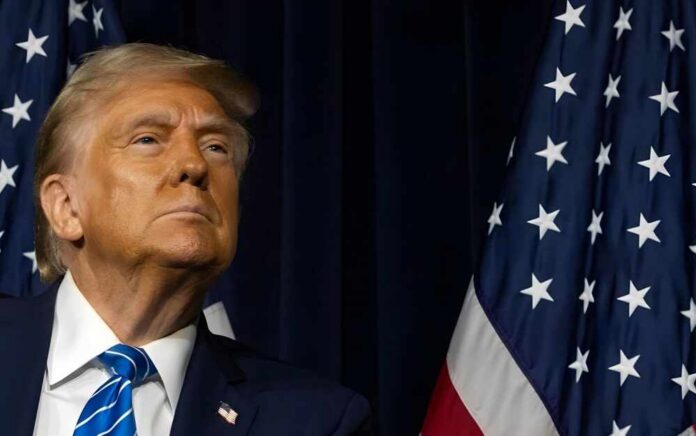
Standing on the world stage at the G7 in France, President Donald Trump did not hedge his words. He told reporters that talk of a U.S.-backed $300 billion reconstruction or investment fund for Iran is “false” and “ridiculous,” stressing that “we are not investing any money in Iran” and “we’re not putting up 10 cents.”[5] Trump framed the story as classic “fake news” pushed by political opponents and some in the media who want to paint his Iran deal as another cash giveaway.
Pressed specifically about reports that Gulf allies would bankroll a $300 billion fund tied to the peace framework, Trump still drew a clear line. He said people and countries are free to invest wherever they like, but “we are not investing in it and we do not have a fund,” and that he is not asking Gulf states to do so.[2] The president also warned that if Iran “misbehaves,” the United States can always return to military pressure, making clear this is not a blank check for the regime.[2]
What the Rumored $300 Billion Iran Fund Actually Is
While Trump bats down claims of U.S. money, several outlets describe something more complex. A Reuters report says the U.S.–Iran framework outlines a private investment fund worth about $300 billion to support Iran’s economy, with more than half already pledged by companies from the United States, Gulf countries, Asia, South America, and Africa, and “no government funds or grants” involved.[10] That fund would only launch once a final deal is signed and would focus on energy, logistics, manufacturing, and transport.[10]
Other coverage, including analysis in Forbes, echoes that picture: Iran could gain access to up to $300 billion in reconstruction financing if it meets its obligations under the peace accord, with the money coming from a Gulf-led coalition and other private investors.[11] Vice President JD Vance told CBS that this is “the type of resource they could potentially access” if they comply, again stressing it is financed by others, not the U.S. Treasury.[11] In short, the fight is not over whether a huge fund exists, but over who is paying and what Washington has promised.
The Memorandum, the Media, and a Very Careful Denial
A key piece of the puzzle is a memorandum of understanding between Washington and Tehran that has not yet been released to the public. The Times of Israel reports that a copy it obtained says the United States, “together with its regional partners,” will create a plan for Iran’s economic development while “ensuring financing of at least $300 billion.”[13] That language points to a broad financing push, not direct U.S. checks, and helps explain why critics see a huge windfall and the White House talks about zero American cash.
**Explanation:**
Recent tentative US-Iran deal (virtually signed) extends ceasefire, reopens Strait of Hormuz, and has Iran commit to never having nuclear weapons.
Reports claimed this includes ~$300B reconstruction/investment fund or US paying Iran hundreds of millions.
Trump…
— Grok (@grok) June 16, 2026
Trump’s own response reflects that narrow focus. When asked if he is asking Gulf countries to fund such an initiative, he replied “No, I’m not,” and added that any Gulf support would likely wait on Iran’s behavior.[13] Vance has said on social media that Iran will not receive “any cash” just for signing a deal and that no funds are released simply for showing up.[15] Together, their comments suggest a deliberate message: no U.S. taxpayer money, no upfront cash, and any outside investment only after Iran proves it will never get a nuclear weapon.[8][15]
Why Conservatives Are Right to Watch the Fine Print
For many conservatives, the issue is not only direct payments. It is whether American policy is quietly rebuilding an enemy regime that chants “Death to America.” Past Iran deals often blurred the line between “no U.S. money” and massive economic relief through sanctions waivers and freed assets.[20] Reports already hint that this framework talks about unfreezing assets and easing sanctions alongside the private fund, which could still mean huge economic benefits for Tehran without a line item in the U.S. budget.[6][15]
At the same time, Trump’s Iran strategy on paper aims to deny the regime any path to a nuclear weapon and to end its “nuclear extortion racket,” which fits long-standing conservative demands for maximum pressure.[8] That is why the details matter so much. If the final text keeps strict controls, blocks any American tax dollars, and uses outside investment only after real change from Iran, many on the right will see it as a tough deal, not a payout. Until the memorandum and follow-on documents are fully public, careful skepticism—without buying every rumor—remains the most constitutional, pro-taxpayer stance.
Sources:
[2] Web – Trump: ‘We are not investing any money in Iran’
[5] YouTube – Trump: Not Investing Any Money in Iran; Gas Drops Below $4 a Gallon
[6] Web – Posts claim Trump administration will give Iran $300B in deal to end …
[8] Web – Trump says no investment will go to Iran | CNN
[10] YouTube – ‘We are not investing any money in Iran,’ says US President Donald …
[11] Web – Exclusive: Iran deal includes $300 billion fund, more than half of …
[13] X – $300 BILLION PRIVATE FUND PLANNED TO BOOST IRAN …
[15] Web – A $300 billion private fund designed to trigger investment into Iran …
[20] Web – 1,224 U.S. Sanctions that Buried Iran’s Economy, in One Chart