A Nobel Peace Prize winner is now being pressed on live TV to explain why she handed her award to President Trump—after America entered a new war with Iran.
Story Snapshot
- Piers Morgan questioned Venezuelan opposition leader Maria Corina Machado on whether she still stands by her decision to present her Nobel Peace Prize to Donald Trump.
- Machado avoided a direct yes-or-no answer, pivoting to Trump’s support for Venezuelan democratic forces and her condemnation of Iran’s regime.
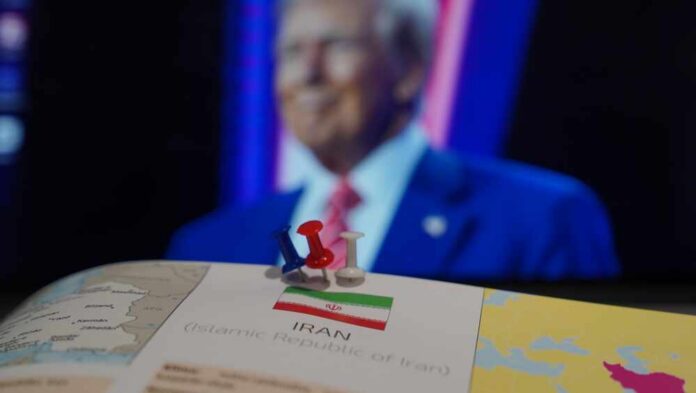
- The controversy lands amid ongoing U.S.-Israel military action against Iran and a public debate over whether Trump’s posture is deterrence or escalation.
- Media coverage and viral clips show a widening gap between “peace prize” branding and the reality of hard-power foreign policy in 2026.
Morgan’s Question Put a Symbolic Gift Under a Spotlight
Piers Morgan’s recent interview with Maria Corina Machado turned a symbolic moment into a political stress test. Machado, a leading figure in Venezuela’s opposition and the reported 2025 Nobel Peace Prize winner, previously presented her award to President Donald Trump in January 2026. On-air, Morgan asked whether she would still make that gesture after the U.S. joined Israel’s war against Iran the following month. Machado did not answer directly.
Machado’s response focused on two themes: gratitude for American backing against Venezuela’s authoritarian regime and solidarity with the Iranian people living under their own ruling apparatus. Rather than revisiting the Nobel handoff as an endorsement of every U.S. military decision, she framed Trump as a leader willing to take risks to confront regimes aligned against democratic movements. That framing matters because it suggests her priority is Venezuela’s transition, not adjudicating Washington’s Middle East strategy.
What the Timeline Shows—and What Remains Unclear
The public timeline described in reporting is stark: Machado’s Nobel-to-Trump gesture in January 2026, U.S. entry into the Iran conflict in February 2026, and Morgan’s accountability-style interview in April 2026. The same reporting also describes major actions and casualties, including the assassination of Iran’s leader Ali Khamenei and a bombing that killed 120 children at an elementary school. Those details are consequential, but they are not broadly corroborated in the provided research beyond a single outlet.
That uncertainty is important for readers trying to separate rhetoric from verifiable facts. A serious allegation—especially involving civilian deaths—typically demands multiple independent confirmations, official statements, or third-party documentation. The research supplied here centers on media coverage and commentary, not primary government readouts or international investigations. What can be stated confidently is narrower: the interview happened, Morgan pressed the issue, Machado sidestepped, and the controversy is being used to measure whether “peacemaker” branding can survive wartime headlines.
Why Venezuela Shapes Machado’s Answer More Than Iran Does
Machado’s political incentives are straightforward. She is trying to keep U.S. support aligned with Venezuela’s opposition as the country struggles with a broken economy, weakened institutions, and a mass exodus described as affecting roughly a third of the population. In that context, publicly rebuking the sitting U.S. president—who controls sanctions policy, diplomatic recognition signals, and regional pressure—could be self-defeating. Her careful language preserves the alliance while still denouncing Iran’s regime and its ties to Venezuelan power brokers.
This is also where many Americans’ frustrations with “the system” surface. Voters who already believe foreign policy is run by entrenched interests hear a familiar pattern: elite institutions hand out prestige, then reality intrudes, and public figures scramble to protect their own priorities. Conservatives tend to distrust international awards as status symbols; liberals often trust them as moral validators. The interview showed how quickly those symbols become political liabilities when war, sovereignty, and national interest take center stage.
Morgan’s Clips Amplify a Larger Debate Over Trump’s Strategy
Morgan’s posture has shifted across appearances and clips referenced in the research, from predicting Trump could win a Nobel Peace Prize to publicly criticizing Trump’s rhetoric and urging him to delete a profane message aimed at Iran. That arc reflects a broader media dynamic: conflict generates attention, and attention pressures public officials to communicate in viral-friendly bursts. The result is an information environment where policy goals, legal constraints, and endgames can get drowned out by screenshots and soundbites.
Piers Morgan Asks Nobel Peace Prize Winner Whether She Would Still Give Trump Her Award Following War Against Iran https://t.co/EF5nuUUasX
— Mediaite (@Mediaite) April 29, 2026
For conservatives who prioritize limited government and constitutional accountability, the larger takeaway is practical: a peace-prize narrative does not substitute for clear war aims, congressional oversight, or measurable objectives. For liberals worried about civilian harm and escalation, the same episode underscores how quickly symbolic gestures can be used to sanitize hard-power decisions. Machado’s sidestep may be politically rational, but it leaves the central question unanswered—what, exactly, is the standard for “peace” when the world is unstable and America is leading from the front?
Sources:
Piers Morgan interview Uncensored: Trump, Meghan, Farage