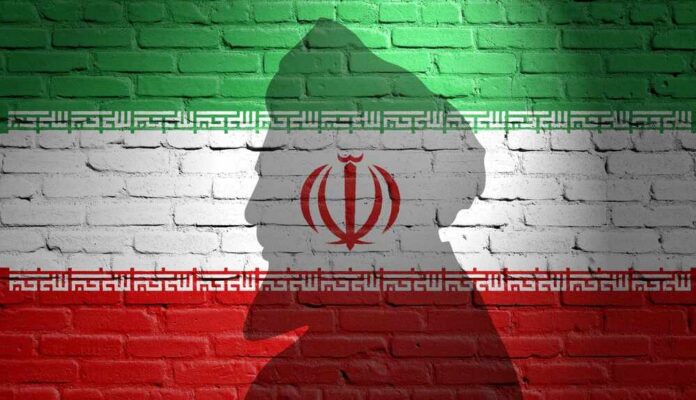
Iran’s regime just staged a “new supreme leader” moment while the man appointed to the job remains unseen, reportedly hospitalized, and possibly unable to govern.
Story Snapshot
- Mojtaba Khamenei was announced as Iran’s new Supreme Leader on March 8 after Ayatollah Ali Khamenei was killed in a February 28 strike, but reports say Mojtaba was also wounded.
- Accounts of Mojtaba’s condition conflict sharply, ranging from minor injuries to coma-level trauma, while Tehran offers minimal verifiable proof.
- Iranian state media has relied on indirect statements read by anchors, fueling questions about who is actually directing Iran’s war decisions.
- His absence from public view—including an inauguration featuring a cardboard cutout—has intensified public skepticism and uncertainty inside Iran.
Succession Announced, But the Leader Is “Missing in Action”
Iran’s leadership transition has unfolded under wartime pressure and heavy information control. After Ayatollah Ali Khamenei was killed on February 28, 2026, Iranian authorities announced his 56-year-old son, Mojtaba Khamenei, as the new Supreme Leader on March 8. Almost immediately, multiple outlets reported Mojtaba had been injured in the same wave of strikes and was not publicly seen. That absence matters because the Supreme Leader is the regime’s top political and religious authority.
Iran has offered no direct video address, live appearance, or clearly time-stamped photo of Mojtaba since the announcement. Instead, the public has been left with secondhand assurances and carefully managed broadcasts. Under normal circumstances, a new supreme leader would be expected to project confidence, deliver public remarks, and consolidate control over the military and the state media. The gap between that expectation and what Iranians are actually seeing is now the central fact driving global scrutiny.
Conflicting Injury Reports: From “Fractured Foot” to Coma Claims
Reports about Mojtaba Khamenei’s medical status are all over the map. Some accounts describe moderate injuries—leg, arm, and hand injuries, a fractured foot, and facial bruising—paired with claims he is recovering. Other reports are far more severe, alleging major trauma, possible amputations, internal injuries, and coma-level incapacitation. What can be stated confidently from the available reporting is narrower: multiple sources agree he was injured, but the severity and his level of consciousness remain unverified.
The most concrete details circulating in international coverage involve claims of hospitalization and intensive security. One report describes treatment at Sina University Hospital, with a sealed-off section and heavy guarding, and identifies senior medical figures involved in his care. Iranian officials have issued denials of critical injury and insist he is “safe and sound,” yet those statements have not been accompanied by the kind of direct, independently verifiable evidence that typically settles major leadership questions.
Indirect Messages and Cardboard Optics Raise Governance Questions
Iranian television has aired statements attributed to Mojtaba, but presented in a way that raises more questions than it answers—read aloud by an anchor rather than delivered by Mojtaba himself. That indirect format might be ordinary for a minor official, but it is unusual for a regime that relies on centralized authority and public theater to project control. Reports also say his inauguration used a cardboard cutout in place of his presence, an image that has become shorthand for the uncertainty.
This information vacuum is not just embarrassing optics; it intersects with wartime decision-making. One account quotes an Iranian official saying commanders have not received direct orders and that “no one knows” how badly injured Mojtaba is or even whether he is alive. Even if that quote reflects internal infighting or rumor, the underlying problem remains: Tehran’s refusal or inability to show the public a functioning leader creates a credibility gap that foreign governments, markets, and citizens will inevitably exploit.
What U.S. and Israeli Statements Do—and Don’t—Confirm
U.S. and Israeli commentary has reinforced the idea that Mojtaba was likely wounded, but it has not conclusively resolved the deeper questions about capacity. President Trump publicly suggested Mojtaba was “damaged” and “probably alive,” signaling uncertainty rather than confirmation. Separately, an Israeli official told Reuters they believed he was wounded, possibly explaining the absence from public address. These remarks are significant because they align with the broad consensus that injury occurred, while still stopping short of verifying coma claims.
For Americans watching from a constitutional republic, the contrast is stark: free societies can demand proof, press officials, and challenge narratives. Iran’s model depends on control, secrecy, and enforced “unity,” and that makes objective verification difficult by design. When the regime can’t convincingly show who is in charge during a major war, it highlights institutional fragility. That fragility may shape how Iran signals escalation, negotiates, or manages internal dissent in the weeks ahead.
Reports Claim Mojtaba Khamenei in 'Low Condition,' Said to Be Dull-Wittedhttps://t.co/JDlEERahlR
— PJ Media Updates (@PJMediaUpdates) March 16, 2026
Until Mojtaba appears in a clear, contemporaneous public setting, the most responsible conclusion is limited: he was reportedly injured, Iranian officials deny catastrophic outcomes, and independent confirmation is lacking. The rest—coma, amputations, full recovery, or a hidden power arrangement—remains contested. In practical terms, that means analysts should watch behavior, not slogans: who issues orders, who appears at funerals and command briefings, and whether Tehran’s messaging becomes more centralized or more chaotic.
Sources:
Reports: Iran’s new Supreme Leader is in a coma after Israeli airstrike
Missing in action: What we know about Mojtaba Khamenei’s condition
Iran Supreme Leader Mojtaba Khamenei health
Iran International report (English)