Iran’s claims of “Israeli-linked” tanker strikes are colliding with shaky verification—while Americans watching gas prices climb are asking why Washington is drifting into another Middle East war.
Story Snapshot
- Iran’s IRGC says it struck an oil tanker in the Gulf or Strait of Hormuz and claims it belonged to Israel, but independent confirmation of Israeli ownership remains unclear.
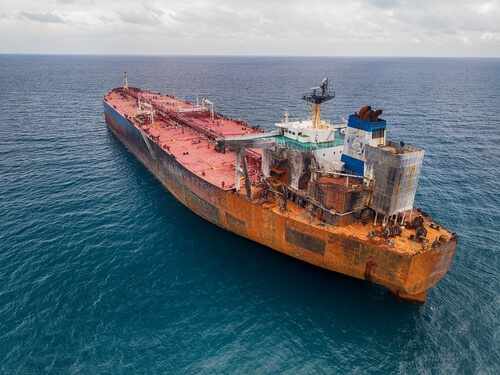
- Multiple tankers have been hit near Iraq and the UAE/Dubai corridor, with fires, reported oil leaks in at least one incident, and at least one crew fatality reported by regional authorities.
- The Strait of Hormuz remains a strategic choke point for global oil flows, and disruptions there can feed higher energy prices that hit U.S. families and retirees first.
- The war traces back to the late-February U.S.-Israel strikes on Iran, with Iran now framing Gulf shipping as fair targets—raising the risk of escalation.
IRGC claims “Israeli” ownership, but names and records don’t line up
Iran’s Islamic Revolutionary Guard Corps has publicized a new claim: that a tanker it hit in the Persian Gulf or the Strait of Hormuz was Israeli-owned or linked to Israel. The problem is verification. Reporting cited in the research describes inconsistent vessel naming—variations like “Express Haqqon,” “Express Halfong,” and “Express Room”—while shipping data referenced in the same research points instead to a Liberian-flagged vessel identified as “Express Rome,” with no independent confirmation of Israeli ownership.
That gap matters because “ownership” claims shape how the public interprets the strike: retaliation against a combatant versus a dangerous attack on commercial shipping. The available reporting indicates Iran’s narrative leans heavily on self-reported IRGC statements about ignored warnings and “retaliatory operations.” At the same time, the research flags a basic limitation: outside confirmation of the specific Israeli link is not established, and some incident details appear disputed by regional actors.
Attacks near Iraq and Hormuz are raising the stakes for crews and commerce
Events described in the research show a pattern of strikes across key lanes: tanker incidents near Iraq, plus separate attacks in the Persian Gulf and the Strait of Hormuz. One set of reports describes two tankers ablaze near Iraq with at least one crew member killed, alongside rescue operations for dozens of crew. Another set cites UAV strikes on a U.S.-linked tanker in the Persian Gulf and another vessel in the Strait of Hormuz. Several incidents reportedly involved fires and, in at least one case, oil leaks.
The immediate consequences are tangible: crews in danger, emergency rescues, and the kind of confusion that can follow when missiles or drones hit crowded shipping corridors. The broader strategic risk is also clear. When armed actors treat commercial tankers as leverage, insurers raise rates, captains reroute, and ports shift operations. The research references precautionary moves in Oman, with vessels reportedly evacuated from a terminal—an indicator that nearby states are bracing for spillover even if they’re trying to avoid direct entry into the war.
Why the Strait of Hormuz triggers U.S. political friction—fast
The Strait of Hormuz is not a symbolic waterway; it is a global energy choke point, and the research notes roughly 20% of world oil moves through it. When transit slows or becomes risky, energy markets react quickly, and consumers feel it at the pump and in the cost of goods. That reality lands hard on a conservative, older voter base already strained by years of inflation and fiscal mismanagement—and now watching another overseas conflict threaten their household budgets through higher energy costs.
For Trump’s second-term administration, this is also a credibility test. The research frames the conflict as an active U.S.-Israel-Iran war that escalated after late-February U.S.-Israel strikes on Iran, and it describes Iran declaring U.S. and Israeli regional assets legitimate targets. That combination—energy vulnerability plus direct U.S. involvement—is exactly the formula that turns a faraway war into a domestic political fracture, especially among voters who backed promises to avoid new long-term conflicts.
What’s confirmed, what’s claimed, and what remains uncertain
Several core elements appear consistent across the research: IRGC responsibility is repeatedly asserted by Iranian channels; multiple tankers have been struck; and Israel has continued strikes on Iranian targets. Yet key details remain unsettled. The “Israeli-owned tanker” label is the central example—reported as an IRGC claim without independent confirmation, with vessel naming inconsistencies and shipping data pointing to a Liberian-flagged ship. The research also flags a high “500 tankers struck” figure attributed to YouTube coverage as not corroborated elsewhere.
Those verification gaps matter for Americans trying to judge what Washington should do next. Calls for escalation become easier when every strike is presented as a clean hit on an enemy asset; they become harder when the record suggests confusion over ship identity, flags of convenience, and propaganda incentives on all sides. Conservatives wary of “regime change” logic will likely focus on concrete U.S. interests: protecting lawful navigation, limiting mission creep, and demanding clear, independently verified facts before any expansion of military commitments.
Sources:
Iran’s Islamic Revolutionary Guard Corps said … – Facebook
Trump Threatens NATO Departure, Claims Iran Wants A …
Iran war rages ahead of Trump’s “important update”
Iran’s IRGC claims strike on tanker in Strait of Hormuz