A UK prime minister just publicly challenged President Trump’s Iran rhetoric as “contrary to British values,” exposing how fast America’s closest alliances can fray when war talk meets economic pain.
Quick Take
- Keir Starmer criticized Trump’s reported threat to “wipe out a whole civilisation” in Iran as the US-Iran ceasefire remains fragile.
- The UK again emphasized it did not join earlier US attacks, citing no clear lawful basis and no viable long-term plan.
- Starmer headed to Saudi Arabia and the Gulf to press for a permanent truce and reopening the Strait of Hormuz amid energy-price fallout.
- Israeli strikes in Lebanon and broader regional distrust are fueling fears that the temporary ceasefire could collapse.
Starmer’s “values” rebuke puts the US-UK alliance on display
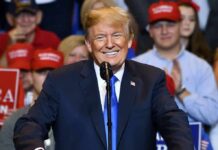
Keir Starmer used unusually direct language after reports that President Donald Trump threatened to “wipe out a whole civilisation” in Iran, saying the rhetoric conflicts with British values. The dispute landed as the United States and Iran attempted to hold a temporary ceasefire together. Starmer’s comments also highlighted London’s distance from Washington’s military decisions, reinforcing that the “special relationship” still has boundaries when legal justification and strategy are contested.
British officials framed the UK’s earlier refusal to join US strikes as a matter of “principles,” pointing to the absence of a lawful basis and a credible plan for what comes next. That stance matters domestically because the UK has felt the downstream consequences of the conflict even without joining it. The most immediate pressure point has been the energy shock tied to disruption around the Strait of Hormuz, a choke point critical to global shipping and oil flows.
A ceasefire measured in weeks, not certainty
Reporting places the current truce at roughly a two-week ceasefire designed to cool the US-Iran confrontation after earlier attacks escalated tensions. The problem is durability. Global leaders have publicly signaled skepticism about whether the pause can last, and developments in the region have continued to raise the temperature. The reporting also notes Israeli strikes in Lebanon that killed hundreds, a flashpoint that could trigger retaliation and pull other actors into renewed escalation.
Uncertainty remains about the exact timing and context of Trump’s “civilisation” threat, but the political effect is clear: allies are reacting to the language as much as the underlying policy. For conservatives, that split is familiar—hardline deterrence can prevent aggression, yet maximalist rhetoric can narrow diplomatic options and make it easier for opponents to portray the US as reckless. Without clearer public details on objectives and end-states, critics have an opening.
Energy, shipping, and the real-world costs voters feel
Starmer’s Gulf trip was presented as urgent diplomacy aimed at making the ceasefire permanent and reopening the Strait of Hormuz. That focus is less abstract than it sounds. When Hormuz traffic is threatened, the ripple hits fuel prices, shipping insurance, and inflation-sensitive household budgets. Starmer described the economic fallout as lasting for weeks in the UK, illustrating how voters can end up paying for geopolitical shocks regardless of whether their country fired a shot.
For Americans, the Hormuz angle is also a reminder of how energy policy and national security intersect. When global routes are unstable, countries with reliable domestic production options tend to absorb shocks better than countries that depend heavily on fragile supply chains. The research provided does not quantify US price impacts, but it does show why allied leaders are fixated on restoring predictable shipping. That practical concern sits behind the moral language now dominating headlines.
What this episode signals about power, trust, and “the system”
The Starmer-Trump clash also underscores a broader reality that frustrates voters on both sides of the Atlantic: major decisions can move faster than public accountability. The UK emphasized legal constraints and long-term planning while trying to avoid a direct rupture with Washington. The US message, by contrast, leaned on deterrence and pressure. When allies disagree publicly, citizens often suspect the real drivers are hidden—bureaucracies, security services, and political incentives more than transparent debate.
Starmer questions Trump’s values over threats to wipe out a ‘whole civilisation’ in Iran
The prime minister said president’s comments did not reflect British values, in what appeared to be a jibe ahead of the King’s visit to the UShttps://t.co/WtGyhAWg51— dave lawrence 🐟🐟🐠 (@dave43law) April 10, 2026
Based on the available reporting, the key unknown is whether diplomacy can translate into enforceable commitments that keep the truce intact after the two-week window. Starmer’s trip suggests regional actors still believe de-escalation is possible, especially if shipping lanes reopen. At the same time, the ongoing regional violence described in the research shows how quickly a ceasefire can unravel. With limited expert analysis in the provided materials, the safest conclusion is that allied unity remains conditional—and brittle.
Sources:
Starmer questions Trump’s values over threats to wipe out a ‘whole civilisation’ in Iran
Iran war: Trump and Starmer values dispute
Starmer-Trump Iran civilisation comments