Senator Markwayne Mullin, Trump’s staunch ally for DHS Secretary, surges past Democrat attacks in Senate committee, paving the way for aggressive deportation enforcement that secures American borders.
Story Snapshot
- Trump’s DHS nominee Markwayne Mullin clears Senate Homeland Security Committee vote on March 19, 2026, despite Democrat “hothead” smears.
- Mullin defends ICE officers in fatal Minneapolis shootings, refusing to bow to reform demands that weaken border security.
- Only Rand Paul dissents among Republicans, highlighting GOP unity for Trump’s deportation agenda amid funding fights.
- Nomination advances to full Senate, backed by 53 Republican seats, rejecting leftist pushes for open borders and agency overhauls.
Noem Firing Sparks Leadership Shift
President Trump fired DHS Secretary Kristi Noem in early March 2026 amid uproar over fatal ICE shootings of two Americans in Minneapolis. Public backlash eroded trust in DHS operations, including use-of-force policies and surveillance practices. Trump nominated sitting Senator Markwayne Mullin, a loyal hardliner on immigration, to replace her. Mullin, from Oklahoma, aligns with Trump’s mass deportation pledges established since his first term. This move prioritizes border security over Democrat calls for de-escalation reforms that conservatives view as handcuffing law enforcement.
Contentious Hearing Grills Mullin on Key Issues
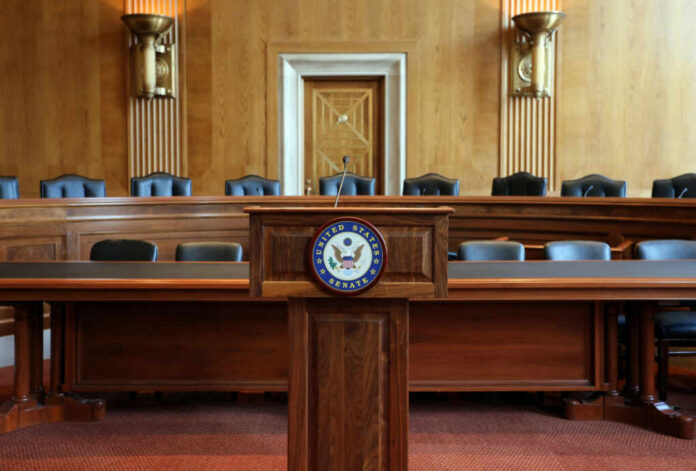
The Senate Homeland Security and Governmental Affairs Committee held Mullin’s confirmation hearing on March 18, 2026. Democrats, led by Ranking Member Gary Peters of Michigan, aggressively questioned Mullin on ICE encounters, DHS use of force, and Trump’s deportation policies. Peters called Mullin a “hothead” and “disqualifying,” citing lost public trust after the shootings. Mullin defended the officers involved and sidestepped reform questions, refusing to apologize for past remarks labeling Rand Paul a “snake.” Republicans rallied behind Mullin for his commitment to enforcement.
Committee Advances Nomination with Strong GOP Backing
On March 19, 2026, the committee voted to advance Mullin’s nomination. Peters confirmed Senator Rand Paul cast the sole Republican “no” vote, stemming from their personal feud. Despite this, Republican unity prevailed, leveraging the party’s 53 Senate seats for likely full-Senate confirmation without filibuster. This rejects Democrat demands tying DHS funding to ICE overhauls, which have caused TSA delays, unpaid Coast Guard and FEMA staff. Conservatives cheer the focus on deportations over government spending sprees. Ongoing congressional standoffs over DHS funding exacerbate disruptions like long airport lines. Mullin’s advancement signals continuity in Trump’s agenda, prioritizing national security against illegal immigration waves that burdened prior leftist policies.
Implications for Borders and American Priorities
Mullin’s potential confirmation entrenches Trump loyalists in DHS, overseeing ICE, TSA, FEMA, and Coast Guard. Short-term, it escalates deportations amid funding fights worsening agency strains. Long-term, it hardens immigration enforcement, countering open-border absurdities that fueled inflation and crime under Biden. Travelers face delays, but immigrants encounter stricter rules protecting American jobs and safety. Minneapolis communities process shootings, yet conservatives demand accountability without undermining officer defenses. Political wins bolster Trump’s base against moderate alienations.
Sources:
Markwayne Mullin’s appointment to homeland security is …
Who Is Markwayne Mullin, the New Homeland Security …
A scary injury led to Trump’s close bond with Homeland …
Trump Administration Live Updates: Mullin Shifts to Softer …