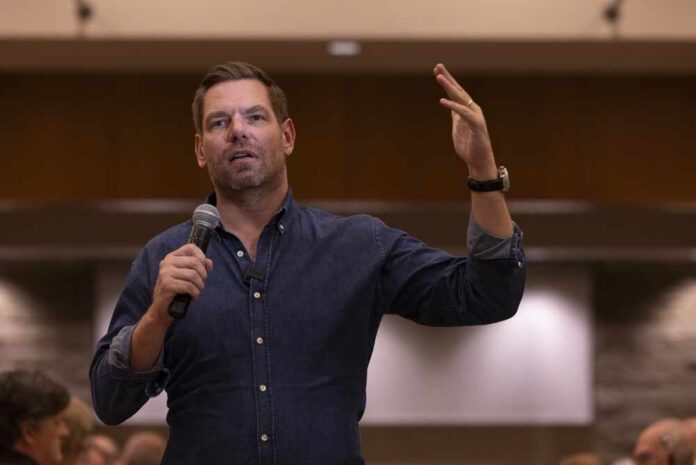
A leading Democrat who once rode the party’s “believe survivors” wave is now fighting to survive his own sexual-misconduct scandal as California’s governor’s race heats up.
Quick Take
- Rep. Eric Swalwell, a Democratic candidate for California governor, is facing sexual assault and misconduct allegations from multiple women.
- Swalwell has publicly denied the central sexual-assault claims as “flat false,” while also apologizing to his wife for unspecified “mistakes.”
- His attorney sent cease-and-desist notices targeting what the campaign calls unverified or defamatory allegations circulating online.
- Key allies and organized support have begun pulling endorsements, raising real questions about whether his campaign can last to the June primary.
Allegations collide with a campaign built for a progressive state
California Rep. Eric Swalwell, a former prosecutor and longtime House member, entered the 2026 race to succeed Gov. Gavin Newsom with the kind of resume and messaging designed for a progressive electorate. That context matters because the current controversy goes straight at a core Democratic-era political demand: take accusations of sexual misconduct seriously. A former staffer has described two alleged incidents—one in 2019 and another in 2024—saying she was too intoxicated to consent.
Swalwell has responded with a categorical denial of the sexual assault allegations, calling them false. At the same time, he released a statement and video message that included an apology to his wife for “mistakes,” without publicly connecting that phrasing to the specific accusations. For voters trying to assess credibility, that split message—deny the alleged assaults entirely while conceding personal “mistakes”—has fueled confusion and intensified media scrutiny, especially with ballots and endorsements on the line.
Cease-and-desist letters target “unverified” claims spreading online
Swalwell’s legal team moved quickly as rumors circulated on social media, with his attorney sending cease-and-desist notices over what they described as false statements. Reporting describes the letters as aimed at people who were allegedly repeating or distributing claims online. A progressive attorney and advocate, Cheyenne Hunt, has been identified in coverage as someone who shared a screenshot of a letter and said she was helping organize alleged victims, underscoring how fast the dispute moved from internet chatter into a campaign crisis.
The legal strategy highlights a deeper political problem that both parties keep running into: Americans see a system where powerful people can lawyer up instantly while ordinary people often fear they won’t be believed. In this case, the former staffer did not file a police report, and at least one outlet noted it could not independently verify the allegations. Those limitations do not prove the claims are false, but they do show why voters should separate what is reported, what is documented, and what remains contested.
Endorsements and staff turmoil signal a fast-moving collapse risk
Political support is already shifting. Coverage indicates allies and organized backers have begun withdrawing endorsements, and some reports describe campaign turmoil, including resignations, as the story broke wider. In a state where Democratic primaries can turn into a referendum on character and ideology, the sudden evaporation of institutional support can be decisive. Even if no legal finding has been made, the political reality is that endorsements often function like permission structures for donors and voters.
What this episode says about “believe survivors” politics and public trust
Swalwell’s situation also spotlights an uncomfortable pattern in modern politics: slogans tend to be enforced most aggressively against opponents, then softened when an ally is accused. Conservatives will see hypocrisy in how some Democratic figures have handled allegations depending on who is in the hot seat. Many liberals will argue that “believe survivors” never meant “skip due process.” Both instincts exist because the public increasingly doubts institutions can deliver fair, consistent outcomes.
Believe Survivors? Swalwell Ripped for Denying Assault Claims, Then Apologizing to Wife for ‘Mistakes’ https://t.co/7nTguopbc5
— Rita_S (@senorita_LLB) April 11, 2026
For the broader country, this is another reminder that elections can become credibility contests with incomplete facts, legal maneuvering, and media-driven narratives—all while everyday problems like inflation, energy affordability, and public safety keep piling up. Californians will ultimately weigh competing claims, the strength of the reporting, and Swalwell’s response. Until authorities make findings or more verifiable evidence emerges publicly, the most responsible takeaway is straightforward: the allegations are serious, the denials are absolute, and the political consequences are already real.
Sources:
Swalwell’s attorney sends out cease-and-desist notice over unverified sexual assault allegation
Eric Swalwell denies new sexual assault allegations
Swalwell campaign “imploding” amid sexual assault allegation