America’s military is hitting Iran again, and the White House is using pressure, not patience, to force Tehran’s hand.
Quick Take
- U.S. Central Command said it launched additional self-defense strikes on multiple targets inside Iran.[1]
- The strikes came after President Donald Trump warned Iran that harder hits could follow if talks failed.[1][3]
- CENTCOM said the targets included surveillance, communications, and air defense sites.[1][5]
- Iran’s side says the fighting is part of a wider exchange tied to earlier attacks and counterattacks.[7][8]
U.S. Strikes Expand After Trump’s Warning
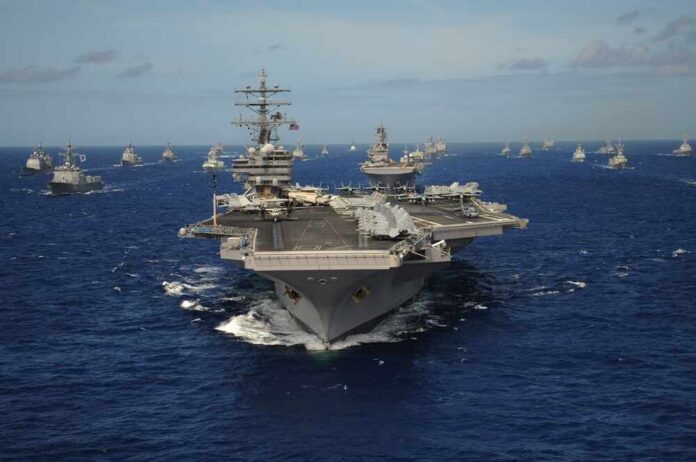
U.S. Central Command said its forces completed new self-defense strikes against multiple targets in Iran.[1] The command said Marine Corps, Air Force, and Navy assets used precision munitions on military sites that posed a threat to U.S. forces and commercial ships.[1] Reuters and other reporting said this was the second night of air strikes, coming hours after Trump warned Iran it would be hit very hard if no deal was reached.[1][2]
Trump’s public message was plain. He told Axios the “clock is ticking” and said Iran could “get hit harder” if it did not offer a more favorable proposal.[1] Fox News also reported that he used similar language on Truth Social, while other coverage showed Defense Secretary Pete Hegseth saying the United States would hit Iran hard and bomb key facilities.[3][4][7] That mix of military action and open threats shows a pressure campaign built to shock Tehran back to the table.[1][4]
What CENTCOM Says It Hit
CENTCOM said the strikes focused on Iranian military surveillance capabilities, communication systems, and air defense sites.[1] In a separate statement about earlier operations, the command said it struck air defense, ground control stations, and surveillance radar sites near the Strait of Hormuz with precision munitions.[5] Officials said those targets were tied to threats against U.S. forces and international commercial shipping, which is the military’s main public defense for the operation.[1][5]
That framing matters because it places the burden on Iran to explain why these systems were in play.[1][5] Supporters of the strikes will see that as basic self-defense and a warning to a hostile regime. Critics will see a widening conflict that keeps moving from one target list to the next. The public record provided here does not resolve that dispute, but it does show a clear pattern of retaliatory force.[1][5][8]
Why the Clash Keeps Growing
The broader picture is one of repeated strike-and-counterstrike moves, not a clean break toward peace.[2][7][8] One report said Iran’s Revolutionary Guard claimed attacks on U.S.-linked targets across the region, including bases in Bahrain, Kuwait, and Jordan.[7][8] Another said U.S. officials described the action as a proportional response to recent attacks on U.S. forces and commercial ships, which suggests both sides are still treating the crisis as an active fight.[5][8]
IRAN WAR UPDATE — JUNE 11, 2026
🟢The United States launched a fresh round of strikes across Iran for a second straight day.
CENTCOM said American forces targeted Iranian surveillance systems, communications sites and air defence positions, describing the operation as… pic.twitter.com/EYIQtJF9Uv
— Mansa Tesla (@MansaTesla) June 11, 2026
For conservative readers, the danger is easy to see. A weak response would invite more attacks, but open-ended escalation can drag the country into a larger war with no clear end.[1][5][7] The best argument in the record for Trump’s approach is deterrence: hit hostile military targets, raise the cost, and force Iran to choose talks over more aggression.[1][3][5] The unanswered question is whether Tehran reads pressure as a warning or as an excuse to keep firing.[2][7][8]
Sources:
[2] Web – Trump warns Iran “clock is ticking” until U.S. launches harder strikes
[3] Web – Hours After Trump Warning, US Resumes Air Strikes On Iran
[4] Web – U.S. military says it’s striking ‘multiple targets’ in Iran in latest …
[5] Web – US Strikes “Multiple Targets” In Iran After Trump’s Warning
[7] Web – Trump Issues Stark “One Night” Warning to Iran, Touts Daring Rescue
[8] Web – Trump tells Iran ‘clock is ticking’ amid renewed military action …