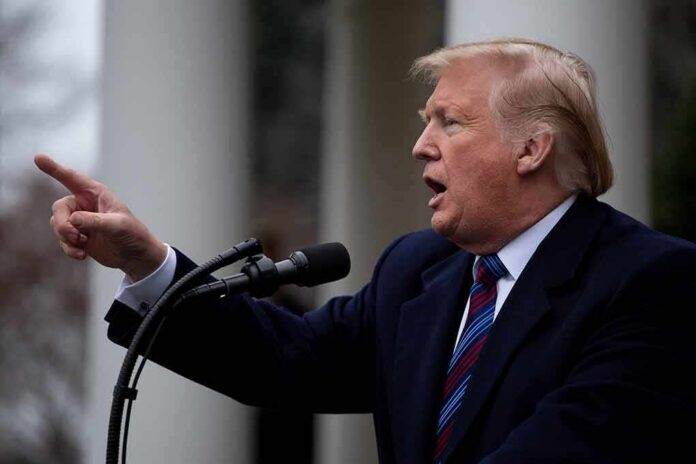
President Trump stood inside a Michigan auto plant and declared his tariffs a success, even as governors, supply-chain experts, and voters in the same state say the trade war is raising costs and rattling jobs.
Quick Take
- President Trump toured Ford and General Motors facilities in Michigan, calling tariffs a driver of an auto industry “revival.”
- The White House says the visit celebrates manufacturing progress and promises more affordability relief for families.
- Local reporting and Michigan officials describe tariffs as a cost burden hitting cross-border trade and auto suppliers.
- The dispute lands in a swing state just as midterm election season heats up.
- No independent state data yet confirms whether the tariffs produced a net manufacturing gain or a net cost increase.
A Return Trip Built Around Tariffs
President Trump traveled to Michigan to defend his tariff policy in front of voters who feel the direct effects. He toured a Ford assembly line building F-150 trucks in Dearborn and later visited a General Motors facility in Milford with chief executive Mary Barra. The stops let him stand next to real vehicles and real workers while making his economic case.
At the Detroit Economic Club, the president told business leaders his agenda created what he called the “strongest and fastest economic turnaround in our country’s history.” He argued tariffs are pulling manufacturing back to American soil and helping Michigan’s auto sector specifically, even as he acknowledged rising public worry about jobs and prices.
White House Frames the Visit as a Win
The White House released a statement calling the trip a celebration of “the resurgence of the American auto industry” and promising continued relief for families. That release frames the visit as proof of progress rather than a response to criticism, presenting factory tours and presidential remarks as evidence that tariff policy is working as designed.
The administration also teased a broader affordability plan without giving full details. Officials say more relief is coming for consumers squeezed by higher prices, positioning the Michigan stop as one part of a larger economic message aimed at calming voters ahead of the midterms.
Michigan Voices Describe a Different Reality
Not everyone in Michigan sees the same picture. A Bridge Michigan fact check found the president touted big wins while downplaying the costs tariffs have added for businesses and consumers in his own speech. Fox 2 Detroit reported Michigan is among the states most exposed to tariff harm because of its deep auto and manufacturing ties to Canada and Mexico.
Governor Gretchen Whitmer has raised these concerns directly with the president. She privately told Trump that Michigan auto jobs depend on a change in tariff policy, arguing the sector he says he wants to protect is actually suffering under the current trade rules. That private warning adds weight to public complaints from suppliers and small businesses across the state.
🇺🇸🚗 President Donald Trump told General Motors workers in Milford, Michigan, that the state’s automotive industry had been “sold out and betrayed” for decades by politicians and special interests that allowed jobs and factories to move overseas.
Speaking at GM’s historic… pic.twitter.com/XIne1kkU0m
— THE INFORMANT (@TheInformantUSA) July 27, 2026
A Bridge Becomes a Symbol of Friction
The dispute has a physical landmark. The Gordie Howe International Bridge opened for traffic the same week Trump’s fight with Canada intensified over new tariffs, turning a major infrastructure milestone into a symbol of trade-war tension rather than pure celebration. That timing makes it harder for either side to claim a clean win.
Why This Matters Beyond One Speech
Michigan is both an auto manufacturing hub and a top swing state, which makes it a natural stage for economic messaging on both sides. A rally marking Trump’s first 100 days in office was already described as taking place in a state “rocked by his tariffs,” showing this tension is not new. The gap between White House claims and local complaints raises a bigger question that neither political party has fully answered: is anyone tracking real Michigan job and price numbers, or is this fight mostly about who controls the story before voters go to the polls?
Neither side has produced hard state-level data settling the matter. The White House points to plant visits and speeches. Critics point to supply-chain warnings and a governor’s private objections. Until independent numbers on jobs, output, and consumer prices arrive, both claims remain more about persuasion than proof.
Sources:
indiatoday.in, whitehouse.gov, wlns.com, youtube.com, apnews.com, abc27.com