Washington just moved to choke off a new stream of Iranian cash from the Strait of Hormuz, raising fresh questions about who really controls the world’s oil lifeline and whether ordinary Americans will pay the price at the pump.
Story Snapshot
- The United States sanctioned Iranian entities it says extort ships with fake “insurance” in the Strait of Hormuz.
- Officials claim the money funds Iran’s Islamic Revolutionary Guard Corps and its military oil network.
- The move fits a broader U.S. strategy to cut Iran’s oil income and “shadow fleet” shipments.
- The showdown adds risk for global energy prices and exposes how fragile key trade routes have become.
What Washington Just Did and Who Is Targeted
The United States Treasury Department announced new sanctions on an Iranian-run system it says is shaking down ships that pass through the Strait of Hormuz. In an official notice, the Office of Foreign Assets Control described a so-called Persian Gulf Strait Authority as part of a scheme that forces vessels to pay illegitimate tolls for safe passage, calling it an extortion effort tied to Iran’s Islamic Revolutionary Guard Corps (IRGC). A related action targets companies that help move Iranian oil and petrochemicals in defiance of earlier sanctions.
State Department officials say these entities “manufacture risk” by threatening vessel seizures and then selling mandatory maritime “insurance” against dangers that Iran itself creates. The new rules block any of their property that touches the United States financial system and forbid U.S. persons from doing business with them. That includes any company that is majority-owned by a sanctioned party, even if it operates through shell firms overseas. The message to global shippers is simple: pay these tolls or buy this insurance, and you could end up under U.S. sanctions yourself.
How the Sanctions Hit Iran’s Hormuz Income and Oil Network
U.S. officials say this action is meant to cut off a fresh revenue stream Iran built on the world’s most important oil choke point. The Strait of Hormuz carries a large share of global oil trade, and Washington argues Iran tried to turn that leverage into cash through fake regulations and fees. At the same time, the United States is targeting vessels and companies it says are part of Iran’s “shadow fleet” that move sanctioned crude oil and petrochemicals to buyers in China and the United Arab Emirates. A separate State Department fact sheet links similar designations to tens of millions of barrels of Iranian oil and direct funding for the IRGC and Iran’s armed forces.
This fits a pattern that has hardened over several years. The United States has repeatedly sanctioned Iranian exchange houses, front companies, and shipping firms that move oil money or military-related goods around the world. Officials say these networks use layers of shell firms and foreign registries to hide Iran’s role and dodge banking rules. Alongside earlier moves against Iranian oil traders and financial “shadow banking” structures, the Hormuz insurance crackdown shows Washington is not only targeting barrels of oil, but also the fees, tolls, and service charges Iran tries to collect from global trade through the strait.
Why This Matters for Energy Prices and Ordinary Americans
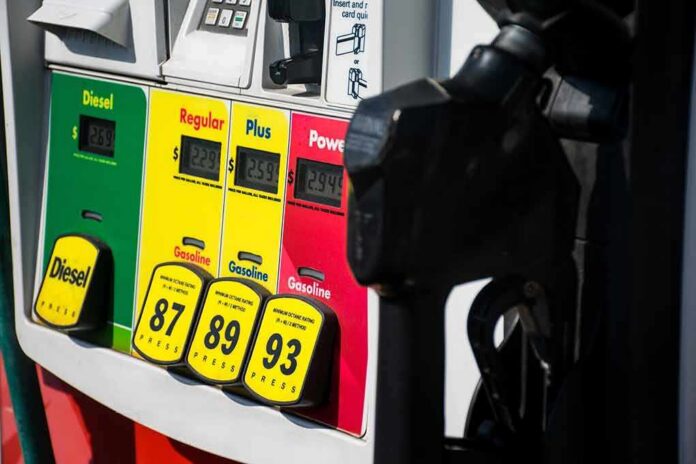
Any time the Strait of Hormuz becomes a battleground, the entire world economy gets nervous. Analysts already point out that most of Iran’s exports pass through this narrow waterway, and disruptions there have helped drive down Iran’s legal shipments while tightening global oil supply. Iran’s crude exports have fallen sharply at times when U.S. pressure increased, which can reduce spare supply and make energy markets jumpy. New sanctions that raise the risk of ship seizures, insurance disputes, or military incidents in the strait can quickly show up as higher fuel and transportation costs worldwide.
OFAC designates an IRGC-backed extortion network in the Strait of Hormuz and eight vessels linked to Iran’s shadow fleet, intensifying maximum pressure under E.O. 13902.
𝐒𝐭𝐫𝐚𝐢𝐭 𝐨𝐟 𝐇𝐨𝐫𝐦𝐮𝐳 𝐄𝐱𝐭𝐨𝐫𝐭𝐢𝐨𝐧 𝐍𝐞𝐭𝐰𝐨𝐫𝐤
– 𝐏𝐞𝐫𝐬𝐢𝐚𝐧 𝐆𝐮𝐥𝐟 𝐌𝐚𝐫𝐢𝐧𝐞…— Shin (@hey_itsmyturn) July 29, 2026
For families on both the left and the right, that is where a distant sanctions fight hits home. Higher oil prices feed into everything from gas for commuting to the cost of groceries on store shelves. Many Americans already feel squeezed by past waves of inflation and what they see as decades of bad energy and spending policies in Washington. When the government layers aggressive foreign sanctions on top of that, people worry that regular citizens will pay more while political and corporate elites stay insulated from the fallout.
A Growing Sanctions Machine and Fears of Unchecked Power
The new Hormuz measures are part of a broader campaign that the State Department now openly frames as “maximum pressure” on Iran’s oil economy. In recent years, U.S. agencies have rolled out sanctions against Iranian cyber actors, oil traders, currency exchange houses, drone suppliers, and regime officials involved in human rights abuses. The stated goal is to starve the Islamic Revolutionary Guard Corps and other security forces of money used for terrorism, regional attacks, and crackdowns at home. Supporters argue that cutting off this cash is safer than sending U.S. troops into new wars.
But the steady expansion of sanctions also fuels a deeper distrust many Americans feel toward the federal government. Each new list of foreign entities, shipping firms, and bank accounts under U.S. control reminds people how much power Washington’s bureaucracy now holds over the global financial system. Critics across the spectrum worry that unelected officials at the Treasury and State Departments can, with a single announcement, reshape trade flows and push up prices without any direct vote by citizens. For those already suspicious of a “deep state” that seems unaccountable, the ever-growing sanctions machine looks like one more tool that elites can wield with little oversight.
Iran, Escalation Risks, and the Fragile Strait of Hormuz
Iran has a long record of pushing back when it feels squeezed, including past harassment of tankers and threats to close the Strait of Hormuz to traffic. Recent U.S. statements say attacks on oil tankers and resumed tanker strikes were part of the reason for tightening sanctions again. That raises the risk of a cycle where more sanctions lead to more Iranian pressure on shipping, which then leads to even tougher sanctions or possible military action. Each step makes the strait a riskier place for crews simply trying to move goods.
For Americans who see both parties as failing to protect basic national interests, this is a familiar pattern. Endless foreign standoffs consume attention and money while problems at home—from wages and health care to the cost of living—go unsolved. The latest sanctions on Iran’s Hormuz income may weaken an adversary’s finances. They may also remind many citizens that a small group of decision-makers in Washington can, almost overnight, put the world’s energy highway at risk and leave working families to deal with the shock waves.
Sources:
insiderpaper.com, home.treasury.gov, state.gov, occrp.org, justice.gov, brandeis.edu