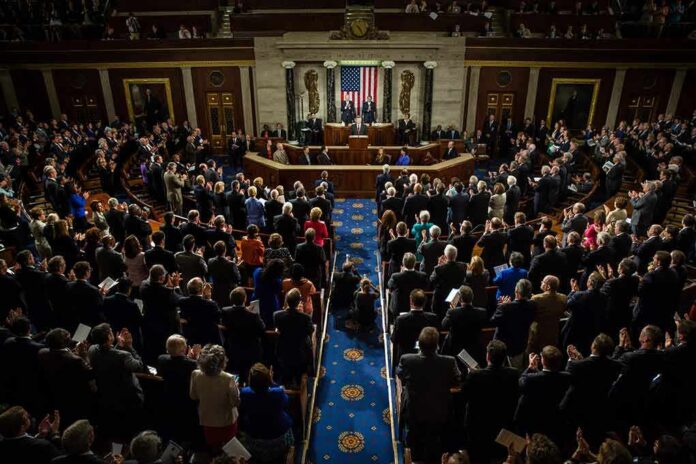
House Republicans advanced a bill that would let some crime victims sue state and local governments that released offenders despite a federal immigration detainer, putting “sanctuary” policies under direct legal fire.
Story Snapshot
- H.R. 7640 creates a private right to sue jurisdictions that release offenders despite a federal detainer.
- The House Judiciary Committee approved the bill and placed it on the Union Calendar, signaling momentum.
- The bill ties cooperation with federal immigration authorities to certain law-enforcement funds.
- Opponents argue it forces states to do federal work and threatens the Tenth Amendment.
What The Bill Would Do And Who Could Be Sued
H.R. 7640, the Shut Down Sanctuary Policies Act of 2026, would bar state and local rules that block cooperation with federal immigration officers. The measure targets policies that stop jails from sharing information, giving notice of release, or honoring Department of Homeland Security detainers. It creates a civil right to sue a state or local government when a person is released despite a detainer and then commits certain crimes that cause harm. Supporters say this gives victims a path to seek damages.
The sponsor describes the bill as a way to hold “sanctuary” jurisdictions accountable when their release decisions lead to harm. The committee report explains the bill preempts conflicting local limits and requires cooperation steps, including on questions, notifications, and detainer compliance. The reported version reflects an amendment in the nature of a substitute, so some details differ from the introduced text. The official summary confirms the private lawsuit remedy is part of the package.
Where It Stands In Congress Right Now
The House Judiciary Committee approved the bill on March 5, 2026, by a recorded vote, and ordered it favorably reported. The bill was placed on the Union Calendar on March 12, 2026, which is a step toward a floor vote. Republicans control the House and Senate, which improves the bill’s chances. But final text can change through amendments, and any Senate action, court challenges, or funding provisions could still affect implementation timing.
The committee report frames the bill as stopping policies that restrict communication with federal officers or block detainer compliance. The Congress.gov summary also notes funding consequences. Jurisdictions found noncompliant by the Department of Homeland Security would lose access to certain law-enforcement or immigration grants. Funds would shift to compliant jurisdictions, creating pressure to align local policies with federal enforcement priorities.
Key Questions About Results And Legal Risk
The record confirms the bill creates lawsuits for victims and conditions some grants, but it does not prove this will reduce crime. The legislative materials do not include outcome data showing that mandatory detainers cut offenses or prevent specific harms. Independent research has found that some sanctuary policies did not increase crime, which shapes the debate over safety claims, but those studies assess policies in general, not this bill’s exact remedies.
The measure is the Shut Down Sanctuary Policies Act of 2026, H.R. 7640. Republican Rep. Tom McClintock of California introduced it on Feb. 23.https://t.co/Lf4Fnx0VuQ
— Juliet Martinez (@_Julietsm) October 14, 2026
Opponents argue the bill forces states and cities to do federal work and undermines the Tenth Amendment. They also warn that heavy immigration enforcement can chill crime reporting and damage trust. A congressional statement called immigration enforcement the federal government’s duty, not an unfunded state mandate. An independent analysis summarized concerns about cutting funds and the risk of detainer-related constitutional violations for local agencies.
Why This Fight Matters To Both Sides
Supporters see a path for grieving families to seek justice when a release goes wrong. They argue that clear rules and real penalties will stop avoidable tragedies. Opponents see federal overreach that could punish local choices and expose police to legal risk. Many readers, across party lines, see a deeper problem: leaders arguing over power while families absorb the cost. The bill turns that frustration into lawsuits and lost grants, raising the stakes for every community.
Sources:
thegatewaypundit.com, congress.gov, govinfo.gov, mcclintock.house.gov