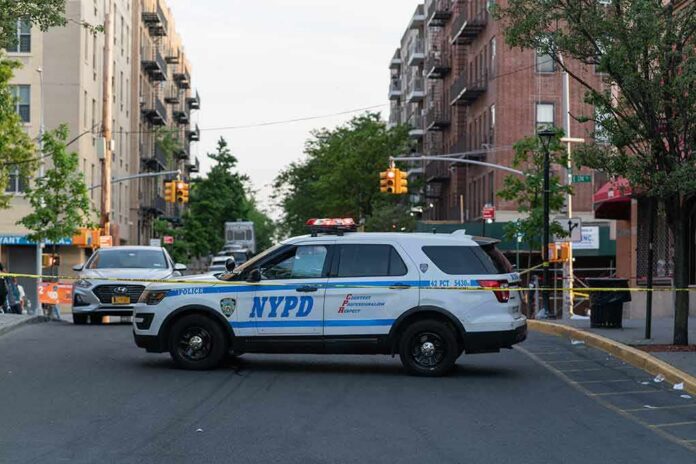
A 14-year-old was shot in the back and killed in Queens, and the gunman fled on the boy’s scooter.
Story Snapshot
- Police said Malakai Adams, 14, was shot near his home in Edgemere and died at a hospital.
- Officers reported the shooter escaped on Adams’s scooter and released a suspect image.
- Early reports cited a possible robbery; later coverage pointed to an online dispute.
- Claims of migrant gang ties remain unproven for this case despite wider allegations.
What Police Reported After the Shooting
New York City police officers responded on September 21, 2026, to Ocean Bay Apartments in Edgemere, Queens. Officers found 14-year-old Malakai Adams with a gunshot wound to the back. Medical staff at Cohen Children’s Medical Center pronounced him dead. Police said the shooter took off on Adams’s scooter, and early accounts described a possible robbery. Investigators asked the public for tips and released a photo of a suspect seen wearing a face covering and dark clothing.
Initial news coverage emphasized the scooter and a masked suspect. Reporters cited dark hooded clothing and a face covering that hid the shooter’s identity. These details matched a pattern that makes arrests harder: fast getaways, concealed faces, and common streetwear. Police statements at the time focused on finding the suspect and recovering the scooter. The case drew wide attention because the victim was a child and because the suspect escaped quickly from a busy public housing area.
How the Motive Shifted as the Case Evolved
CBS New York later reported that police backed off the initial robbery motive. The New York Post said detectives believed the shooting may have followed an online dispute. The outlet also reported that police arrested a 17-year-old with ties to the Crips street gang. Those updates reframed why the gun was fired, even though the suspect allegedly fled on the scooter. The arrest does not by itself settle motive, but it shifts the story beyond a simple theft narrative.
That change matters because public debate often jumps from one shocking crime to broad causes. People on the right and left are angry about safety and fairness. They see leaders talk while families face real harm. A fast-changing case can fuel quick claims and partisan blame. But the reporting here shows a narrow, tragic event with evolving facts. It shows why patience with evidence protects both justice for victims and trust in the system.
Claims About Migrant Gangs and What We Can Prove
Some outlets tied city moped and scooter robberies to migrant crews and named the Trinitarios gang. One article cited an unnamed officer and pointed to two men it said were Dominican and here unlawfully. Those claims spoke to deeper fears about border policy, fairness, and order. But the Adams case itself has not been shown to involve migrants or Trinitarios. Later reporting cited a teen suspect and a gang tie unrelated to that allegation.
Separate police actions have linked some robbery patterns to recently arrived immigrants in other incidents, with officials citing dozens of cases. Those operations show real concerns with mobile thefts that use mopeds and scooters. Still, one case cannot prove a citywide trend, and not all two-wheeled vehicles are the same or illegal. Good policy needs clear categories, chargeable facts, and fair enforcement that targets violent actors, not workers or riders who follow the law.
What This Means for Safety, Policy, and Shared Frustration
New Yorkers want safe streets, fast arrests, and fair justice. Parents want their kids to get home alive. Taxpayers want leaders to fix what is broken, not argue on television. This case shows the core job: stop gun crime, catch offenders, and tell the public what happened. Clear data on scooter and moped crimes, repeat offenders, and gang links can guide real fixes. That is how trust is earned across party lines and neighborhoods.
Sources:
thegatewaypundit.com, amny.com, cbsnews.com, nydailynews.com, nypost.com, yahoo.com, pix11.com, nyc.gov, oann.com