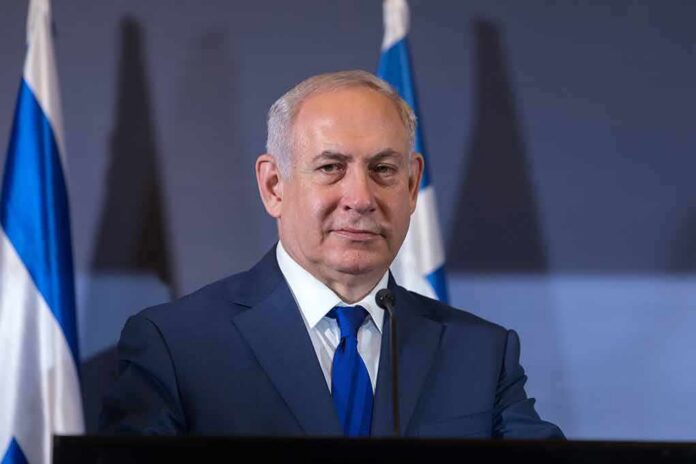
An unannounced face-to-face between U.S. Defense Secretary Pete Hegseth and Israel’s Prime Minister Benjamin Netanyahu centered on Iran at a southern Israel air base, according to multiple reports.
Story Snapshot
- Hegseth met Netanyahu at Ovda Air Base during a secret Israel visit, sources said.
- Three Israeli officials said Iran was the focus of the talks, according to reporting.
- U.S. refueling planes and jets were deployed at the base during the visit, outlets reported.
- The Pentagon and Netanyahu’s office did not issue a readout; Hegseth cited a Central Command trip.
What Happened and Where
Axios reported that Defense Secretary Pete Hegseth met Prime Minister Benjamin Netanyahu at Ovda Air Base in southern Israel on October 19, 2026, during an unannounced visit. Other outlets, including The Jerusalem Post, repeated the air base location and timing. They also noted the presence of United States refueling aircraft and fighter jets at the base during that period. The Detroit News reported that three Israeli officials said the discussions focused on Iran and took place the Monday before October 20.
United Press International reported that Hegseth held secret talks with Netanyahu, citing unnamed United States military officials and Israeli sources. The Times of Israel also reported the unannounced meeting and placed it eight days before Israel’s October 27 election. Axios identified additional Israeli attendees in coverage relayed by Arab News: Defense Minister Israel Katz and National Security Adviser Shmuel Ben Ezra were said to have joined the meeting. No public schedule listed the stop, and reporters learned of it after the fact.
How Officials Framed the Trip
Hegseth publicly shared that he visited United States service members in the Central Command region and called their mission “historic,” but he did not name Israel or mention a leader-level meeting. The Pentagon declined to comment, and Israel’s embassy and the prime minister’s office did not offer readouts in the immediate aftermath, according to several reports. That silence is common in sensitive defense talks and leaves only a narrow public record of what was discussed or decided.
The Detroit News’ account offers the clearest on-the-record description of the agenda, stating that three Israeli officials said the conversation focused on Iran. Other reporting sketched the broader context as United States–Israel talks about whether and when to resume major operations against Iran, while also noting that no decision was announced and no strike plan was detailed in public. Together, the accounts point to a high-stakes security review rather than a declared policy shift.
Why It Matters for Americans
Meetings like this can signal where taxpayer money, military assets, and diplomatic capital might be used next. When discussions involve Iran, the stakes include oil markets, energy costs at the pump, and the safety of deployed troops. Many Americans, on the left and right, worry that top officials make life-changing choices behind closed doors and share little afterward. The limited detail here fits that pattern, even as the core fact of the meeting is strongly supported by multiple outlets.
Placing the encounter at an active air base, with United States tankers and jets on hand, underscores the military weight behind the diplomacy. Reports noted the timing, just days before Israel’s election, which can blend security policy with political pressure. That political calendar may shape how Israeli leaders message deterrence and resolve. It can also raise concerns among American readers that foreign and domestic politics, not strategy or prudence, may drive decisions with real costs.
The Iran Context and the Secrecy Factor
Talks on Iran often happen out of view. Past United States dealings in the region have used private meetings to manage risk and test options before any public step. That does not prove what was said here, but it explains the quiet approach. The base rate is that secret contact is common in this file, and partial confirmation through multiple reputable outlets is typical of how such episodes surface. A single firm takeaway stands out: multiple reports agree the two men met and discussed Iran.
Unannounced stop at Ovda Air Base: Hegseth meets Netanyahu days before Israel’s election amid talks on Iran posture and US-Israel coordination. A high-stakes, behind-the-scenes moment shaping regional security.
https://t.co/hBwXrlHbUs— Azat TV (@azattelevision) October 20, 2026
Americans frustrated with endless wars, rising prices, and government spin see a familiar story line. Leaders meet in secret. Agencies offer no details. Markets and families brace for fallout. Supporters of strong deterrence argue that quiet coordination can prevent a larger war. Critics counter that secrecy can hide missteps until it is too late. Both concerns can be true at once. For now, the record shows a real meeting, Iran as the focus, and no announced decision on new strikes.
Sources:
navytimes.com, axios.com, upi.com, jpost.com, detroitnews.com, arabnews.com, yahoo.com, newarab.com