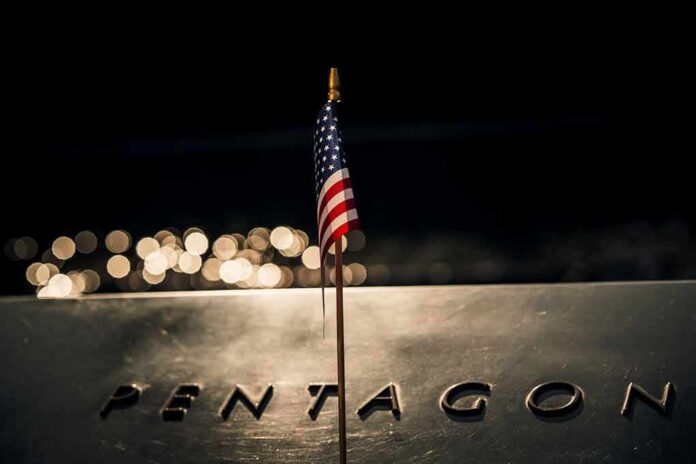
The Pentagon has ordered all defense personnel to stop using inside military information to place bets on prediction markets, warning that doing so can trigger criminal charges.
Story Snapshot
- Defense Secretary Pete Hegseth banned betting based on classified or other nonpublic military information.
- The memo names Polymarket and Kalshi and warns of possible criminal and military penalties.
- Federal prosecutors charged a U.S. soldier with using classified details of a secret raid to bet for profit.
- Regulators allege about $33,000 in wagers tied to the raid and multiple pre-raid trades.
Pentagon Issues Ban On Insider Betting By Defense Personnel
Defense Secretary Pete Hegseth directed all Department of Defense personnel not to use nonpublic information to place bets on U.S. military operations. The October 20, 2026 memorandum, reported by national outlets, applies to classified and unclassified nonpublic information. The memo specifically names prediction platforms Polymarket and Kalshi. It warns that violating the order can lead to administrative discipline, criminal charges under federal law, or action under the military justice code.
The new rule signals that the Pentagon views insider betting as a security and ethics risk, not a niche hobby. Senior leaders argue that trades tied to missions can create public signals that adversaries might watch. They also argue that a service member who holds a financial position on an outcome could have skewed judgment while planning or executing a mission. The department is moving to close gray areas by covering unclassified but nonpublic information as well.
Recent Criminal Case Provides The Enforcement Backdrop
The Justice Department charged an Army special forces soldier in April with using classified information to profit on a prediction market. Prosecutors say he helped plan and carry out a U.S. operation to capture Venezuela’s Nicolás Maduro, and then used that inside knowledge to place winning bets before the raid. The indictment frames the conduct as fraud and misuse of confidential government information under federal law. A related civil complaint by regulators presents trading records to support the claim.
Reporting on the case describes both the scale and the timing of the alleged bets. News outlets state that the total wagers were about $33,000, and that roughly a dozen trades were placed in the week leading up to the operation. The regulator’s complaint alleges that the soldier breached his duty by trading on contracts tied to the Maduro mission using sensitive nonpublic information. The criminal case is ongoing, and the charges are allegations, not a conviction.
Scope Of The Directive And How It Could Be Enforced
The memo’s reach covers service members and civilian personnel across the department. It bars using any nonpublic government information to make bets “including” on named platforms. That phrasing signals that enforcement is not limited to just the two platforms cited. The memo points to penalties available under existing law and under the Uniform Code of Military Justice, so commanders and investigators already have tools to act when they see a violation.
The choice to include unclassified but nonpublic information is a notable change. Many operational facts are not classified but are still sensitive before an action occurs. By writing the ban this way, the department closes a common loophole. It also reduces the risk that someone argues a trade was legal because the data were not marked classified. That can help investigators move faster and set clearer standards for the force.
Why Prediction Markets Raise Unique Security Concerns
Prediction markets invite fast, public, and global bets on real-world events. That makes them easy to watch and hard to police. Traders with inside knowledge can use even small clues for an edge, while adversaries can watch price moves for hints. Academic and policy work in 2026 describes growing concerns about informed trading in these markets and notes that government events can be high-risk because insider pools are small and information gaps are large.
Pentagon bans troops from betting using insider information
Hegseth announced the ban this past week in a memo titled “Do Not Compromise Military Operations for Personal Financial Gain.” The directive bars department members — civilian staff or uniformed troops — from using… pic.twitter.com/m0rtYK3hOo
— Armed Forces Press (@AFP_press) October 24, 2026
Regulators have also warned that using misappropriated material nonpublic information can violate federal anti-fraud rules. The Commodity Futures Trading Commission stated in 2026 that such misuse on prediction markets may fall under its rule against deceptive practices. That puts market bets in a similar legal space as insider trading cases in other markets, even as courts and agencies work through how to apply those standards to event contracts.
What This Means For Troops, Taxpayers, And Trust
This policy tries to protect missions and the people who carry them out. It also aims to defend public trust in the military’s judgment. Many Americans on the left and right fear that powerful insiders profit while regular people pay the price. A rule that blocks betting with government secrets speaks to that concern. It sets a clear line: if you serve the country, you do not get to cash in on the country’s secrets.
Sources:
cbsnews.com, justice.gov, abcnews.com, cnbc.com, cftc.gov, stripes.com, gambling.com