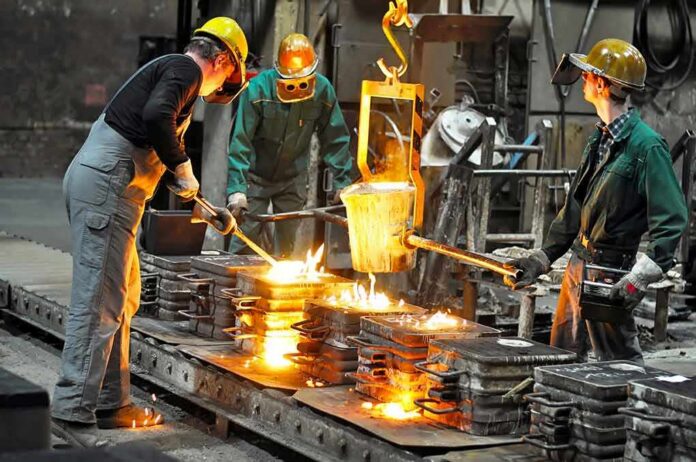
A 160-year-old Pennsylvania foundry will get a $300 million overhaul to make critical steel parts for U.S. submarines, aiming to fix a known bottleneck in the defense supply chain.
Story Highlights
- Hadrian bought Kutztown Foundry & Machine and plans a $300 million upgrade.
- Modernization targets naval-grade steel castings for Columbia- and Virginia-class submarines.
- The site had 49 workers and aims to add hundreds of skilled jobs over time.
- The Navy has flagged castings and forgings as core pinch points in submarine production.
Company Move: Acquisition and Major Capital Plan
Hadrian announced it acquired Kutztown Foundry & Machine in Kutztown, Pennsylvania, and plans to invest $300 million in the facility. The company said the project will add advanced software, automation, and new equipment. Hadrian framed the effort around naval-grade steel castings for U.S. submarine programs, naming Columbia- and Virginia-class boats. The acquisition price was not disclosed. Senator Dave McCormick called the move a chance to build the defense base and create good-paying jobs in the state.
Pre-acquisition reporting said the foundry employed 49 workers. Hadrian said modernization and a “Factory of the Future” at the site are expected to create hundreds of jobs as the project ramps up. The company did not publish a detailed budget for buildings, furnaces, robotics, or training. It also did not give specific output targets, like tonnage or cycle times. The public record so far reflects a defined plan and goals, not completed production gains.
Defense Need: Castings, Forgings, and Submarine Schedules
The Navy has warned for years that consolidated suppliers and long lead times have strained the submarine supply chain. The Navy’s public industrial base updates list castings and forgings among the highest-risk areas. These items are hard to source and slow to scale, but they are essential for hull, propulsion, and other critical systems. Navy documents describe single-source dependencies and constrained capacity, which raise schedule and cost risks for key programs.
Recent Navy industrial base reports outline projects to cut lead times and add supplier capacity. Those efforts include targeted support for foundries and heavy manufacturers. Reported results show faster delivery and higher output at some sites after modernization steps. The Navy’s shipbuilding plan also describes new spending to grow submarine supplier throughput across the next several budget years, with castings and forgings a frequent focus area.
Local Impact: Jobs, Skills, and a Legacy Plant
The Kutztown facility dates to the 1860s, making it a rare survivor in a sector that has seen many closures. Hadrian said every existing worker joined the company as an owner, signaling a stake in the plant’s future. The company aims to blend historic know-how with modern software, robotics, and quality systems. The plan points to training and advanced processes that can expand output while lifting safety and consistency, which are crucial for naval-grade work.
BREAKING: Hadrian has acquired a 160-year-old American foundry to tackle a critical bottleneck in U.S. nuclear submarine production.
Founded in 1866, Kutztown Foundry & Machine has specialized naval steel-casting capabilities. Limited domestic casting capacity is a major… pic.twitter.com/61kUfv1ewl
— Atoms Not Bits (@AtomsNotBits) November 16, 2026
Pennsylvania leaders have pushed to rebuild industrial jobs that support national defense. Senator McCormick highlighted the chance to bring hundreds of skilled roles to Berks County. That message tracks with a wider push to reconnect defense demand with local manufacturing. Still, the public materials give no breakdown of positions or wages yet. Hiring totals, training timelines, and job classifications will likely surface as construction and tooling advance.
What to Watch: Timelines, Capacity, and Qualification
Project milestones will determine when new furnaces, machine tools, and automation come online. Naval-grade castings also require strict qualifications, audits, and material certifications. Those steps take time but set the standard for repeatable quality. If the plant meets those bars, it could shorten lead times for submarine parts. Faster and more reliable deliveries would support schedules for Columbia- and Virginia-class submarines, which rely on steady supplier flow to hit build targets.
Public data does not yet list contract numbers, specific components, or target tonnage for the Kutztown site. That level of detail is often limited by company policy or security rules. For now, the signal is clear: a legacy foundry will receive a large investment to boost a critical link in the submarine supply chain. The next phase will show whether dollars, equipment, and training translate into faster parts, more capacity, and durable jobs in Pennsylvania.
Sources:
insidedefense.com, prnewswire.com, usni.org, payneinstitute.mines.edu