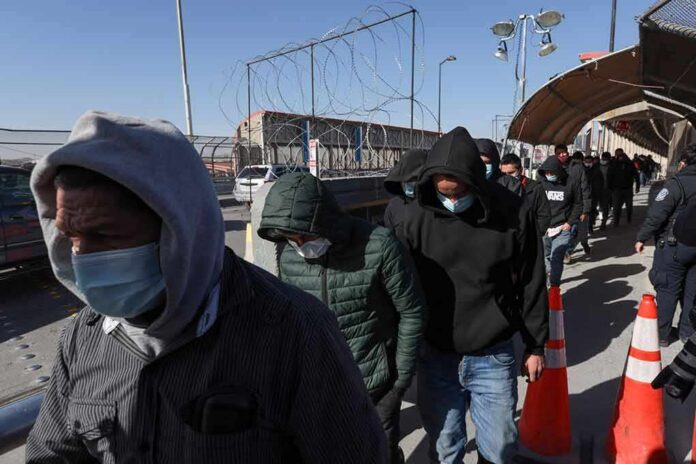
President Trump threatened to immediately double tariffs on Mexico unless it stops a northbound migrant caravan, raising fast-moving trade and border stakes in one stroke.
Story Snapshot
- Trump tied Mexico’s handling of a new caravan to an immediate tariff hike threat.
- Reporters counted about 1,500 migrants leaving Tapachula and heading north.
- Mexico’s president urged cooperation, not threats, and denied policy changes due to U.S. pressure.
- Legal authority for instant tariff doubling remains unclear after recent court rulings.
What Happened: Tariff Threat Linked to Migrant Caravan
On November 12, President Trump said Mexico “must stop” a migrant group moving through southern Mexico or face an immediate doubling of tariffs on Mexican goods. He said the migrants “will not be accepted” and warned there would be “no leniency” for anyone who tries to cross. His statement directly tied Mexico’s actions on the caravan to U.S. trade costs, signaling a rapid policy lever across two sensitive issues: border control and supply chains. Bloomberg Law noted legal questions around such a tariff move.
That same day, Reuters reporting cited by major outlets said about 1,500 people, mostly from Central America, left Tapachula near the Guatemala border and began walking north. The reports did not cite evidence that the group had weapons or organized hostile intent. They also noted that migrants hoped the election could lead to better legal pathways, which explained expectations but did not prove the vote caused the caravan to form. Estimates varied, leaving the precise size uncertain across public claims.
How Mexico Responded and What It Says
Mexico’s President, Claudia Sheinbaum, pushed back on the use of tariffs and threats. She said Mexico’s approach is to build bridges with the United States, not close borders. She also said Mexico’s migration steps were already in place and were not a reaction to Trump’s new warning. She argued that solving migration and drug demand requires cooperation. She added that a caravan Trump raised with her would not reach Mexico’s northern border, while stressing Mexico would not close the border with the United States.
These statements show a wide policy gap. The White House linked trade pressure to fast action to block the group. Mexico emphasized planned enforcement and humanitarian handling without conceding to new U.S. demands. That gap matters for readers who run small factories, farms, and trucking firms that rely on cross-border inputs each week. A sudden tariff jump can squeeze margins and prices, even if it is later reversed, because orders, freight, and contracts move on tight timelines.
Legal Questions and Economic Stakes
Trade lawyers and reporters questioned what law would let the White House double tariffs “immediately,” especially after a recent Supreme Court decision that narrowed emergency trade powers. Bloomberg Law reported that the authority was unclear and that no timeline or operational standard was provided for what would count as Mexico “stopping” the caravan. That legal fog raises the odds of court fights and market whiplash if the threat becomes an action.
Tariffs are not an abstract tool. They flow into real costs for buyers and consumers. Federal Reserve research on past tariff waves found that trade policy can rapidly shift supply chains and raise input prices. Those effects can hit factory towns and grocery shelves, while also pushing companies to rework contracts or pass costs to buyers. The speed of change is the risk here: border shocks and tariff shocks together can ripple faster than most families or firms can plan for.
Security Claims and Known Unknowns
Trump has long argued that caravans can include “very bad actors,” a warning he has voiced since at least 2019. The current reports, however, did not identify specific criminal or terrorism links inside this group. That does not prove the group is safe or unsafe. It only shows what is on the public record today. The story remains a real-time test of two things at once: Mexico’s ability to manage mass movement and Washington’s willingness to tie border demands to trade penalties.
🚨🇲🇽 TRUMP THREATENS TO DOUBLE MEXICO TARIFFS
Trump: stop the 1,500-migrant caravan NOW — or tariffs on Mexico DOUBLE immediately.
**A tariff war with America's top trade partner is now on the table.**
Source: Reutershttps://t.co/3byzoIY5zj
— Tosh Petrovich (@inspiring_tosh) November 12, 2026
Both conservatives and liberals share a core worry that Washington reacts with slogans instead of plans. People on the right see weak border control and rising costs. People on the left see harsh tactics without fair process. Here, leaders are again trading threats on social media while agencies and courts sort the details. That cycle erodes trust. Clear numbers from United States and Mexican authorities on the caravan’s size, route, and arrests would help ground the debate and guide policy choices.
Sources:
facebook.com, news.bloomberglaw.com, rawstory.com, wfmd.com, elpasotimes.com