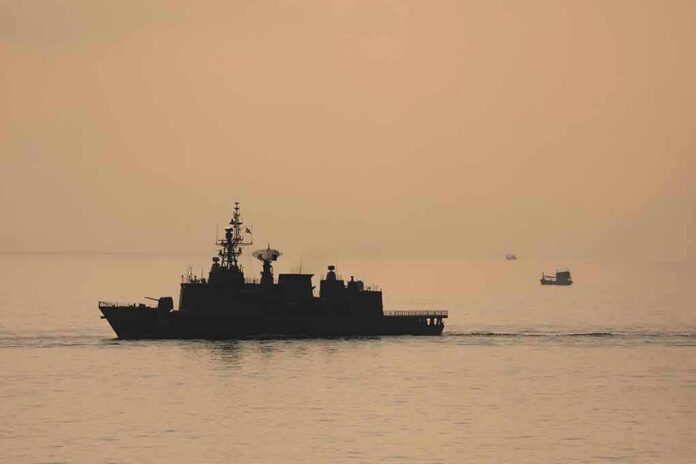
As tankers burned and war shut a vital oil route, a British swimmer spent three days in the Strait of Hormuz to warn that the water and its wildlife are getting hit too.
Story Highlights
- Lewis Pugh swam about 15 kilometers over three days to spotlight war’s environmental damage.
- A tanker strike occurred roughly four kilometers from his position during day one, according to his team.
- Pugh passed near a liquefied petroleum gas carrier that was on fire during the swim.
- He urged leaders to reopen the strait safely and clean up pollution harming marine life.
An Unusual Protest in a Global Chokepoint
On November 21, 2026, the Associated Press reported that British endurance swimmer Lewis Pugh completed a three-day, roughly 15-kilometer effort in the Strait of Hormuz to draw attention to damage from the ongoing conflict on the waterway’s habitat and wildlife. The route ran along parts of the strait, beginning near Oman’s Musandam Peninsula and moving toward the Cape of Hormuz. The Lewis Pugh Foundation supplied photographs showing him in the water on multiple days during the attempt.
British Broadcasting Corporation News reported that on day one a tanker was hit by a projectile about four kilometers from Pugh’s position, according to his team. Images and accounts describe heavy smoke and oil on the water in places. Later, he swam near an active fire on the liquefied petroleum gas carrier Tara Gas, with flames still visible as he passed the area. The athlete framed the swim as a warning: the war’s spills, soot, and debris are pushing stress onto coral, fish, turtles, and dolphins.
Why This Waterway Matters Far Beyond the Gulf
The Strait of Hormuz is one of the world’s most important trade lanes for oil and liquefied natural gas, and turmoil there sends ripples through global supply chains, pricing, and security planning. United Nations Trade and Development analysis says military escalation has disrupted shipping flows through the narrow passage, raising risks for trade and the environment when traffic stalls or reroutes. When this chokepoint falters, costs rise for families and businesses far from the Gulf, and cleanup burdens often land on taxpayers.
When ships bunch up or get hit, oil and fuel leaks can foul coasts and shallow reef zones. United Nations Trade and Development warns that such disruptions add environmental risks, not just economic ones, as more vessels idle, burn fuel, or divert on longer routes that increase emissions. Pugh’s message lines up with those concerns. He called for a safer reopening of the passage and active cleanup to protect marine life. That pitch speaks to a basic expectation many share: keep trade moving without poisoning the water.
What He Did—and What He Did Not Claim
Reports describe Pugh swimming parts of the strait over three days rather than a single, shore-to-shore crossing of its full width. That detail matters for measuring the feat but does not change the core point: he entered a live conflict zone to spotlight environmental harm. He tied his actions to his public role as a United Nations environment advocate for oceans, which helps explain the method and message behind the swim. The photos released by his foundation support that he was in the waterway during the reported period.
British endurance athlete Lewis Pugh has completed a three-day swim through the Strait of Hormuz while tankers came under attack nearby. pic.twitter.com/tfhbQNtCXI
— Firstpost (@firstpost) November 23, 2026
For readers on the left and right, the stakes connect to deeper trust issues. People expect government and industry to keep vital routes safe, honest, and clean. Instead, they often see finger-pointing while oil burns, wildlife suffers, and costs pass to everyday families. Pugh’s swim will not fix policy. But it does focus attention on practical steps most Americans agree on: reduce the shooting, reopen the lane safely, hold polluters to account, and protect both trade and the sea that supports it.
Sources:
insiderpaper.com, haaretz.com, theconversation.com