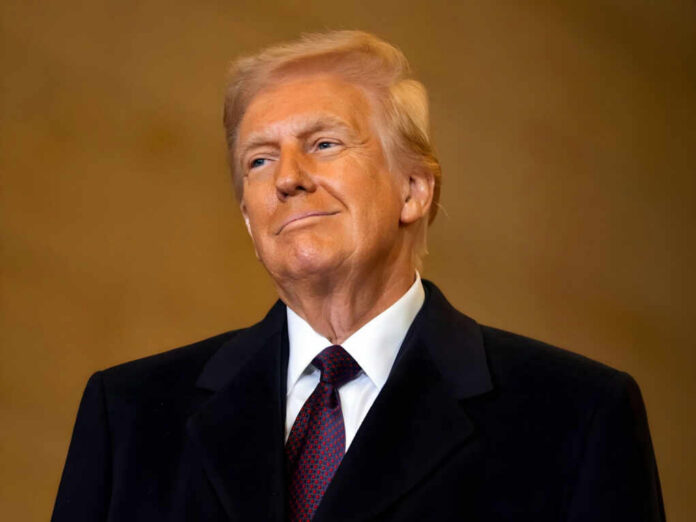
President Trump’s late-night social media activity once again sparked national conversation after he reposted digitally altered images depicting himself carved into Mount Rushmore, raising questions about political messaging in the age of artificial intelligence.
Story Snapshot
- Trump reposted supporter-created images showing his face on Mount Rushmore alongside Washington, Jefferson, Roosevelt, and Lincoln
- National Park Service confirms no additional carvings are possible due to geological instability and lack of suitable rock face
- The posts highlight the growing trend of AI-generated political imagery and its role in shaping public discourse
- Trump’s amplification of supporter content reflects his ongoing connection with his base and use of alternative platforms
Digital Images Spark Monument Debate
Former President Donald Trump shared digitally manipulated images on Truth Social showing his likeness carved into Mount Rushmore’s granite face. The posts, originating from supporter accounts including one user identified as “Patriotic American Alpha Sauce,” depicted Trump’s face positioned among the monument’s existing presidential figures. One image showed Trump’s visage looming over George Washington’s shoulder, while another featured him grinning beside an empty section of the monument. These posts generated immediate reaction across political divides, with supporters viewing them as celebratory tributes while critics labeled them exercises in vanity.
Monument’s Physical Limitations Prevent Expansion
The National Park Service has definitively stated that Mount Rushmore cannot accommodate additional presidential carvings. The monument, completed in 1941, features Washington, Jefferson, Theodore Roosevelt, and Lincoln carved into South Dakota’s Black Hills. Geological surveys confirm rock instability and insufficient stable granite prevent any expansion of the existing sculptures. Trump previously visited Mount Rushmore on July 3, 2020, delivering an Independence Day speech emphasizing American heritage. That visit drew both supporters celebrating traditional values and critics highlighting the site’s location on land sacred to the Lakota Sioux, demonstrating the cultural complexities surrounding national monuments.
Supporter-Generated Content Shapes Political Messaging
Trump’s reposting pattern reflects a broader phenomenon where political figures amplify supporter-generated content to maintain base engagement. Artist Jon McNaughton previously created speculative paintings depicting Trump on Mount Rushmore, marketing them as representations of “a true champion for American ideals.” These artistic interpretations, while commercially motivated, demonstrate grassroots enthusiasm among segments of Trump’s supporter base. The symbiotic relationship between political figures and their most dedicated followers has intensified through social media platforms, particularly those offering alternatives to mainstream outlets. This dynamic raises questions about authenticity versus manufactured political theater in modern campaigns.
AI Technology Transforms Political Communication
The emergence of accessible image-editing and AI tools has fundamentally altered political messaging capabilities. What once required professional graphic design skills can now be accomplished by ordinary citizens with basic software. This democratization of image manipulation presents both opportunities and challenges for political discourse. Supporters can create compelling visual messages celebrating their preferred candidates, while the same technology enables misleading or deceptive content. The Trump Mount Rushmore images, while obviously fictional, illustrate how digital alterations blur lines between aspiration, satire, and propaganda. As AI technology advances, distinguishing authentic communications from manipulated content becomes increasingly difficult for average citizens trying to stay informed.
Cultural Divide Reflects Deeper Frustrations
Reactions to Trump’s posts reveal the persistent cultural divisions frustrating Americans across the political spectrum. Supporters interpret the images as justified recognition of Trump’s defense of traditional American values against what they perceive as relentless attacks from liberal elites and biased media. Critics view the posts as narcissistic self-aggrandizement disrespecting the monument’s historical significance. Both perspectives share underlying frustration with institutions they believe fail ordinary citizens. Whether concerned about woke agendas eroding foundational principles or worried about discrimination against marginalized communities, Americans increasingly question whether elected officials prioritize their own power over solving problems that prevent hardworking citizens from achieving the American Dream through determination and initiative.
Sources:
Donald Trump Re-Posts Edited Image of Himself on Mount Rushmore – Business Insider
Trump Rushmore Photos – Getty Images
Trump Rushmore – Jon McNaughton Art