A 16-year-old opened fire at an Oregon elementary school, killing three children and a teacher before being stopped inside the building, according to police accounts.
Story Highlights
- Police say a teen gunman forced his way into Silver Rail Elementary and killed four people.
- Officers found the attacker down inside the school within minutes of the first 911 calls.
- A community member reportedly pursued and engaged the suspect before he was killed.
- The event fits a rare but damaging pattern of school violence tracked by federal reports.
Police Timeline: Rapid Calls, Fast Entry, Suspect Down
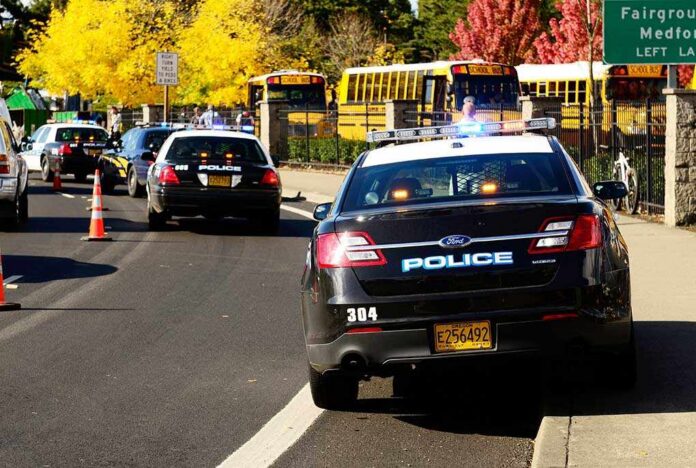
Bend police said the first 911 call came just before 1 p.m., reporting shots into a vehicle outside Silver Rail Elementary. Additional calls quickly followed from inside the school. Officers arrived within minutes and moved in. They located the suspect down inside the building and began aid and evacuations. Officials said three children and a teacher were killed. The suspect, identified as a local 16-year-old, also died at the scene, police said.
Police leaders described a violent entry. They said the attacker shot at locked doors to get inside. That breach triggered more calls and a rapid response. Officers secured classrooms, guided children and staff out, and searched for any additional threats. The report said two people were also taken to hospitals with injuries. The school district and local agencies set up reunification sites for families and arranged crisis counseling for students and staff.
Community Member’s Role: Pursuit and Engagement Inside
Bend Police Chief Mike Krantz said a community member pursued the teen into the school and engaged him before the suspect was killed. This account places a civilian in the path of the gunfire during the crucial early moments. Early briefings left open who fired the fatal shot, but officials credited the swift engagement for halting the attack. That intervention, paired with fast police action, likely reduced further harm inside classrooms and hallways.
Federal studies show some attacks end when citizens intervene. The Federal Bureau of Investigation (FBI) has reported that unarmed people have stopped a share of active shootings by tackling or restraining attackers. Those cases are not common, but they can save lives when seconds matter. Most events still end through police action or the attacker’s own actions. Schools now train staff and parents on simple steps to protect students until officers arrive.
Victims, School Security, and the Larger Pattern
Published reports named the victims as three students, ages 5, 8, and 11, and a teacher. Police did not share a motive. They also did not release details on the weapon, the number of shots, or the full room-by-room timeline. That information often takes time to confirm. Officials said investigators are reviewing 911 audio, school cameras, and forensic evidence to build a full picture of how the attack unfolded and how people responded.
Brother identifies Bend dad who confronted school shooting suspect
The shooting at Silver Rail Elementary occurred Thursday, Oct. 15. In reporting published Friday, Oct. 16, NBC News said Giamanco’s brother told the outlet that Giamanco, a 36-year-old carpenter and… pic.twitter.com/UqXfGioYXk
— John Alayi (@realjohnalayi) October 16, 2026
National data puts the attack in context. The FBI counted 48 active-shooter incidents in 2023, up sharply from 2019. Education sites made up a small share, but the harm in schools is severe and lasting. In 2023, five percent of active-shooter incidents occurred in education settings, according to the FBI’s annual report. Even one attack can upend a town, shake parents’ trust, and strain police, hospitals, and schools for months.
Why This Hits a Nerve Across the Aisle
Parents on the right and left want safe schools and quick, competent responses. Many feel leaders talk more than they act. They see layers of security rules, funding fights, and politics that do not fix basics like locked doors that hold, drills that work, radios that connect, and officers who can get inside fast. This case will renew attention on school entry points, alarm systems, and how communities train for the first critical minutes.
People also worry about warning signs in teens and who steps in early. Threat assessment teams, clear reporting paths, and faster mental health help can make a difference. The data show some attacks are averted when someone speaks up and trained adults act. Families want proof that systems work when it counts, not only after a tragedy. They expect honest timelines, released records when allowed by law, and steady follow-through long after the cameras leave.
What To Watch Next
Expect a fuller timeline from Bend police with dispatch logs, school video, and ballistic results. Look for clarity on the bystander’s actions and whether police link any lifesaving steps to that intervention. The school district will review locks, cameras, and drills. State and federal officials may offer grants for secure entries and radios. Parents will ask how those dollars turn into working doors, faster alerts, and training that helps save lives in real time.
Communities cannot control when evil strikes, but they can control speed, access, and coordination. Every second counts. Clear roles for staff, parents, police, and even nearby citizens can close the gap between first shots and first aid. That is not about politics. It is about keeping children alive and making sure government systems serve the people they are meant to protect.
Sources:
youtube.com, wdsu.com, newsweek.com, denverpost.com, politico.com, wjla.com, fbi.gov, ucr.fbi.gov