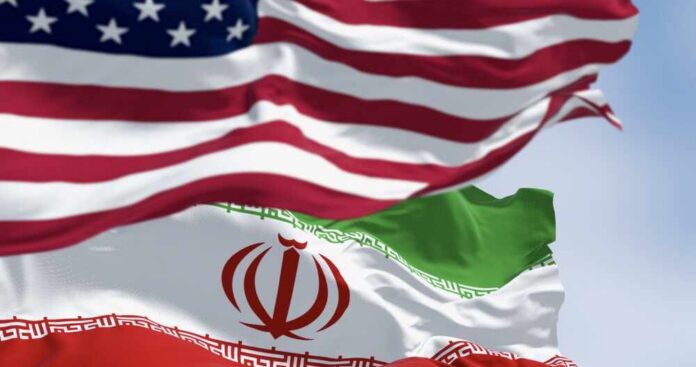
A fierce fight has broken out over whether a possible Iran deal secretly hands Tehran billions in cash upfront — and Vice President JD Vance is calling the reports “fake information.”
Story Snapshot
- Vice President JD Vance says Iran will get **no cash upfront** just for signing or attending talks.
- Media leaks claim draft language once included **immediate access to frozen Iranian assets**, fueling backlash.[6]
- The White House says any economic relief would come **only after Iran fully meets strict nuclear and security terms**.[1][2]
- Confusing and changing reports echo past Iran debates, where **drafts and rumors were treated like final giveaways**.[6]
Vance Pushes Back on ‘Fake’ Claims of Upfront Billions
Vice President JD Vance has moved to calm outrage among conservatives by flatly denying that Iran will receive cash or assets just for showing up to negotiations or signing a piece of paper.[1][5] In a statement reported by Iran International, Vance said there is “a lot of fake information” about a possible deal to reopen the Strait of Hormuz and limit Iran’s nuclear program, and he insisted Tehran would receive “no cash simply for signing an agreement or attending talks.”[1] Vance’s message targets a core concern for many Americans who remember the pallets of cash and sanctions relief under the Obama-era Iran deal, which critics saw as rewarding a hostile regime.
Reports over the past week claimed that the emerging peace framework would unlock billions of dollars for Iran right away, including rumors of a $3 billion transfer routed through the United Arab Emirates.[2] Officials in Abu Dhabi have publicly rejected those stories as “false and unfounded,” saying no such transfer has taken place. Vance’s team is aligning with that denial, arguing that none of Iran’s frozen funds are being released upfront and that any economic relief will be tied to strict, verifiable steps by Tehran.[1] This structure is meant to reassure Americans that the Trump administration is not cutting another blank check to the world’s leading state sponsor of terrorism.
Leaks, Drafts, and a Fight Over ‘Cash for Concessions’
Even as Vance denies upfront payments, some media reporting has pointed to language in earlier drafts that would have given Iran immediate access to frozen assets once a deal was signed.[6] CBS News coverage said a draft memorandum “did include” the United States accepting the release of $12 billion in frozen Iranian assets, even while stressing that negotiators were still “very close” but “not there yet” on a final agreement.[6] That kind of reporting feeds a familiar narrative: one side frames the deal as “cash for concessions,” while the administration argues it is “conditional relief” locked behind strict compliance triggers.[6] For conservative readers who remember past broken promises by Iran, early talk of billions in unlocked funds sounds like the start of another bad bargain.
The confusion has deepened because talks have been fluid and sometimes contradictory. After a marathon 21-hour session in Pakistan, Vance told reporters that the United States was leaving Islamabad “without a deal” after Iran refused to accept a long-term ban on nuclear weapons development and other key conditions.[3] At the same time, Iranian and Pakistani officials have spoken hopefully about agreed texts and future steps, fueling speculation that some kind of understanding is still near.[2][6] This gap between on-the-record statements and off-the-record leaks lets critics and supporters alike cherry-pick details, turning negotiation drafts into political weapons well before any final text is made public.[6]
Conditional Relief, Nuclear Red Lines, and Conservative Concerns
According to outlets that have spoken with White House officials, the United States is framing the deal as strictly conditional: Iran would have to dismantle key parts of its nuclear program, give up highly enriched uranium, and accept on-site destruction or removal of nuclear material before any economic relief begins to flow.[2] Coverage of these talks says the American side is demanding strong guarantees that Iran cannot build a nuclear weapon, and Vance has described the proposal on the table as a “final offer” centered on that red line.[3][6] From a conservative standpoint, that focus on hard nuclear limits and verifiable steps is essential, but many will still worry that once money starts moving, pressure on Tehran will fade and old patterns of cheating and delay will return.
What makes this fight especially tense is the memory of earlier deals and payouts. Fact-checkers and advocacy groups have documented how the Obama administration sent roughly $1.7 billion to Iran as part of a settlement over a decades-old arms dispute, money critics linked politically to the 2015 nuclear deal even though the White House framed it as a separate legal payment. That history leads many Americans to distrust any claim that “this time is different.” Vance’s insistence that Iran gets “no funds just for showing up” is clearly meant to draw a sharp line between the Trump approach and the old way of doing business.[5] Still, until the full text of any agreement is public, the battle over whether this is a tough, conditional deal or another quiet windfall for Iran will continue.
Sources:
[1] Web – Vance denies that Iran will receive “billions of dollars of assets” in …
[2] YouTube – No deal after 21 hours. JD Vance Says US–Iran talks fail
[3] Web – Vance says Iran deal would release no cash for signing or talks
[5] YouTube – Trump And Vance Angrily Deny Peace Deal Favors Iran
[6] Web – Trump recently edited possible U.S.-Iran agreement, including on …