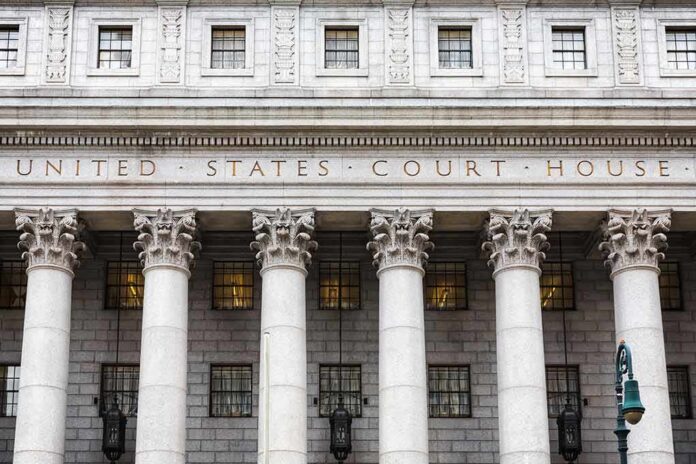
A federal judge barred federal agents from pressuring California election workers and ordered new court oversight of sensitive election-related warrants just days before ballots are counted.
Story Snapshot
- A temporary restraining order blocks threats or coercion of election workers tied to alleged noncitizen voting.
- The court cited likely violations of the Voting Rights Act’s anti-intimidation protections.
- The order halts demands to segregate or reject ballots based only on federal allegations.
- The judge required notice to the court about election-related warrants and subpoenas.
What The Judge Ordered And Why It Matters
United States District Judge Trina Thompson issued a temporary restraining order on October 30, 2026. The order bars the Department of Justice and the Department of Homeland Security from threatening, intimidating, or coercing California election officials. The judge found that the federal push, framed as stopping unlawful noncitizen voting, was likely to interfere with election administration and disenfranchise lawful voters. The ruling cites the Voting Rights Act’s ban on intimidation of people who help others vote, placing quick guardrails on federal conduct.
The order also blocks demands to remove voters from rolls, deny ballot requests, or set aside ballots based only on a federal allegation that a person might be ineligible. Thompson directed the Department of Justice to notify the court if it seeks search warrants, grand jury subpoenas, or other demands for election materials or testimony tied to allegedly ineligible voters. The order runs through mid-November unless extended, creating a short-term buffer around ballot handling while the case proceeds.
How We Got Here: The 20,000-Name List And A Clash Over Ballots
The Trump administration said it identified about 20,000 California voter records linked to likely noncitizens and asked officials to set aside any related ballots until citizenship could be verified. California officials countered that the list was unverified and contained lawful voters, and a federal appeals court declined to require mass ballot segregation days earlier. A county’s preliminary review of a sample found many entries showed no voting history and even United States birth, raising accuracy concerns.
Federal prosecutors maintained they had credible evidence of unlawful registrations. They argued that state and county leaders risked commingling lawful and unlawful ballots by not segregating the 20,000 flagged records. A federal agent said the investigation used roughly 800 employees to manually check names and disputed the county’s preliminary findings in an affidavit. Those claims now sit against the court’s warning that aggressive federal actions could chill normal, lawful election work and harm eligible voters.
What This Means For Voters, Officials, And Trust
Election workers face pressure when federal letters, subpoenas, or criminal warnings arrive close to counting time. The judge’s order aims to reduce that pressure so workers follow state rules without fear of prosecution. The ruling does not decide who is eligible. It sets near-term limits on tactics that could scare officials into discarding or segregating ballots based only on disputed lists. The Ninth Circuit’s recent rebuff of mass segregation supports this caution for now.
Both sides raise real concerns shared by many Americans. People want clean rolls and fair counts. People also fear that blunt purges or rushed demands will sweep in citizens by mistake. Past list-matching drives in other places have produced notable errors, which fell on lawful voters. That risk is why courts often slow sudden, sweeping changes close to Election Day, especially when tools of criminal investigation are in play. Expect appeals and more filings as the clock runs.
Sources:
thegatewaypundit.com, wltx.com, cbsnews.com, fox59.com, news.bloomberglaw.com, nbcnews.com, nytimes.com, nbclosangeles.com, democracydocket.com, nbcbayarea.com