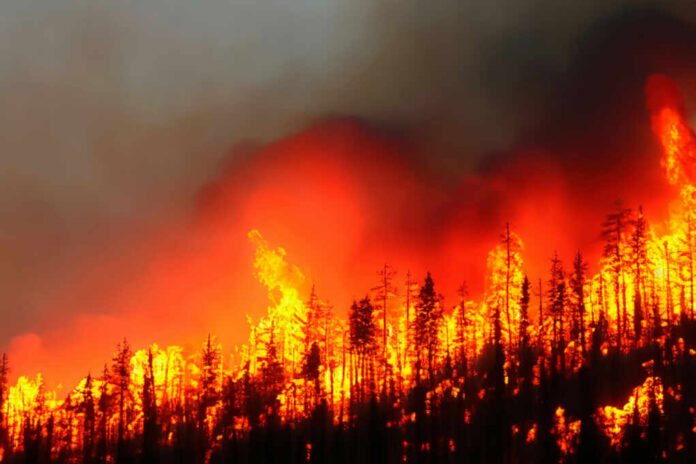
A massive wildfire in Riverside County exploded from 50 acres to over 4,000 acres in mere hours on April 3, forcing thousands of California residents to flee their homes as wind-driven flames raced through bone-dry brush that federal and state land mismanagement left vulnerable to catastrophic burning.
Story Snapshot
- Springs Fire near Moreno Valley erupted from 50 to 4,000+ acres in approximately three hours with zero containment
- Mandatory evacuations ordered for thousands as 30+ mph winds drove spot fires into residential neighborhoods
- Steep terrain blocked fire truck access, forcing exclusive reliance on hand crews and helicopter water drops
- Concurrent Crown Fire in Acton strains Southern California firefighting resources amid ongoing dry conditions
Explosive Growth Overwhelms Firefighting Efforts
The Springs Fire ignited at approximately 11:00 a.m. on April 3, 2026, off Gilman Springs Road in Riverside County as a modest vegetation fire covering roughly 50 acres. Within 30 to 40 minutes, ferocious winds gusting over 30 mph transformed the blaze into a 1,000 to 1,500-acre inferno racing uphill through dense dry brush. By early afternoon, aerial helicopter footage from news crews captured the fire’s explosive expansion to between 3,500 and 4,000 acres, with dark smoke billowing across the Moreno Valley skyline and spot fires igniting in backyards as desperate residents scrambled to evacuate.
Terrain and Weather Fuel Uncontained Blaze
Steep, rocky foothills choked with tinder-dry brush created ideal conditions for rapid fire spread while simultaneously preventing ground-based fire trucks from reaching the flames. Firefighters deployed hand crews and air resources, including helicopters making repeated water drops, but reported zero percent containment as of April 3 afternoon coverage. Eastern winds flattened smoke plumes horizontally, a visual indicator of high-velocity gusts that scattered embers widely and ignited multiple spot fires ahead of the main flame front. Recent precipitation had kept brush shorter than typical drought years, but officials confirmed the vegetation remained “ripe for fire development,” underscoring ongoing risks from inadequate land management practices.
Thousands Under Mandatory Evacuation Orders
Riverside County fire officials issued mandatory evacuation orders for neighborhoods throughout Moreno Valley as the fire threatened populated areas. Aerial footage captured residents hastily packing valuables into vehicles, while one homeowner resorted to scooping pool water to dampen brush near his property line in a last-ditch defense effort. Reporters on the scene emphasized the urgency with blunt warnings: “You must get out now,” as dark smoke signaling nearby flames loomed over evacuation zones. The displacement of thousands of residents adds to growing frustration over California’s perpetual fire crises, which critics attribute to decades of environmental policies that prioritize regulatory overreach over common-sense forest and brush management.
The Springs Fire struck while firefighting resources already faced strain from the simultaneous Crown Fire burning in Soledad Canyon near Acton, which also ignited around 11:30 a.m. on April 3. This dual-threat scenario highlights Southern California’s vulnerability during wind-driven fire conditions, a recurring pattern exacerbated by dry vegetation left unchecked on state and federal lands. The broader economic toll includes escalating suppression costs, potential property losses, and long-term environmental damage such as increased erosion and flood risks on scorched hillsides, all burdens ultimately borne by taxpayers already struggling with inflation and high living costs under failed state policies.
Land Mismanagement Fuels Recurring Crisis
Southern California’s chronic wildfire problem stems from systemic failures in vegetation management on public lands, where excessive environmental regulations have prevented necessary controlled burns and brush clearance. While prior rainfall modestly reduced brush height, officials confirmed the vegetation remained dangerously flammable, a predictable outcome when bureaucratic red tape blocks proactive land stewardship. The reliance on reactive helicopter drops and hand crews, rather than preventing fires through fuel reduction, wastes taxpayer dollars and endangers lives. This latest blaze underscores the urgent need for policy reforms that prioritize public safety and property rights over the inflexible environmental agendas that have left California communities perpetually at risk from preventable disasters.
Sources:
Southern California’s Springs Fire Explodes to 4100 Acres …
Evacuations lifted for 4100-acre Springs Fire in Moreno …
Springs fire burns 4000+ acres in Moreno Valley area as …