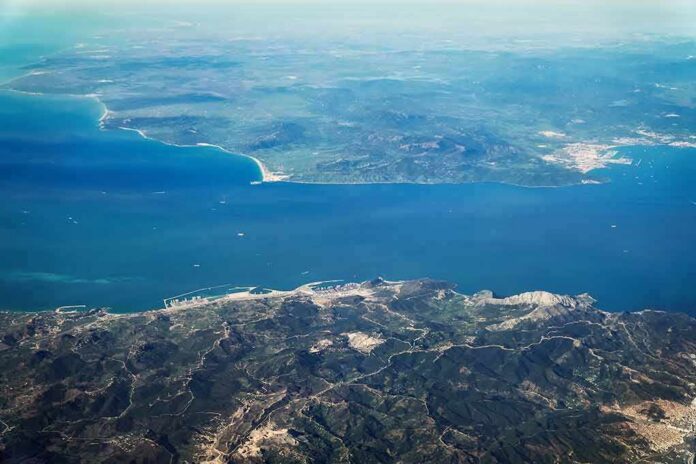
Houthi forces have pushed to islands inside the Bab al-Mandab, tightening a choke point that anchors U.S. and allied power near Djibouti.
Story Highlights
- Houthi fighters reached Red Sea islands and Perim after taking Mocha, near the Bab al-Mandab choke point.
- Control around the strait threatens global shipping and energy flows linking Europe and Asia.
- Analysts say disruption is possible without full territorial control, raising costs and risks for trade.
- Camp Lemonnier in Djibouti remains a key U.S. hub as great-power competition grows in the Horn of Africa.
What Advanced And Why It Matters
Reuters reported that Houthi militants reached the Red Sea Hanish islands after taking Mocha, and then moved to Perim Island in the middle of the strait. France 24, citing Agence France-Presse, described Houthi control across Yemen’s Red Sea coast after a rapid offensive that included three strategic islands. These positions sit beside the narrow channel that links the Red Sea to the Gulf of Aden. That corridor carries oil, manufactured goods, and food between Europe, Asia, and the United States.
The Bab al-Mandab is a true bottleneck. Ships that avoid it must sail around Africa, which adds time, fuel, and insurance costs. During past Red Sea crises, freight prices and delivery times jumped. The Washington Institute and other analysts say the Houthis can raise risk with drones, missiles, and sea mines, even if they do not hold every shoreline cliff or town. That kind of pressure can ripple into higher prices worldwide, especially for energy and key goods.
How The Chokepoint Shapes U.S. And Allied Options
The United States runs major counterterrorism and maritime security missions from Camp Lemonnier in Djibouti. That base supports patrols, surveillance flights, and logistics across East Africa and the Arabian Sea. Independent assessments say the base’s footprint is steady but focused, not massive, which can limit rapid surge options if a crisis widens. When a hostile group gains reach near a chokepoint, every convoy, tanker, and warship faces more risk and requires more escorts and air cover.
The new Houthi positions come after years of attacks against ships in the southern Red Sea and Gulf of Aden, including drones and anti-ship missiles tracked by open-source and government reporting. During the Gaza and Lebanon wars, targeted strikes and seizures turned parts of the Red Sea into an area ships tried to avoid. That pattern shows how a smaller force can impose real costs. The Houthis can threaten traffic, test U.S. resolve, and raise pressure on regional rivals without a conventional navy.
What Each Side In America Sees At Stake
Conservatives see a security failure that endangers supply chains, raises fuel costs, and rewards an Iran-backed militia. They want stronger deterrence, clear rules of engagement, and faster action to protect sea lanes. Liberals see a risk of mission creep and higher consumer costs from another distant conflict. They want tight goals, allied burden-sharing, and safeguards for civilians and trade. Both sides agree the government must keep commerce moving and prevent another long, costly entanglement abroad.
Americans also see a deeper pattern. A small group with the right weapons can upset global markets and challenge great powers. That reality feeds the belief that Washington reacts late, spends big, and struggles to deliver basic security. Voters across the spectrum worry that agencies manage headlines, not outcomes. Restoring confidence will require clear objectives, measurable results at sea, and honest updates on costs, timelines, and risks to U.S. troops and taxpayers.
What To Watch Next On The Water And Ashore
Watch for changes in ship routing and insurance rates through the Red Sea. Track any increase in naval escorts or strikes near Yemen’s coast. Look for signs of deeper Iranian support, which Reuters linked to past Houthi advances. Monitor coordination among the United States, European partners, and regional navies on surveillance, missile defense, and mine countermeasures. Finally, watch how Djibouti’s role evolves as a logistics hub amid rising rivalry among the United States, China, and others in the Horn of Africa.
The lightning quick Houthi advances have created a dilemma for the US as it transitions from global to regional hegemon.
The Houthis are now less than 100 miles from Camp Lemonnier, in Djibouti. That's similar to the distance from Iran to Bahrain, where the Iranians pounded
1/— Labrador Skeptic (@SaysSimulation) September 12, 2026
The bottom line is simple and urgent. The Houthis have moved into positions that can disrupt one of the world’s busiest sea lanes. Every extra day of risk near the Bab al-Mandab adds costs that reach U.S. families and businesses. Clear guardrails, allied action at sea, and pressure that targets capabilities—not civilians—offer the best chance to protect trade, avoid escalation, and keep a distant flashpoint from becoming another open-ended drain.
Sources:
redstate.com, aljazeera.com, theguardian.com, africa.businessinsider.com, hornreview.org, csis.org, france24.com