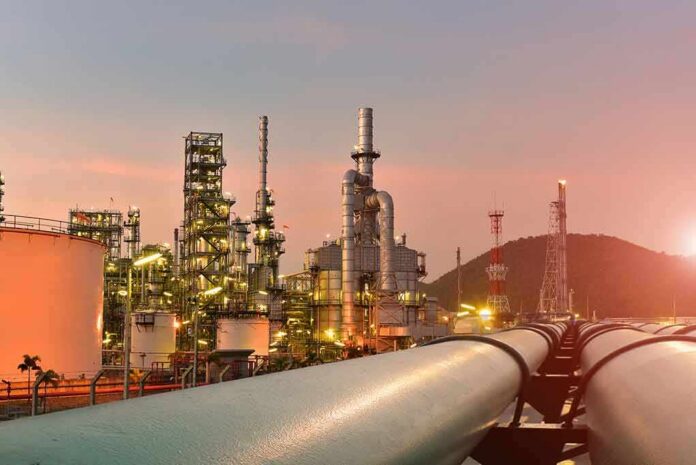
Ukrainian drones have slashed Russia’s fuel output to multi‑decade lows, forcing export limits and lighting critical refineries on fire, including Moscow’s own hub.
Story Highlights
- International Energy Agency reports Russian refining at its lowest in 20+ years
- Moscow’s main refinery, supplying about 40% of the city’s fuel, was knocked offline
- Russia curbed fuel exports as gasoline and diesel production fell sharply
- Attacks now hit refineries deep inside Russia, on average once every three days in 2026
Refinery Output Plunges Amid Repeated Drone Strikes
The International Energy Agency (IEA) said Russian refinery throughput fell to 3.8 million barrels per day in June 2026, the lowest level in more than 20 years and about 30 percent below the prior year. The agency linked the drop to a wave of Ukrainian drone attacks that damaged primary and secondary processing units across multiple plants. It reported gasoline output down about 20 percent and diesel output down nearly 30 percent, tightening supplies in key regions and straining logistics networks.
The IEA described a broad, sustained campaign rather than isolated hits, with a Russian refinery struck on average once every three days during the first eight months of 2026. That cadence spread damage across the map, far from front lines. Some facilities nearer to Ukraine have been hit more than a dozen times since 2022, stressing repair crews and spare parts chains. This pressure compounds maintenance needs, raising the risk that temporary outages stretch into longer disruptions.
Moscow’s Fuel Hub Knocked Offline After September Attack
Reporting identified the Gazprom Neft–owned Moscow Oil Refinery in Kapotnya as supplying about 40 percent of the capital’s fuel market. A September 20 drone strike ignited both primary processing units, halted refining, and sent plumes over the city’s southeast districts. The IEA later said the 250,000‑barrel‑per‑day facility was expected to remain offline until early 2027 due to damage to complex units that take months to repair or replace. That downtime forces Moscow to seek fuel from other regions at higher cost.
Russian officials also faced fires at the Ryazan refinery after a separate drone incident, which authorities acknowledged while emphasizing air defenses and response efforts. Ukraine has targeted refineries, storage, and related energy assets since 2022 to limit Russia’s war financing and fuel flows. This year, the strikes increased in pace and depth, reaching facilities many hundreds of miles from Ukrainian territory and underscoring gaps in layered air defense around industrial hubs.
Domestic Fuel Strains Trigger Export Limits and Rationing
As output fell, Russia moved to restrict fuel exports to protect domestic supplies, a step consistent with tighter gasoline and diesel availability inside the country. Reports described purchase limits at Moscow fuel stations during peak demand, linking them to refinery outages and seasonal needs. Export curbs help keep pumps supplied at home but shift pressure to global buyers who rely on Russian products, adding friction to an already tense energy market marked by sanctions, shipping risks, and insurance costs.
The IEA noted that repeated damage to complex units, such as catalytic crackers and reformers, lengthens repair timelines and can force expensive replacements. These units turn crude into higher‑value fuels. When they go down, refiners lose flexibility and yields drop. Managers can run simpler units, but product slates get heavier and less useful for drivers, farmers, and industry. That mix change ripples through storage and distribution, creating spot shortages even when crude volumes remain steady.
What This Means For The War And For Energy Markets
Energy has become a central front in the conflict, with Ukraine seeking to raise Russia’s costs by hitting refineries, while Russia keeps striking Ukraine’s power grid and economic sites. This is not a quick knockout. It is an attritional contest where cheap drones can force costly repairs, rerouting, and extra air defense. The IEA’s data shows clear pain on Russian refining, even as exact shares of “capacity disabled” remain a matter of claims and definitions across wartime narratives.
For Americans, the lesson is simple and sobering: when major fuel systems are under attack, prices and supply risk do not stop at borders. Sanctions, shipping detours, and refinery outages anywhere can raise costs everywhere. Conservatives see this as proof that energy security needs real capacity, not wishful thinking. Liberals see how shocks hit workers and widen gaps. Both can agree on this: when elites mismanage risk, regular people pay at the pump and in their power bills.
Sources:
youtube.com, apnews.com, almendron.com, independent.co.uk, iea.org