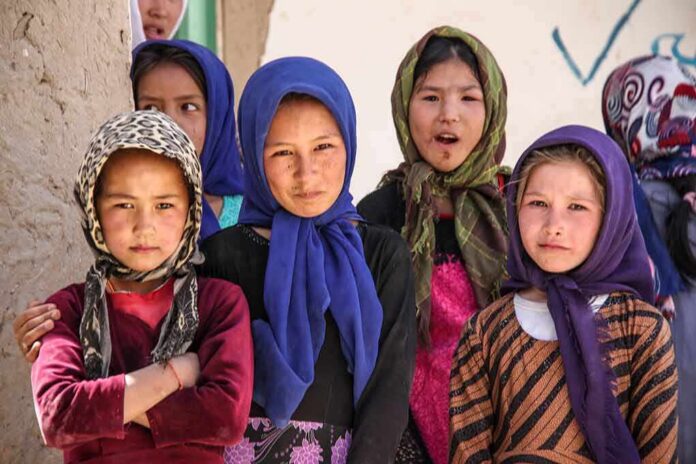
Afghan women are keeping girls learning in secret, even as millions remain banned from school.
Story Snapshot
- United Nations agencies say 2.2 million Afghan girls are barred from secondary school.
- UNICEF reports 445,000 children in community classes, 64 percent of them girls.
- Reporters documented underground classrooms and online lessons led by women.
- United Nations officials say Taliban restrictions on women’s work and movement are intensifying.
What Is Happening Inside Afghanistan’s Shadow Schools
United Nations groups and reporters describe a hidden school network run by Afghan women. Community-based classes supported by the United Nations Children’s Fund (UNICEF) now reach 445,000 children, and nearly two thirds are girls shut out of public schools. A PBS team filmed a secret classroom in Kabul and profiled women teaching online to teen girls across the country. Former United Kingdom Prime Minister Gordon Brown, now a United Nations envoy, urged support for “underground schools” and internet learning in 2024.
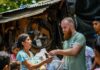
Associated Press journalists found girls studying in private homes in Kabul, some taught by young women without formal training. The picture is clear and sobering. Girls study in living rooms and basements. Lessons move if neighbors ask questions. Phones stay on silent to avoid attention. These tactics help learning continue, but they also show the limits. Not every class can cover full subjects or offer recognized exams, and teachers risk arrest or harassment if discovered.
The Ban That Forced Learning Underground
Afghanistan is the only country where girls and women are blocked from both secondary and higher education, according to the United Nations Educational, Scientific and Cultural Organization (UNESCO). The start of the 2025 school year brought the total number of girls denied secondary education to 2.2 million, a number that grows each year the policy stays in place. That ban is the reason community lessons exist. United Nations leaders have pressed the de facto authorities to lift it and restore basic rights.
United Nations reporting also says the restrictions reach far beyond classrooms. Women face rules that limit work, movement, and access to services. United Nations monitors documented closures of women-run beauty salons in homes and orders that make it harder for women to shop or hold jobs without a male guardian present. These steps shrink the space for women to earn income and to teach. When a home salon closes, a family can lose cash needed for data, light, and books that support secret classes.
Why This Matters To Americans Watching From Afar
This story speaks to a basic question of freedom and duty. Girls want to read, write, and plan a future. Mothers, sisters, and teachers are stepping up to help them, even when it is risky. United States readers across the political spectrum can agree on this: shutting down learning by force betrays core human values. When any government stops girls from learning, families lose hope, economies lose talent, and instability grows, which can spill across borders over time.
Some Afghan women quietly defy Taliban bans, by opening secret schools and running small businesses @AP @ElenaBec https://t.co/go4rjGH18b
— Mari Yamaguchi|山口真理 (@mariyamaguchi) November 17, 2026
United States policies have swung between intervention and restraint over the years. Many Americans now doubt that distant institutions, at home or abroad, act for regular people. This case shows why trust frays. Powerful leaders make sweeping rules; ordinary families improvise to protect their kids. United Nations agencies can count students in community classes and document abuses, but they cannot by themselves change the ban. The courage on display comes from citizens filling the gap left by failing systems.
What We Know And What We Do Not
The strongest facts come from United Nations agencies and on-the-ground reporting. UNICEF gives verified totals for community classes and the share of girls enrolled. UNESCO confirms that at least 2.2 million girls are locked out of secondary school. Reporters have seen secret lessons, heard from teachers, and described online models that reach teens across provinces. These facts back the core claim: covert and community classes are real, and girls are the main reason they exist.
Some details remain hard to pin down. No public census exists for every hidden class or business, and not all teachers are certified. That makes it tough to judge quality or scale beyond the cases we can see. Still, one point stands: as long as the ban lasts, underground learning will fill the gap, at personal risk to women who teach and the girls who attend. United Nations officials warn that each month lost deepens harm to a whole generation.
Sources:
youtube.com, media.un.org, pbs.org, unficyp.unmissions.org, news.un.org