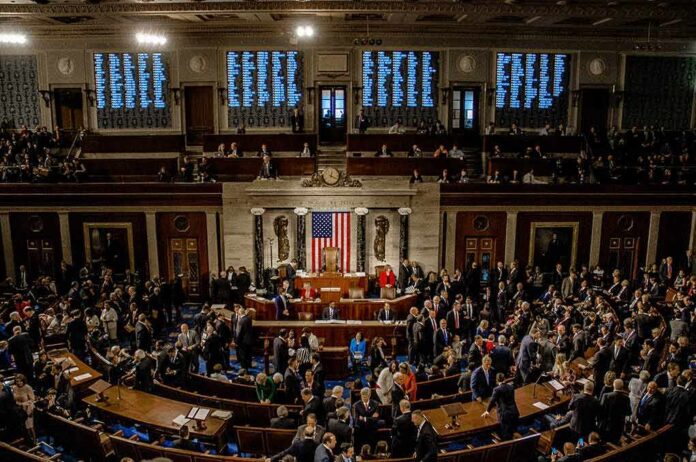
The core question is not whether a senator can craft a sharp TV sound bite; it’s whether the off-camera, unglamorous work of legislating is actually getting done—and multiple, specific reports from former aides and Pennsylvania Democrats say John Fetterman is skipping that work often enough to be consequential, while his defense rests largely on his own vote-count metric and continued committee assignments.
At a Glance
- Former staffers and allied Democrats describe a pattern of canceled meetings, light committee engagement, and office dysfunction under Sen. John Fetterman.
- Fetterman disputes the picture, pointing to roughly 90% vote participation in a recent period and his ongoing committee roles.
- The strongest evidence against him aggregates insider accounts across outlets; the strongest defense is numerical attendance on floor votes, which captures only a slice of the job.
- This fight reflects a broader accountability problem in Congress: the public sees the floor and the cameras, not the schedules, prep memos, and constituent work that define Senate performance between votes.
The case against: consistent, named outlets and converging accounts
The most detailed allegations come from half a dozen former staffers who told The Philadelphia Inquirer that Fetterman has routinely avoided meetings, skipped standard Senate work, and left aides to handle constituent and stakeholder sessions without him. Those accounts describe a senator who spends long stretches alone in his office, cancels engagements, and resists routine briefing materials—less an isolated bad week than a practice pattern. The Inquirer’s reporting was not a one-off; it dovetailed with an editorial call from the same paper urging Fetterman to take the job seriously or step aside, citing missed votes, thin committee presence, and a light footprint on the Senate floor. Later, Politico chronicled intraparty blowback after a Wall Street Journal report described similar behavior, including skipped duties and contemplated absences from high-salience constituent events.
These are not anonymous social-media broadsides; they are converging narratives from mainstream outlets with named editorial accountability, built on former staff voices and Democrats in Pennsylvania politics. Individually, any ex-staffer can carry grudges; collectively, across publications and time, their stories gain weight—especially where the allegations are specific (canceled meetings, limited committee engagement) and inherently verifiable by people in the room.
Fetterman’s defense: floor votes, committee seats, and skepticism of anonymous critics
Fetterman’s reply centers on a straightforward metric: he says he has made roughly 90% of Senate votes since January, arguing that his attendance rebuts the idea he is disengaged. NBC News captured that claim, along with his dismissal of ex-staffer critiques as smear tactics. He also points to ongoing service on Agriculture, Nutrition, and Forestry and on Homeland Security and Governmental Affairs—committee assignments that signal a formal role in the chamber’s machinery.
Those are not trivial points. Votes are the irreducible minimum of the job, and committee seats matter because that is where most bill text is negotiated, amended, and overseen. But votes are the end of a process whose quality depends on upstream work: hearing prep, stakeholder meetings, bipartisan bargaining, and constant constituent contact. A 90% floor-attendance figure can coexist with a thin presence in the work that informs those votes; it shows up for the roll call, not necessarily for the grind that gives a vote substance.
How Senate work actually gets done—and why the dispute fixates on meetings
Modern Senate offices run on three engines: committees, constituents, and coalitions. Committees are where executive branch oversight and bill-writing actually occur; constituents anchor a senator’s priorities with casework and local stakeholder feedback; coalitions—colleagues in both parties, interest groups, and home-state officials—are how an office builds leverage. Meetings sit at the center of all three. They feed the memos a senator reads (or doesn’t), set up the amendments a senator offers (or doesn’t), and resolve the conflicts that otherwise stall a markup. When former staffers describe canceled sessions and minimal meeting time, they are pointing to the specific habits that degrade an office’s capacity, even if floor votes are still being made.
Staff turnover compounds these effects. A revolving door at the top—particularly chiefs of staff, who orchestrate schedules, policy lanes, and interoffice discipline—predictably reduces throughput and continuity. While some churn is normal, an office repeatedly resetting its leadership often spends scarce political time reinventing its internal processes instead of advancing external goals; that dynamic is a common subtext in the criticisms reported by Pennsylvania media and national outlets.
What the evidence does—and does not—establish
On the scale of specificity, the allegations of canceled and rerouted meetings, light committee engagement, and staff frustration are detailed and come from multiple former aides speaking to established outlets; they are not definitive proof of neglect in a legal sense, but they carry practical credibility because they track how Senate work manifests day to day. On the defense side, the 90% vote-participation figure is concrete but narrow; it answers the charge of total absence from the chamber, not the broader critique of disengagement from the pre-vote workstream. Continued committee assignments show status, not participation intensity; every senator carries committees, but not every senator invests in them equally.
Health history has hovered in the background of this narrative, with Fetterman and his office emphasizing transparency and good standing with doctors. That context matters for empathy and fairness, but it is orthogonal to the central management question: is the office, as an institution, performing the constituent, committee, and coalition functions at a level Pennsylvanians should expect? The most consistent outside reporting says the performance has been uneven and, at times, intentionally minimal on the senator’s part.
The accountability lens: why this matters beyond one senator
Congressional accountability is persistently distorted by what the public can see. C-SPAN televises votes; no camera captures the two-hour meeting with a local hospital system about Medicare reimbursement that shapes a committee amendment. That asymmetry incentivizes public performance and allows a defense rooted in visible metrics—vote counts, cable hits—to crowd out the question that defines legislative effectiveness: is the invisible work getting done, reliably, with sufficient depth to move policy? In disputes like this, defamation law’s “actual malice” standard creates a high bar for legal remedies by public officials; the real check is political, not judicial, and it relies on rigorous, sourced journalism and constituent scrutiny rather than litigation.
How to judge performance going forward
Three signals cut through spin. First, committee throughput: bill sponsorships tied to substantive markups, hearing participation with evidence of preparation, and amendments that survive negotiation. Second, stakeholder engagement: a stable volume of on-the-record meetings with home-state institutions and communities that can corroborate face time with the senator himself, not just staff. Third, office stability: fewer senior departures over time and clearer lines of responsibility that stakeholders can navigate without cancellations or last-minute reshuffles. These are measurable, public-facing proxies for the unseen craft of legislating; they are also the areas where the criticisms have landed most directly.
Bottom line
The preponderance of specific, cross-sourced reporting supports a picture of Sen. Fetterman placing modest sustained effort into the routine, staff-intensive parts of Senate work, even as he cites a respectable recent voting record and maintains formal committee seats. Votes matter; the work that makes votes meaningful matters more. Pennsylvanians—and colleagues who depend on him in committee—should judge his performance on the full workflow of the job: preparation, presence, and follow-through, not just the tally on the board.
Sources:
feedpress.me, fetterman.senate.gov, en.wikipedia.org, rawstory.com, politico.com, theguardian.com