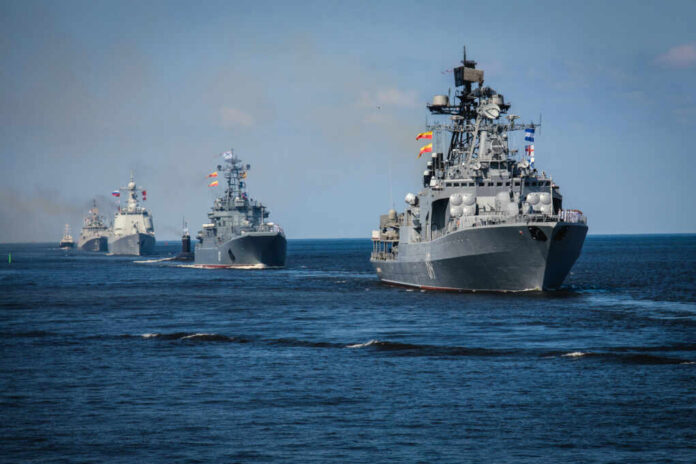
Iran just temporarily shut down parts of the Strait of Hormuz—the world’s most critical oil chokepoint—during military drills, and while markets barely flinched, the threat to America’s energy security and global stability remains alarmingly real.
Story Snapshot
- Iran closed sections of the Strait of Hormuz for live-fire naval drills, marking the first announced closure since the 1980s
- The strategic waterway handles 20% of global oil supply—approximately 20 million barrels daily—making it vital to world energy markets
- Markets showed minimal reaction to the temporary closure, but experts warn prolonged disruption could spike oil prices and fuel inflation globally
- The closure coincided with indirect U.S.-Iran nuclear talks in Geneva, highlighting dangerous escalation amid unresolved tensions
Critical Chokepoint Temporarily Shuttered During Military Exercises
Iranian Revolutionary Guard forces conducted live-fire naval drills Tuesday that temporarily closed portions of the Strait of Hormuz, a 33-kilometer-wide waterway between Iran, Oman, and the UAE. Iranian state media announced the closure for “safety and maritime concerns” as missiles struck targets within the strategic passage. This marks the first explicit closure announcement since Iran mined the strait during the 1980s Iran-Iraq “Tanker War,” representing a significant escalation in Tehran’s willingness to weaponize the chokepoint. The drills occurred while Iranian Foreign Minister Abbas Araghchi held indirect nuclear negotiations with U.S. officials in Geneva, mediated by Oman.
Watch;
https://youtu.be/Que2xMc4txE?si=4mDTHAUYxYHcpARe
Energy Markets Face Existential Vulnerability Despite Calm Response
The Strait of Hormuz funnels approximately 20 million barrels of oil daily—roughly one-fifth of global supply—from major producers including Saudi Arabia, Iraq, UAE, Kuwait, Qatar, and Iran itself. Secretary of State Marco Rubio correctly called any prolonged closure “economic suicide” for Iran, yet the regime’s actions demonstrate willingness to leverage this weapon despite self-harm. Energy importers like India face catastrophic vulnerability, with 50% of oil and 60% of natural gas transiting the strait. Existing bypass pipelines cover only a fraction of capacity, leaving Asian economies—including China, Japan, and South Korea—dangerously exposed to supply shocks that would devastate manufacturing and transportation costs.
⚡️ BIG BREAKING: Markets Shrug As Iran Shuts Hormuz, but Energy Risk Is Still Real https://t.co/Eacv712EG1
— Expeditious Feed (@Expeditiousfeed) February 18, 2026
Trump Administration Confronts Nuclear Brinkmanship and Regional Instability
President Trump faces escalating Iranian aggression following previous U.S. and Israeli strikes on Tehran’s nuclear infrastructure in June, which destroyed centrifuges, air defenses, and missile facilities during a 12-day conflict. Iran has enriched uranium to 60% purity—near weapons-grade levels—since Trump’s withdrawal from the failed Obama-era JCPOA nuclear deal. Supreme Leader Ayatollah Ali Khamenei warned the U.S. could suffer an irrecoverable “slap,” boasting that Iranian anti-ship weapons outmatch American warships. Meanwhile, Iran continues brutal domestic repression, with over 7,000 deaths during January protests following a crackdown. The administration’s approach balances military readiness with diplomatic pressure, seeking a genuine deal that protects American interests.
Economic Consequences Loom Despite Temporary Reprieve
Markets shrugged off Tuesday’s closure due to its brief duration and lack of sustained disruption, but this complacency masks genuine long-term risk. Israeli expert Danny Citrinowicz from the Institute for National Security Studies noted the closure sends a clear message about global impact from any future strike on Iran. Prolonged blockage would trigger oil price spikes, accelerating inflation. Iran’s own dependence on the strait for exports and imports—plus limited refining capacity—makes extended closure unlikely but not impossible during escalated conflict.
While current diplomatic efforts show potential progress, the regime’s willingness to conduct live-fire drills in the world’s most vital energy corridor demonstrates why America must maintain overwhelming military superiority and pursue domestic energy dominance. Any future closure lasting days rather than hours would inflict severe economic damage on allies and adversaries alike, making vigilance and preparedness essential to protecting American prosperity and national security interests against rogue regimes testing resolve.
Sources: