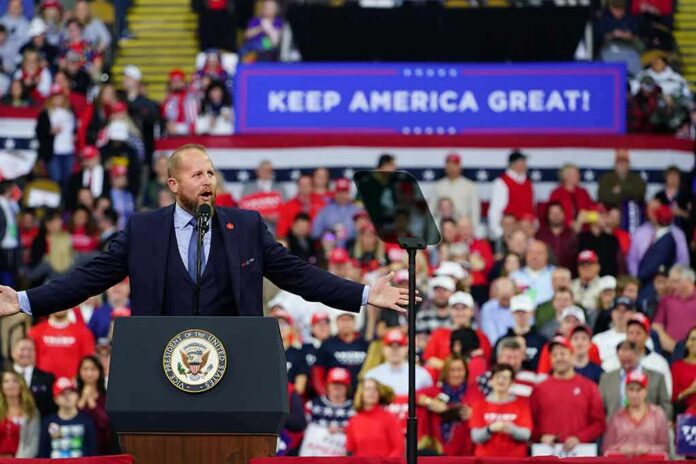
Republicans launched their first-ever national midterm convention in Dallas with President Trump headlining both nights to fire up voters for November.
Story Highlights
- President Trump led a two-night Republican midterm convention in Dallas to boost turnout.
- Republicans billed the event as a national mobilization with leaders and candidates on stage.
- Some vulnerable Republicans skipped the gathering, signaling mixed political risk.
- Midterm conventions are rare and aim to energize core voters more than persuade swing voters.
What Happened in Dallas
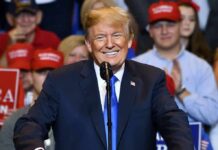
Republicans staged a two-night midterm convention on September 9 and 10 at the American Airlines Center in Dallas. President Trump was set to headline both nights, placing him at the center of the program. The Republican National Committee described the event as a national push to motivate voters and contrast with Democrats. Organizers opened public ticketing through the convention site, underscoring a planned, large-scale turnout effort rather than an improvised rally.
The Republican National Committee promoted a roster beyond the president. Vice President JD Vance, Karoline Leavitt, and Republican leaders and candidates from across the country were slated to participate. The message focused on mobilizing supporters for key November races to keep control of Congress. Party materials called it a showcase of a “common-sense” agenda and framed the weekend as a historic first for midterm season, not just a campaign stop.
Why This Approach Now
Midterm elections often hinge on which side turns out its base, not on big shifts among undecided voters. Parties use high-profile events to raise energy and reduce drop-off among likely supporters. Coverage described the Dallas convention as unusual and more like an extended rally than a traditional party meeting with formal business. That format fits a mobilization strategy aimed at enthusiasm and media reach rather than complex delegate work or platform votes.
Polling trends add pressure to focus on the base. Reports noted President Trump’s weak standing with independent voters heading into the cycle, which can limit gains from persuasion and raise the stakes on turnout. That dynamic can make a leader-centered event attractive for driving core support, while also creating risk that opponents become more active at the same time. The Dallas plan reflects that tradeoff in a clear, public way.
The Political Stakes and Risks
The convention sought to send a unified national signal, yet attendance choices showed fault lines. Several competitive Republicans chose not to attend, according to reporting, to avoid tying their races even closer to the president. That decision suggests some incumbents viewed the event as a net risk for swing districts. It also hints at a two-track strategy inside the party: national energy from Dallas with local tailoring back home.
With just 55 days until the midterm elections, President Trump and Republicans from across the country are descending upon Dallas, Texas, for two nights to support the slate of candidates running this year in the first-ever GOP midterm convention. https://t.co/auoA69CCkv pic.twitter.com/BVoMDgcu2n
— ABC News (@ABC) September 9, 2026
Republicans put logistics and security in place for a major show of support around the arena, including credentialing and public ticketing. National outlets treated the gathering as a first-of-its-kind midterm convention with a heavy production feel. The event’s success will be judged by what follows: volunteer sign-ups, small-dollar fundraising, and voter contact in target districts. Independent turnout data tied directly to the Dallas weekend has not been reported in the cited materials.
How to Read the Moment
The Dallas convention reflects a broader voter mood: many Americans on the right and left feel national leaders are missing the mark. Republicans framed the event as a push to address costs, border issues, and safety, while Democrats warn that such rallies sidestep governing challenges. Voters frustrated with high prices, energy uncertainty, and political gridlock will look for results, not just speeches. The midterms will test whether a leader-driven model can convert attention into actual votes.
Sources:
facebook.com, politico.com, npr.org, theguardian.com, texastribune.org, gop.com, pbs.org, cbsnews.com, yahoo.com, ap.org