America’s top diplomat says the White House wants a peaceful end to the Iran war even as nuclear-strike rumors race across the internet.
Story Snapshot
- Secretary of State Marco Rubio said President Trump has not decided on new strikes and prefers diplomacy.
- Rubio said talks with Iran continue, often through intermediaries, without a set deadline.
- Media reports describe potential post-election military options, creating tension with the peace-first message.
- Tucker Carlson’s nuclear-strike claim remains unverified and faces a public denial of nuclear use by Trump.
What Rubio Said At The G20 And Why It Matters
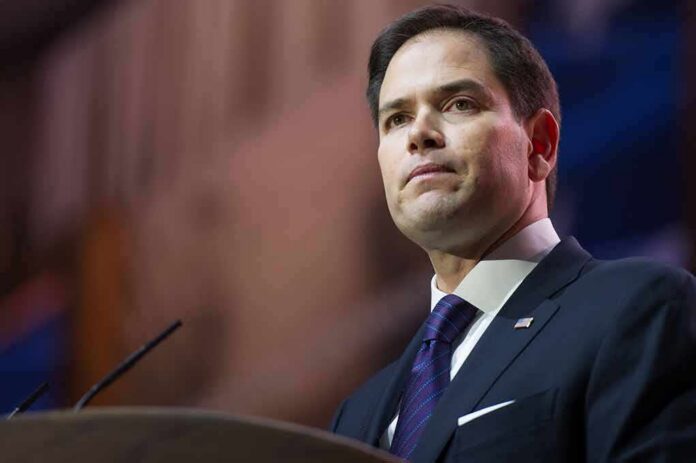
At a Group of 20 press event in Atlanta on October 31, Secretary of State Marco Rubio said President Trump had not decided on further strikes against Iran. Rubio stressed that the United States could act militarily if needed, but would prefer to end the conflict peacefully. He told reporters there was no announcement to make and that the administration did not take the matter lightly. These remarks set a public line: options ready, peace preferred.
Rubio also said talks with Iran have not stopped. He described conversations happening both directly in some cases and often through third parties. He did not share names, documents, or a timeline. That lack of detail limits what the public can verify, but it does confirm that a diplomatic channel exists and that the door is not shut. The message signals space for a deal if both sides see value in it.
The Clash Between Diplomacy And Force Posture
Reports suggest that United States military options could roll out soon after the midterm elections, as early as November 4. Rubio’s comments did not confirm such plans, yet they did not close the door either. This creates tension between a peace-first tone and visible readiness to strike. That mix is not new in U.S.-Iran policy, where pressure and talks often run in parallel to seek leverage at the table and deterrence on the ground.
President Trump, in separate remarks covered by outlets tracking the conflict, has boasted that U.S. action badly hurt Iran’s nuclear capability and said one or two targets may remain. Those statements are hard to square with a simple “pause and talk” storyline. They suggest Washington believes it has the upper hand and can end the fight on its terms. That framing can help bargaining, but it can also harden the other side.
Nuclear Rumors, Public Denials, And What We Know
Commentator Tucker Carlson claimed the administration was days from a nuclear strike on a site called Pickaxe Mountain and said Israel’s prime minister was pushing hard. He offered no public evidence, and multiple reports treated the claims as unverified. President Trump publicly said on October 16 that he would not use nuclear weapons against Iran, directly undercutting the nuclear allegation. No official policy change on nuclear use has been published to support Carlson’s claim.
Rubio’s remarks left key gaps. He did not describe the content of talks, the role of intermediaries, or any red lines. He did not define what would trigger strikes or how far they could go. That lack of clarity fuels public distrust across the spectrum. Many Americans believe officials protect their jobs first and keep citizens in the dark. Limited facts let rumors fill the void, especially when the topic is war and nuclear use.
How To Read The Signals Without The Spin
Here is the bottom line from the public record. The administration says no final decision on more strikes has been made. It says it prefers a peaceful end while keeping strong military options ready. It also says talks remain open but provides no proof of progress. Media reports describe possible timelines for action after the midterms. A high-profile nuclear warning remains unverified and conflicts with Trump’s own denial. Those are the facts on the table today.
Why This Moment Feeds Left-Right Frustration
Voters across parties see a familiar pattern. Leaders talk about peace while preparing for war. Officials claim transparency but share little that can be checked. Rumors get more oxygen than records. Conservatives worry about global entanglements and elite agendas. Liberals worry about escalation and the human cost. Both sides see a government that struggles to level with them. Clearer disclosures on talks, decisions, and limits would help rebuild trust, even if people still disagree on policy.
Sources:
military.com, yahoo.com, cnbc.com, latintimes.com, english.aawsat.com, ians.in, abcnews.com, etvbharat.com