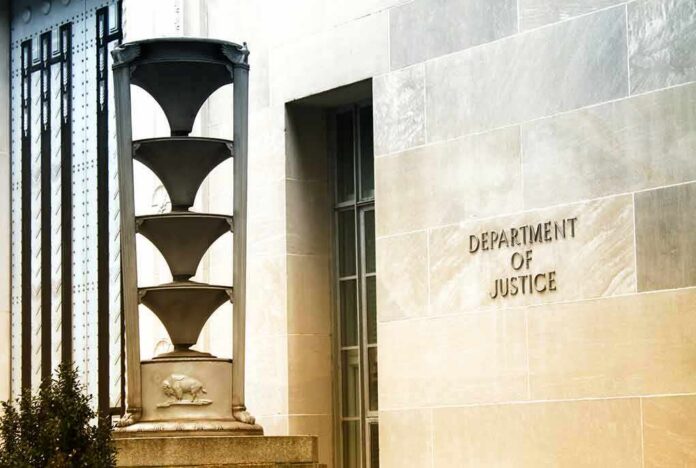
The Justice Department now says its own 2021 school-board memo overreached and will tighten guardrails to better protect parents’ free speech rights.
Story Highlights
- Justice Department review says the 2021 response to school-board protests went too far.
- Officials pledge new training to separate true threats from protected speech.
- Attorney General Merrick Garland had framed the memo around threats, not dissent.
- Courts later found the memo did not change law but the backlash never faded.
What DOJ Now Acknowledges About Its 2021 Memo
Justice Department officials say a new internal report concludes the department’s 2021 school-board response swept too broadly and created the impression that outspoken parents were potential targets. The department says it will improve training so agents and prosecutors better distinguish between criminal threats and heated, lawful speech. The 2021 guidance followed sharp clashes at meetings over masks, curriculum, and school closures. The department is not rescinding the core focus on stopping threats, but it is adjusting the approach.
Attorney General Merrick Garland’s October 4, 2021 memo cited a “disturbing spike” in harassment, intimidation, and threats of violence against school officials and directed coordination between the Federal Bureau of Investigation (FBI) and local authorities to address threats. Supporters said the point was safety, not silencing speech. Critics argued the vague framing chilled parents and invited federal monitoring of local disputes. The new review admits the line was blurry in practice and urges clearer standards.
How Courts, Congress, And Advocates Responded
Federal courts later dismissed lawsuits arguing the memo muzzled parents, noting it did not create new crimes or rules, and the Supreme Court declined to take a related case in 2024. Still, congressional Republicans pressed the department for answers, claiming the guidance treated parents like suspects and invited federal overreach. Advocacy groups on both sides kept the fight alive. One side warned about rising threats to school staff. The other warned about “weaponizing” federal power against dissent.
News outlets documented the clash in real time. National coverage reported Garland’s defense that the department sought to address violence, not debate. Other reports highlighted parents who said the memo felt like a warning shot from Washington and could silence lawful criticism. Conservative lawmakers demanded the department not deter free speech at local meetings, arguing local police could handle real threats without federal involvement. The legal rulings eased one concern, but the political and cultural damage lingered.
Why This Matters Beyond One Memo
This episode shows how fast a safety step can turn into a speech fight once Washington gets involved. Parents on the right and left want safe schools and also the right to speak up without a federal spotlight. Many Americans already feel the system favors the powerful and punishes regular people. A memo that seemed to open a federal file on local complaints added to that distrust. The department’s new training push is a small step toward rebuilding trust, if carried out consistently.
The Justice Department says a new report found the department went too far in its response to parents who spoke out at school board meetings during the Biden administration.@markpmeredith reports that the review examined Attorney General Merrick Garland’s 2021 memo directing… pic.twitter.com/ZACokbnIyk
— Fox News (@FoxNews) October 5, 2026
The deeper problem runs past one document. When officials blur lines between true threats and sharp criticism, they invite doubts about motives. When politicians score points instead of fixing rules, they feed the sense that government serves itself. Clear thresholds, narrow scopes, and transparent metrics can help. Parents need to know when a rant is protected and when a threat crosses the line. School staff need fast help when danger is real. Both can be true at once.
What To Watch For Next
Watch for formal guidance spelling out what counts as a threat and who decides. Look for training that reaches every United States Attorney’s Office and every FBI field office, not just headquarters. Track whether referrals drop, rise, or shift. Congress may seek more records to test whether the new rules change behavior. If the department engages parents and school leaders early, it can reduce fear on both sides. Results, not press releases, will decide if trust improves.
Sources:
judiciary.senate.gov, dailysignal.com, abcnews.com, mikejohnson.house.gov, washingtonpost.com, cnn.com