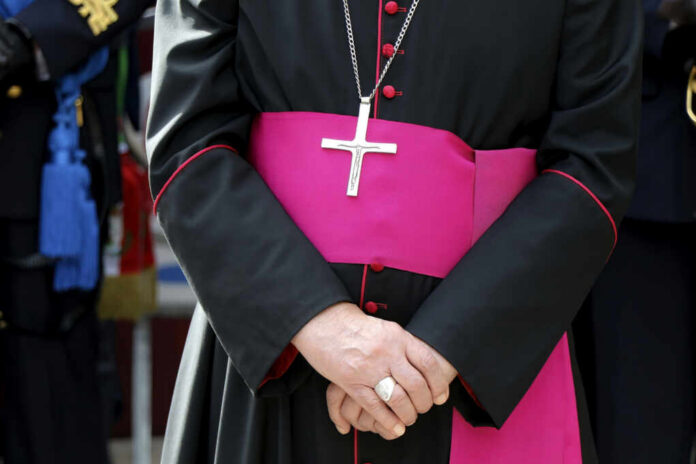
Pope Leo XIV’s quiet choice of a new Irish bishop has opened a fresh fight over who really steers Catholic teaching and power in the modern West.
Story Snapshot
- Pope Leo XIV appointed Bishop Michael Router to lead the Diocese of Derry after the retirement of Bishop Donal McKeown.
- Router has spoken about women taking stronger roles in Church life, drawing fire from traditional Catholic voices.
- The Vatican’s secretive process for picking bishops leaves lay Catholics guessing about how doctrine is being guarded.
- The clash echoes wider fears, on right and left, that distant elites make big decisions with little accountability.
Pope Leo’s Appointment and Local Reaction
Pope Leo XIV has appointed Bishop Michael Router, formerly Auxiliary Bishop of Armagh, as the new Bishop of Derry after accepting the resignation of Bishop Donal McKeown. Local coverage in Ireland states that Router will move from his current post in Armagh to take up leadership of the Derry diocese in the coming months. Bishop Niall Coll of Raphoe publicly welcomed the appointment, offering prayers and good wishes on behalf of his diocese, and praising McKeown as he enters retirement. These early reactions from nearby bishops show strong institutional support for Router inside Ireland’s Church leadership.
Reports from Catholic and regional media describe Router as a familiar figure in Northern Ireland, with years of service as a priest and then as a bishop in Armagh before this promotion. The Diocese of Derry’s own announcement presents his appointment as a normal transition, stressing continuity in pastoral care as McKeown steps down and Router prepares to take over. None of these formal statements mention controversy; they focus on routine Church language about service, prayer, and gratitude for the outgoing bishop’s work. That gap between official tone and online debate is where frustration on both left and right often grows.
Router’s Words on Women and Why They Spark Pushback
The storm around Router comes from a past homily in which he spoke of hope that synod discussions would lead to greater involvement of women in leadership roles in the Church. Critics on Catholic social media and video channels say these lines hint at support for female priests and women leading liturgical celebrations, which they argue clashes with long-standing Church teaching on ordination. A commentary video points to the profession of faith expected of bishops and claims Router “says the opposite” of the Church’s statement that ordaining women is impossible, though it does not show him explicitly calling for women to be ordained as priests. This leaves many lay Catholics confused about what, exactly, he meant by “leadership roles.”
Some Catholics note that Church documents already allow women to serve in certain roles at Mass, such as reading Scripture or leading music, while drawing lines against other functions. One widely shared directive from Eternal Word Television Network states that women may read and proclaim intentions but “are not permitted to act as altar servers,” highlighting how rules can appear both narrow and complex. Router has not publicly clarified whether his comments about women leading in worship refer only to these permitted tasks or to deeper changes like ordination or presiding over liturgy. That silence keeps the door open for both hope from reformers and anger from traditionalists, feeding a narrative that Church elites use vague language instead of clear answers.
How Bishops Are Chosen and Why It Feels Like ‘Deep State’ Religion
The appointment of Catholic bishops follows a quiet, layered process run mostly from Rome, not from local voters. First, bishops in a region send names of priests they think would make good bishops to the apostolic nuncio, the pope’s ambassador. The nuncio then investigates those men, asking clergy and lay people for confidential input, and forwards a shortlist to the Vatican’s Dicastery for Bishops. That body studies the candidates and presents options to the pope, who makes the final decision, with no public explanation required. There is no appeal against his choice, and ordinary Catholics never see the report that shaped it.
CCMS Welcomes the Appointment of Bishop Michael Router as new Bishop of Derry https://t.co/kH1BNAvXub
— CCMS Info (@InfoCcms) July 17, 2026
Recent reporting from religion outlets notes that this secretive system has become a steady source of tension. Synod delegates and theologians have argued that lay Catholics and local communities need a bigger voice, or at least more transparency, when leaders with strong views on issues like women’s roles or same-sex relationships are promoted. Analysts of Pope Leo XIV’s early choices say he tends to favor bishops who support the “synodal” style of wider listening started under Pope Francis, while still keeping final control in Rome. For many believers, this looks a lot like how they view politics in Washington, D.C.: powerful insiders gather information behind closed doors, then hand down decisions that shape daily life, leaving citizens on both left and right feeling shut out.
Why This Matters Beyond Church Walls
The fight over Router’s appointment reflects deeper worries shared by many Americans and Europeans about institutions run by distant elites. Traditional Catholics fear their faith’s core teachings are slowly being hollowed out by leaders who speak in soft, modern language but never plainly defend long-held doctrine. More liberal Catholics see hopeful signals in talk of women’s leadership and synods but doubt those words will turn into real change without honest public debate. Both sides feel the main decisions happen in rooms they will never enter, and that official statements gloss over conflict rather than face it.
People across the political spectrum already think national governments are captured by a “deep state” of career insiders and global networks; seeing the same patterns in their churches can deepen that mistrust. The Router case fits a pattern where media headlines celebrate a new leader while online outlets, especially conservative ones, frame the story as evidence of quiet revolution from above. As with federal agencies and elected officials, the issue is less about one bishop and more about whether those in power see everyday believers as partners or as problems to be managed. That is why a personnel decision in a distant Irish diocese can feel, to many, like one more sign that the values they grew up with are being renegotiated without their consent.
Sources:
lifesitenews.com, donegalnews.com, highlandradio.com, bbc.com, armagharchdiocese.org, charlottelatinmass.org, churchofengland.org, en.wikipedia.org, thebostonpilot.com, time.com