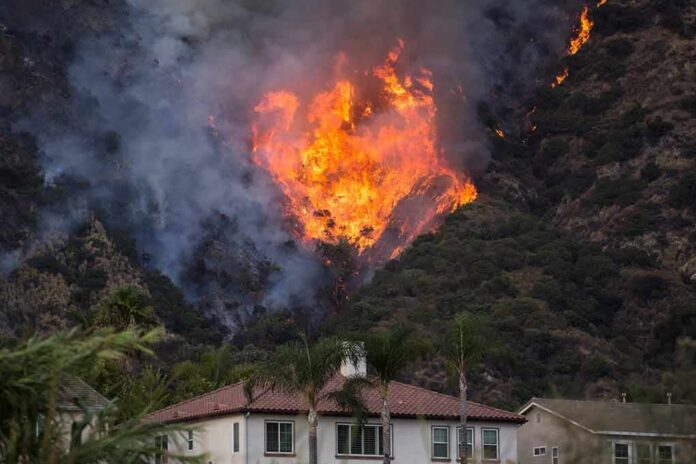
A fast-moving wildfire in eastern Spain forced authorities to evacuate about 1,000 residents and order thousands more to stay indoors due to choking smoke.
Story Highlights
- Officials evacuated hundreds to about 1,000 residents near Valencia as winds drove flames toward towns.
- Emergency services said the fire started near Montichelvo and pushed smoke into nearby villages.
- Spain has seen repeated mass evacuations from multiple fires this summer across several regions.
- Fire leaders across Europe now prioritize fast evacuations when fires outrun direct attack tactics.
What Authorities Ordered And Why It Mattered
Spanish emergency services reported that a wildfire ignited near Montichelvo in the Valencia region and spread quickly with strong winds. Officials evacuated at least hundreds of people, with totals around 1,000 in some localities, to keep residents out of harm’s way. Crews also told several thousand people in nearby towns to stay indoors because smoke drifted into neighborhoods and made the air unsafe. These steps aimed to reduce injuries as flames moved faster than ground teams could safely stop.
Local leaders faced a clear tradeoff. Early evacuation disrupts daily life, but waiting risks lives when winds shift and embers jump roads. Recent fires across Spain show why speed counts. National and regional agencies this summer have issued wide evacuation and shelter-in-place orders, then adjusted them as weather changed. The pattern reflects a simple goal: remove people from danger first, then circle back to protect homes when conditions allow.
How This Fire Fits A Bigger European Trend
Fire seasons in Spain and France have grown longer and harsher, with hotter, drier conditions feeding fast runs and spot fires that leap ahead of crews. Fire commanders now teach a “life first” playbook that favors quick evacuations and property defense over direct attack when flames are too intense. That shift saves lives but can leave families angry and scared, especially when they must leave with little warning or shelter indoors for hours while smoke blankets their streets.
Spain’s recent weeks brought a string of large fires, and not only in Valencia. Regions near Madrid and Avila also saw broad emergency orders, later eased as weather improved and crews gained control. This rapid cycle of evacuate, confine, and reopen can feel chaotic, but it mirrors the changing fire behavior. It also exposes weak spots in planning, communications, and local resources, which hit rural towns and working families the hardest when roads clog and services strain.
Shared Concerns: Safety, Costs, And Trust In Systems
Residents across the political spectrum share core worries in moments like this. Families want clear alerts that reach their phones fast, open roads to get out, and clean air to breathe if they must stay put. Business owners and farm workers want help to rebuild when smoke and ash shut down a short tourist season or kill crops. Many also want to know that leaders will fix gaps in warning plans highlighted by recent deadly fires in other regions.
🇪🇸A fast-moving wildfire has forced around 1,000 residents to evacuate the town of Gátova in eastern Spain. The blaze spread through the Sierra Calderona as shifting winds pushed flames toward populated areas. Emergency crews, helicopters, firefighting aircraft and military… pic.twitter.com/tPqIXWVW6L
— Global Brief (@globalbrief_now) August 22, 2026
These fires also raise hard questions about energy, land use, and budgets that hit home for both conservatives and liberals. Rural fuel buildup, aging power lines, and drought turn small sparks into disasters. Every delay in thinning, grazing, or maintaining rights-of-way can carry a high price later. People see the same pattern they fear in other parts of government: slow planning, tangled rules, and finger-pointing after the fact, while ordinary citizens bear the risk and the bill.
What To Watch Next
Officials will update evacuation counts and air quality as winds change and crews gain ground. Residents should watch local alerts and prepare go-bags, since flare-ups remain likely when heat and wind return. Lawmakers will face pressure to speed fuel-reduction projects, boost aircraft and crew funding, and tighten emergency alert systems. Firefighters will keep pushing the life-first approach that has become standard across Spain and Europe, even when that brings tough, fast choices for communities.