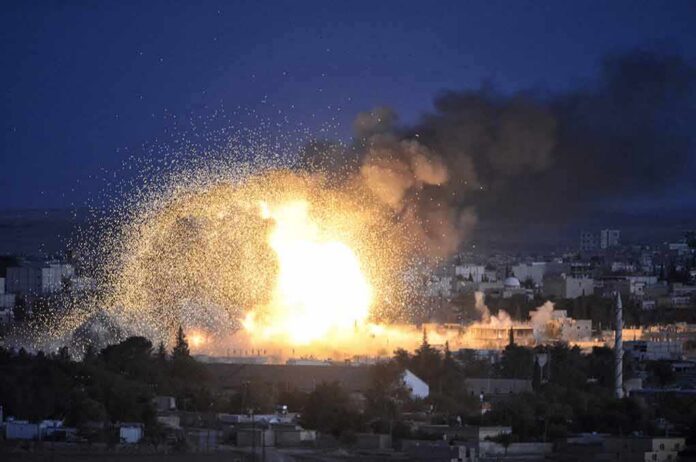
Europe lined up with Riyadh and labeled the latest Houthi strikes “unacceptable,” warning they endanger civilians and regional stability.
Story Highlights
- The European Union condemned recent Houthi strikes and voiced full solidarity with Saudi Arabia.
- Brussels tied the attacks to risks for regional stability and civilian safety.
- The European Union stance follows global concern over Red Sea attacks on shipping.
- Houthis denied targeting holy sites and framed their actions as retaliation.
EU Condemnation Centers On Civilian Harm And Stability Risks
The European Union condemned the latest Houthi strikes and called them unacceptable. The European External Action Service said the attacks hit civilian and economic sites and injured dozens in southern Saudi Arabia. The statement added full solidarity with Saudi Arabia and urged an immediate halt to attacks. A separate European External Action Service post also condemned earlier strikes that hit civilian infrastructure in Yemen and Saudi Arabia, and warned they undermine stability and peace efforts.
European Union language matched earlier positions from the bloc and its institutions. In 2024, the Council backed a United Nations resolution that condemned Houthi attacks on Red Sea shipping. That resolution demanded an immediate stop to actions that impede global commerce and breach navigational rights. The European line has tied Houthi actions to broader security and trade risks. It has also stressed protecting civilians and upholding international law.
Houthis Reject Claims About Holy Sites And Cite Retaliation
Houthi spokesmen rejected claims that they targeted Mecca. They called Saudi statements “fabrications and lies,” and said their operations focused on oil facilities and military bases, not holy places. Houthi messaging also framed their strikes as a response to Saudi air raids across Yemen. Statements cited dozens of Saudi strikes and vowed to continue until attacks on Yemen stop. These are claims by the group and do not change the European Union’s condemnation of civilian targeting.
Reporters and wire outlets carried the dueling narratives. Saudi officials warned that any strike near Mecca crosses a red line. Houthis denied that charge, maintaining they aim at military and energy sites. The gap remains wide. The European Union avoided the holy site dispute in its latest notes. Instead, it focused on civilian harm and the need to reduce escalation on both sides.
Why This Matters For Energy Prices, Trade, And Everyday Costs
Attacks tied to Yemen’s war now reach sea lanes that move oil, fuel, and goods. Since late 2023, Houthi strikes on ships in the Red Sea and Gulf of Aden have raised costs and risk for carriers. The United Nations Security Council condemned those attacks and warned they hinder global trade. Analysts say repeated strikes force ships to reroute around Africa, which adds time, raises insurance, and can lift prices for consumers.
🔴 The European Union strongly condemns the Houthis’ military campaign in Yemen and the strikes against Saudi Arabia, including the recent attack targeting the holy city of Mecca
🔴 The EU expressed its “full solidarity” with Saudi Arabia and said the targeting of civilians and… pic.twitter.com/hisDuWbcjA
— Al Arabiya English (@AlArabiya_Eng) September 17, 2026
European Union governments launched a naval mission to guard traffic and deter attacks. The mission is part of a wider push with partners to keep sea lanes open and prevent a larger war. Think tanks and maritime experts warn that a prolonged crisis could break cooperation and spread conflict. For families already paying more for food, fuel, and goods, even small shocks at sea can ripple into higher bills at home.
What To Watch Next: De-Escalation Or A Wider Spillover
European Union officials will press for de-escalation and a return to talks. The bloc will likely keep support for freedom of navigation and civilian protection. Houthis may try to use strikes to gain leverage, while Saudi leaders weigh response options. Each new hit risks a chain reaction. If shipping attacks continue, pressure will rise for stronger patrols and tighter sanctions, which can raise costs that land on working people far from the front lines.
Sources:
insiderpaper.com, eeas.europa.eu, report.az, data.consilium.europa.eu, aa.com.tr, cnbc.com, en.wikipedia.org, aljazeera.com, english.aawsat.com, nbcnews.com