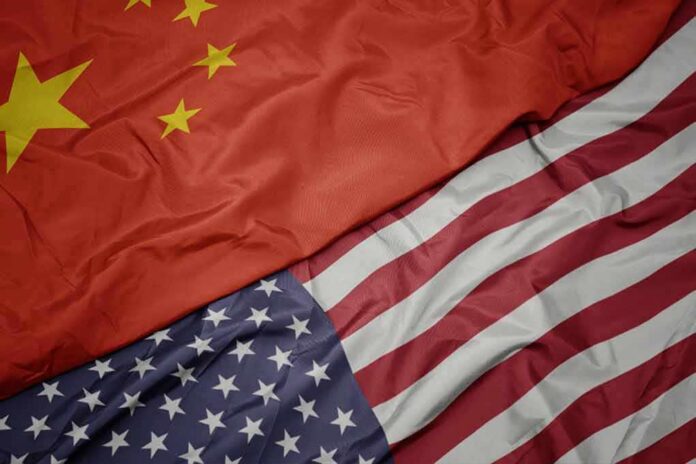
Washington and Beijing agreed to create a joint channel to flag dangerous artificial intelligence incidents that could threaten national security, and they plan more talks on trade and military contacts next.
Story Highlights
- Both governments said they will set up an AI incident communication channel and hold an AI dialogue in November.
- The White House described it as a bilateral line to handle AI-related events with security stakes.
- Treasury Secretary Scott Bessent outlined a notification mechanism ahead of the summit.
- China linked the move to stronger crisis communications between the two militaries.
What the U.S. and China Agreed to Build
Public statements from both sides said they will establish a channel to handle artificial intelligence incidents and convene an AI-focused dialogue in November. The described goal is fast communication if an AI problem rises to national security level. Examples include rogue models, threats to critical systems, or biological risks enabled by AI. The two governments also said they would keep talking on trade and military issues, tying technical safety to broader ties.
The White House framed the step as a bilateral communication channel for AI incidents after the leaders met. U.S. Treasury Secretary Scott Bessent previewed the idea days earlier, saying the United States proposed a notification mechanism for AI problems that could threaten security. That proposal gives the channel a clear purpose: notify quickly, route to the right officials, and reduce the chance that a machine-driven event sparks a human crisis.
How the Channel Fits Long-Running Crisis Tools
This plan mirrors earlier deconfliction tools built during tense periods. Analysts and coverage compared it to a hotline model meant for emergencies, not daily talk. Past U.S.-China links include a presidential hotline set after the 1990s Taiwan Strait crisis and a defense telephone link started in 2008, both designed to limit miscalculation. Reports suggest the new AI line aims to do the same when algorithms act faster than people can respond.
China’s Foreign Ministry connected the AI step to a wider push on military crisis management. Reporting said both sides agreed to sign a memorandum of understanding on strengthening crisis communications between the two militaries. That pairing matters because a technical warning is only useful if military officers can reach each other and act. Channels work best when they are staffed, tested, and respected during pressure, not only announced in calm times.
What We Know and What Remains Unclear
Reporting describes an agreement to set up the channel and to hold the first AI dialogue in November, but it does not include the signed text or operating rules. Stories do not specify who staffs the line, what triggers a notice, or how quickly messages must move. Coverage suggests incidents that reach national security level would qualify, but the scope and thresholds are still broad in public view. That leaves room for future sessions to lock in procedures.
Several outlets outlined practical needs for the channel to work. They point to clear message formats, tiered severity levels, and trained technicians who can translate technical alerts into policy steps. They also stress continuity, so the line stays open around the clock and routes to empowered decision makers. Those basics are not flashy, but they decide whether a call prevents harm or gets lost. The November dialogue could clarify these design choices.
Why This Matters to Americans Across the Spectrum
Runaway code, deepfake commands, or hacked control systems can hit power grids, hospitals, markets, or transportation. Fast contact between the world’s top two AI powers can help stop a bad day from becoming a disaster. Conservatives worry about national security and critical infrastructure. Liberals worry about equity and civilian harm. Both want a government that acts before a crisis spreads. A working channel is a modest tool that can save time when it counts.
A new mechanism will allow the US and China to communicate about AI-related incidents and risks, including those with potential national-security implications.
The two sides also agreed to accelerate military crisis communications, ABC reports. pic.twitter.com/evsr7YLcrb
— Resist the Mainstream (@ResisttheMS) September 26, 2026
The move also sits inside a wider relationship that touches the economy, defense, and high-tech supply chains. The two sides said they would keep talking on trade and military communications along with AI safety, linking stability to issues that affect jobs, prices, and peace. The plan does not solve deep disputes. It does create a place to send a red flag fast. If built with clear rules and steady testing, it could lower risks while the tougher debates continue.
Sources:
military.com, abcnews.com, theoutpost.ai, aljazeera.com, kuwaittimes.com, toledoblade.com, carnegieendowment.org, usnews.com, fortune.com