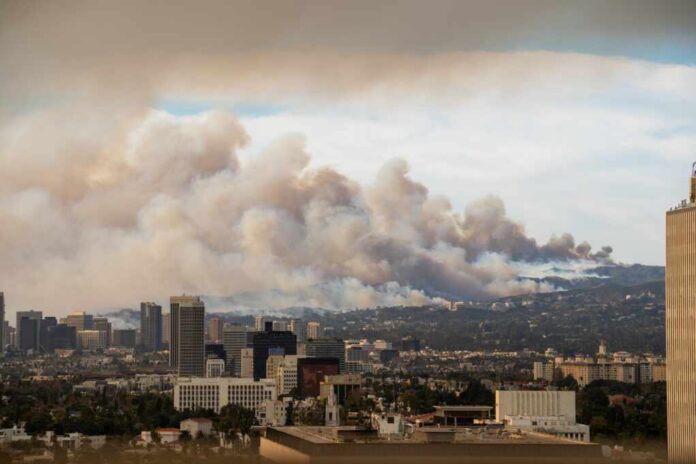
Hazardous wildfire smoke from Canada and Minnesota has once again turned the skies over the Midwest and Northeast into a health threat for millions of Americans.
Story Snapshot
- Heavy smoke from Canadian and Minnesota wildfires is blanketing large parts of the Midwest and Northeast with unhealthy to hazardous air.
- More than 100 million people are under air quality alerts, with some cities reaching the worst pollution levels in the world.
- Officials warn that fine particle pollution in the smoke can damage lungs, hearts, and even the brain, especially in vulnerable groups.
- Repeated smoke events are exposing deep problems in how governments prepare for and manage growing climate and wildfire risks.
Wildfire Smoke Turns a Vast Region Into a Health Hazard Zone
Heavy smoke from dozens of large wildfires burning across Canada and in northern Minnesota is spreading south and east, covering huge sections of the United States from the Upper Midwest to the Northeast. Air quality alerts now stretch from Minnesota, Wisconsin, and Michigan through New York and New England, warning that the air is “unhealthy” or even “hazardous” for millions of people. In some past events, Chicago and Detroit have ranked among the most polluted cities on Earth during peak smoke episodes.
Minnesota officials and other state agencies have told residents that fine particle pollution from the smoke is expected to stay elevated for days, not hours. In earlier similar outbreaks, air quality index readings in parts of Minnesota have reached the red and purple categories, meaning unhealthy to hazardous conditions even for healthy adults. Satellite images show thick plumes flowing from fires in provinces like Manitoba and Saskatchewan, then pouring over the Great Lakes and into major U.S. cities such as Toronto, Detroit, and New York.
What the Smoke Does to People’s Health
Wildfire smoke carries very small particles called PM2.5, which can travel deep into the lungs and then into the bloodstream. Medical studies and public health agencies link this kind of pollution to asthma attacks, heart problems, strokes, and even damage to brain connections over time. Older adults, children, pregnant women, and people with lung or heart disease face the greatest danger, but very high levels can also harm otherwise healthy people, especially those who work outside or lack access to clean indoor air.
During big smoke events since 2023, scientists estimate that thousands of people have died early around the world, including several thousand in the United States, because of repeated exposure to these particles. These are not one-off bad days; residents in parts of the Midwest and Northeast have now lived through multiple summers of recurring smoke, each one bringing more emergency alerts, closed playgrounds, and crowded clinics. For many families, especially those without good health insurance or air conditioning, these warnings are not just weather updates but another layer of stress on top of rising costs and shrinking opportunities.
Mixed Messages, Growing Frustration, and Questions of Responsibility
People across the political spectrum are growing frustrated with how officials and media describe these events, because the health messages can seem confusing or uneven. In several recent smoke waves, early headlines have shouted about “hazardous” air, only for later data from the Environmental Protection Agency to show large areas in the “unhealthy for sensitive groups” range once the smoke settled or thinned. This gap between scary news and shifting numbers feeds a wider sense that institutions do not communicate clearly or honestly, especially when millions of lives and livelihoods are affected.
Residents already angry about high energy prices, inflation, and government gridlock see these recurring smoke crises as another sign that leaders are not tackling root problems. Conservatives blame years of poor forest management and global agreements that, in their view, weakened domestic energy security and economic strength. Liberals point to the “America First” approach and cuts to environmental and social programs that limit investments in clean energy, public health, and climate resilience. Both sides increasingly share one belief: the federal government and cross-border partners seem more focused on political battles and public relations than on building robust systems to prevent or manage disasters.
Wildfires, Climate Pressures, and a Strain on Old Assumptions
Canadian officials and researchers say longer, hotter, and drier fire seasons are making large blazes more common, turning forests into repeated sources of smoke that can travel thousands of miles. In a study of the record 2023 Canadian fire season, scientists linked the smoke to tens of thousands of premature deaths worldwide, showing that the impact reaches far beyond burnt trees and local towns. For people in the Midwest and Northeast, this means that even if no major fire is burning nearby, their air can still become dangerous because of decisions and conditions far to the north.
As Canadian wildfire smoke affects air quality across parts of the Midwest and Northeast, people are once again relying on monitoring data to understand what they are breathing.
Yet ground monitors may not capture the full picture, especially at the neighborhood level.
Undark’s… pic.twitter.com/QHMpsjDZ28
— Undark Magazine (@undarkmag) July 16, 2026
As these events pile up, they challenge old assumptions that clean air is a given in much of North America. They also raise hard questions about who is responsible when cross-border pollution threatens the health of ordinary citizens. Some Americans now see the smoky skies as a symbol of a deeper problem: a system run by distant elites, slow to respond, and quicker to explain away risk than to invest in prevention. For millions stepping outside into another day of haze, those big-picture worries feel very close to home.
Sources:
washingtontimes.com, cnn.com, science.nasa.gov, cbsnews.com, nypost.com, nbcnews.com, bloomberg.com, apnews.com, weather.gov