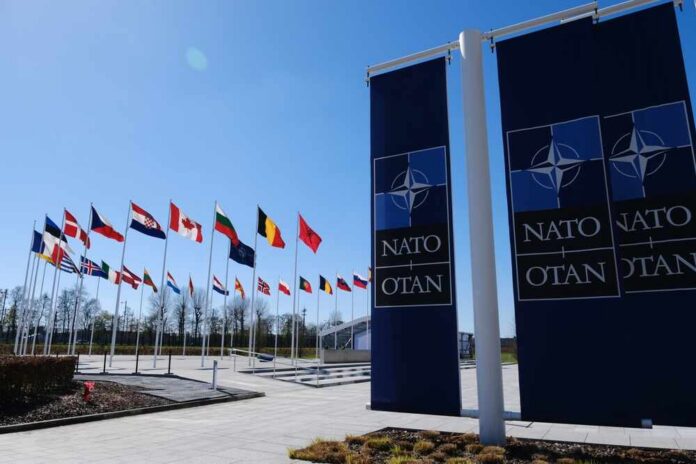
At the NATO summit in Turkey, President Trump turned a routine press conference into a stark warning that allies must pay more, back his hard line on Iran, and accept a bigger U.S. role in Greenland or risk a deeper split in the alliance.
Story Snapshot
- Trump pushed a controversial five percent defense spending goal and said he would be “very unhappy” if allies fall short.
- He blasted European partners for not joining the U.S. war against Iran and hinted at new strikes “maybe tonight.”
- He repeated that Greenland “should be controlled by the United States,” drawing direct pushback from Denmark and Greenland’s leaders.
- The clash highlights a deeper problem: NATO is caught between U.S. demands and European fears of both Iran and American power.
Trump’s Five Percent Push and Burden-Sharing Fight
President Trump used the Ankara summit press conference to hammer a now-familiar point: he thinks the United States carries too much of NATO’s defense burden and wants allies to spend far more on their militaries. He has moved beyond NATO’s long-standing two percent target and now talks about a **five percent** goal, far above what even the biggest European economies can afford without major cuts at home. Economists note that if all members spent five percent of their national output on defense, total NATO military spending would rival or exceed global defense spending by every other country combined. That scale alarms many Europeans, who already face high energy bills, aging populations, and strained social programs. But it resonates with many Americans on both the right and left who feel they pay for foreign security while their own roads, schools, and hospitals crumble back home.
Trump’s language at these gatherings follows a pattern set during his first term, when he often scolded allies in public and even threatened to walk away from the alliance. Research on that period shows his tough talk did push some countries to raise defense budgets, but did not fundamentally change the U.S. military presence in Europe, which remained large and expensive. Many conservatives today see his five percent push as overdue pressure on rich European governments that prefer welfare spending to defense, while many liberals see it as fueling an arms race and rewarding defense contractors instead of workers. Both sides, however, share a growing sense that American taxpayers are not getting a fair deal from Washington or Brussels when hundreds of billions go overseas while basic needs at home stay unmet.
Iran Ceasefire ‘Over’ and a Risky Escalation
During the Ankara press conference, Trump said the ceasefire with Iran is “over” and suggested new U.S. military action could come soon, even hinting it could happen “again tonight.” He complained that many NATO allies did not support Washington in past clashes with Iran and questioned why the United States spends so much to defend countries that will not back it in war. That charge fits his long-running view that allies enjoy U.S. protection while ignoring American security priorities in the Middle East. Yet public records so far do not show specific NATO governments refusing concrete requests in this latest phase, and European leaders have mostly stayed quiet on his ceasefire comments, focusing instead on general calls for stability and diplomacy.
This silence from partners feeds frustration on both sides of the Atlantic. Many Americans feel that when their troops deploy and their budgets swell to fight Iran, Europe benefits from safer trade routes without paying a real price. Many Europeans, meanwhile, fear getting dragged into another long war they did not vote for and that could drive energy prices higher again, hurt their economies, and inflame tensions with Muslim communities at home. The lack of clear, joint NATO policy on Iran leaves citizens in all member states wondering who is really in charge: elected leaders, unelected national security staff, or the deeper “system” that seems to move toward war even when voters are tired of it.
Greenland Clash: Sovereignty vs. Strategy
Trump also used the summit to revive one of his most unusual ideas: that Greenland should “be controlled by the United States, not Denmark.” He framed this as a strategic move to block China and Russia from gaining more access to the Arctic, a concern that NATO Secretary General Mark Rutte said is valid. Trump claimed he had at least a “framework” of understanding with NATO leaders about future U.S. control, and suggested Denmark and other European partners were failing to invest enough in Greenland’s defense and development. For many Americans who worry about Chinese and Russian expansion, a stronger U.S. role there sounds like common sense, especially when they see elites talking about climate summits while ignoring hard security questions in the far north.
U.S. President Donald Trump addressed personal security threats and regional leadership shifts during his latest press briefing at the NATO summit in Ankara. Trump emphasized that he remains a primary target for hostile foreign entities following the recent escalation of… pic.twitter.com/CLIWRdrRx7
— X-K (@ConflictRadarME) July 8, 2026
Danish Prime Minister Mette Frederiksen answered Trump’s remarks with a firm rebuke, saying Greenland is not for sale and that Denmark will defend “every inch” of its territory. Greenland’s Prime Minister Jens-Frederik Nielsen added that only Denmark and Greenland’s people can decide the island’s future and rejected Trump’s talk of any framework deal. NATO military commanders also said there have been no alliance decisions about new U.S. bases or transfers of control there, only broad political discussions about Arctic security. These responses stress national sovereignty and legal limits, but they do not fully answer Trump’s deeper charge: that Europe relies on U.S. power to keep Russia and China at bay in the Arctic while blocking the very American moves that might strengthen that defense.
What This Summit Reveals About the System
The fight over money, Iran, and Greenland shows how far the alliance has drifted from its simple founding promise: free nations pooling strength to keep each other safe. Trump’s harsh style and ambitious demands upset many Europeans, but they also put words to a feeling many ordinary Americans have carried for years—that they pay the bill while distant elites make the deals. At the same time, leaders in Denmark, Greenland, and across Europe see his pressure as a threat to sovereignty and fear a United States that can unilaterally redraw maps or start wars that reshape their economies and societies. Both sides look at the other’s ruling class and see a small circle of wealthy, insulated decision-makers who talk about “values” while everyday people struggle with high prices, weak wages, and shrinking trust.
Viewed through that shared frustration, this NATO summit was not just about Trump’s latest headline or gaffe. It was a public glimpse of a larger problem: a security system built in another age trying to manage new threats—Iran’s missiles, Arctic routes, Chinese influence—without real consent from the people who fund it and fight its wars. Whether one blames Trump, European leaders, or the broader “deep state,” the message from Ankara is clear. The gap between what governments decide and what citizens want is widening, and each new summit that sidesteps that reality makes it harder for millions of Americans and Europeans to believe the system still serves them more than it serves itself.
Sources:
trumpwhitehouse.archives.gov, youtube.com, war.gov, cnbc.com, cfr.org, reuters.com, instagram.com, defensepriorities.org, piie.com, diis.dk, facebook.com, jstor.org