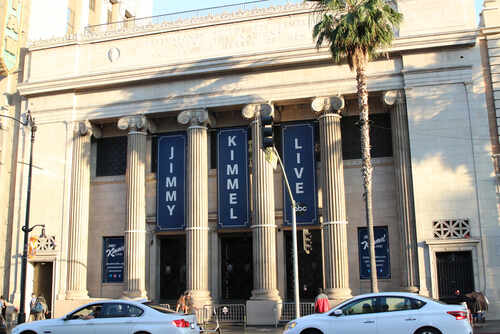
A late-night comedian’s on-air jab at President Trump is colliding with a bigger question many Americans share: who really gets “held accountable” in politics and media anymore?
Story Snapshot
- President Donald Trump criticized Jimmy Kimmel’s show ratings on Truth Social and suggested ABC should be “tested.”
- Kimmel read Trump’s post on-air and flipped the “ratings” argument back at the president by mocking Trump’s approval numbers.
- The exchange reflects a long-running Trump–late-night feud that has repeatedly mixed entertainment, politics, and fundraising.
- ABC/Disney sits in the middle, balancing controversy-driven attention with corporate risk and political pressure.
Trump’s Truth Social shot puts ABC back in the crosshairs
President Donald Trump reignited his public feud with ABC’s Jimmy Kimmel by posting on Truth Social about Kimmel’s return to air and the show’s “bad Ratings.” Trump’s message targeted both the host and the network, framing ABC’s decision to keep Kimmel as a mistake and signaling the possibility of a broader confrontation with the company. The Fox News account of the exchange highlights Trump’s language about letting Kimmel “rot” and wanting to “test ABC out.”
Trump’s comments matter beyond the usual celebrity back-and-forth because they land on a sensitive fault line: the perception that major media companies operate with political bias while facing little consequence. Conservatives who feel legacy networks routinely mock their values see this as familiar territory, while liberals often view Trump’s media attacks as intimidation. What is clear from the available reporting is that Trump’s rhetorical target was not only a comedian, but also the corporate gatekeepers behind him.
Kimmel’s comeback turns “ratings” into a political mirror
Jimmy Kimmel used his monologue to read Trump’s post aloud and respond with a counterpunch aimed at Trump’s own standing with the public. According to coverage of the segment, Kimmel joked that if low ratings are disqualifying, then both men should lose their jobs—then added a sharper line: “I can’t believe we gave you your job back.” The exchange turned a TV-ratings insult into a broader commentary about presidential approval and public judgment.
The sources recap Kimmel’s central move: treating Trump’s media criticism as raw material, then redirecting it at Trump personally. That approach is consistent with Kimmel’s established posture during both Trump presidencies, where the show has frequently positioned itself as anti-Trump commentary. For conservative viewers, the moment can read less like comedy and more like an example of elite culture policing political outcomes. For liberal viewers, it is framed as “punching up” at a powerful figure.
A feud with a long memory: emails, hiatuses, and repeated attacks
This flare-up did not start from scratch. TV Insider’s reporting describes earlier episodes in which Trump attacked Kimmel during show breaks, including fundraising emails that labeled the host a “ratings-starved hack.” Those references matter because they suggest the conflict is not merely spontaneous entertainment, but also part of a recurring political-media cycle where attention can be converted into donations, clicks, or audience loyalty. The timeline in the coverage points to repeated attacks and repeated punchlines.
The reporting also notes some uncertainty on the exact timing of Kimmel’s hiatus return across the various episodes, but the pattern is consistent: Trump criticizes a media figure, the media figure uses Trump’s criticism as content, and both sides benefit from the oxygen of national attention. That dynamic fits a broader public frustration—on both left and right—that prominent institutions can turn conflict into profit while everyday Americans deal with inflation, high costs, and a government that feels unresponsive.
Why ABC/Disney is the quiet stakeholder in a loud political fight
ABC/Disney is not delivering punchlines, but it may carry the most practical exposure in this kind of dispute. The Fox News piece notes Trump referencing a prior settlement figure when talking about ABC, a reminder that large media corporations often navigate legal, political, and advertiser pressures simultaneously. Even without a specific policy threat described in the reporting, the message is that cultural conflict can quickly shift into corporate leverage fights—and corporations tend to make decisions based on risk, not civic health.
Jimmy Kimmel Flips Trump’s Low Ratings Dig Back at Him: ‘We Should Both Be Out of the Job’ #Mediaite https://t.co/AvvJvdIAfD
— #TuckFrump (@realTuckFrumper) May 1, 2026
For viewers, the bigger takeaway is less about who “won” the joke exchange and more about what it reveals: modern politics and modern media share the same incentive structure—constant outrage, constant engagement, and very little accountability. Conservatives who want limited government and less cultural coercion will see yet another example of entertainment institutions leaning into partisan narrative-making. Liberals who distrust Trump will see another instance of him picking fights with critics. Either way, the cycle keeps feeding itself.
Sources:
Kimmel mocks Trump upset over show’s return: ‘Can’t believe voters gave president job back’
Jimmy Kimmel Fires Back After Trump Calls Him a ‘Ratings-Starved Hack’