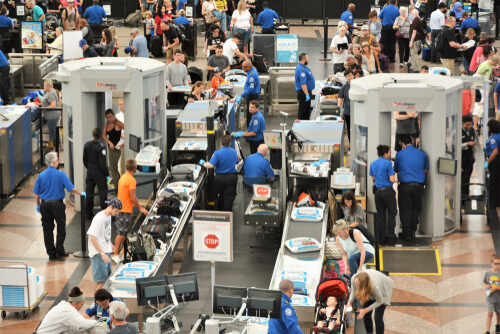
Washington’s shutdown brinkmanship is now bleeding into airport security, with more than 450 TSA officers quitting while “essential” workers are forced to show up without pay.
Quick Take
- A partial DHS shutdown that began Feb. 14 has pushed TSA staffing into crisis as resignations top 450 and absenteeism spikes.
- TSA officers are classified as essential employees, meaning they must work even during a funding lapse, intensifying financial strain on families.
- The White House ordered ICE personnel deployed to airports to help cover gaps, a rare step that raises questions about mission overlap.
- Senate talks have focused on funding most of DHS while carving out ICE removal operations, the core issue in the standoff.
Resignations surge as airports absorb the shock
The shutdown reached roughly 40 days by March 25-26, and the operational stress is showing up where Americans feel it immediately: airport lines and screening throughput. Reports across multiple outlets put permanent TSA quits in the 400-to-458 range, with “more than 450” becoming the clearest benchmark. On March 23, call-out rates hit 11.8% nationwide, with more than 3,450 officers calling out.
Major airports have reported long waits and uneven staffing, with some locations seeing absentee levels several times higher than the national average. TSA has warned that additional call-outs are possible if the funding lapse continues, a signal that agency leaders are concerned about sustainability. For travelers, that translates to missed flights, packed terminals, and an uneasy sense that basic functions are being held hostage to a political stalemate.
Essential workers without pay: a policy pressure cooker
TSA officers are considered essential employees, so they are legally required to report to work during a shutdown even when paychecks stop. That legal reality may satisfy the letter of continuity-of-government rules, but it creates a punishing household-level crisis. Union leaders have emphasized that officers are falling behind on rent, utilities, and childcare—and that resignations are often necessity, not protest.
The conservative frustration here isn’t complicated: Americans can accept sacrifice in a true emergency, but they expect Washington to act like adults when critical infrastructure is on the line. When Congress uses funding leverage to fight over policy riders, the immediate burden falls on working families who don’t have lobbying shops or Senate staffers. The longer the shutdown drags, the more institutional experience walks out the door—and the harder it is to rebuild.
Immigration enforcement fight drives the shutdown—and the workaround
The funding dispute centers on immigration enforcement operations, especially ICE removal operations. Democratic lawmakers have pushed for changes such as mandatory body cameras and identification requirements for ICE officers as a condition of funding, while the Trump administration and Republican allies have argued for full DHS funding without those restrictions. A Democratic effort to change Senate rules to pay TSA employees during the shutdown failed along party lines.
President Trump directed ICE personnel to airports to supplement security operations as TSA staffing thinned. That move highlights a practical problem: DHS contains multiple missions, but they are not interchangeable. Reporting has indicated ICE officers will still prioritize immigration laws while stationed at airports, which can complicate lines of authority and blur agency roles. The government can surge manpower, but it cannot instantly replace specialized screening experience.
Senate negotiations: partial funding proposal, unresolved endgame
By March 24-26, senators were discussing an approach that would fund most of DHS—including TSA—while excluding ICE enforcement and removal operations, the central point of dispute. The concept also contemplated immigration-operations changes sought by Democrats. Senate leaders described talks as serious, and DHS Secretary Markwayne Mullin said reopening DHS and getting employees paid was his top priority after being sworn in March 25.
More Than 450 TSA Agents Have Quit During DHS Shutdown https://t.co/IZxE1NB1JS
— zerohedge (@zerohedge) March 25, 2026
Hard numbers from the shutdown period underline what’s at stake. Over 450 resignations represent more than a headline; they are a pipeline problem because screening jobs require hiring, vetting, and training that cannot be done overnight. With the U.S. already navigating a tense global environment in 2026, prolonged dysfunction at home strains public confidence. The immediate fix is simple—fund the department—but Washington’s real test is whether it can do so without turning frontline workers into collateral damage.
Sources:
TSA says 460 airport officers quit as standoff poses major …
More than 450 TSA officers have quit during the partial …
More than 400 TSA employees quit since shutdown began
DHS has reported increased absences of TSA officers, who …