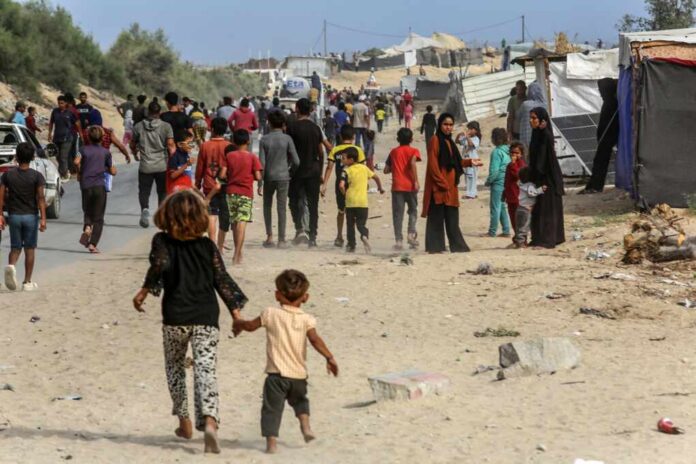
Somalia’s humanitarian response plan sits at just 13% funded as millions face starvation, exposing how global aid reductions and geopolitical instability are abandoning one of the world’s most vulnerable populations to catastrophe.
At a Glance
- An estimated 6.5 million Somalis face acute food insecurity by mid-2026, nearly double the level from a year ago, driven by four consecutive failed rainy seasons and collapsing aid funding.
- Over 1.8 million children aged 6-59 months will suffer acute malnutrition in 2026, with more than 466,000 cases of severe acute malnutrition placing lives at immediate risk.
- Humanitarian funding has plummeted, with aid organizations forced to close nearly 200 health facilities and over 400 schools, scaling back food assistance and nutrition treatment for vulnerable children and mothers.
- The United Nations Humanitarian Response Plan requires $852 million but has received only $110 million, forcing aid organizations to cut services by up to 60% precisely when needs are surging.
A Perfect Storm of Natural Disaster and Failed International Commitment
Somalia faces an unprecedented convergence of natural and man-made crises. Four consecutive failed rainy seasons have devastated pastoral and agricultural livelihoods across the nation, with livestock deaths and crop failures pushing families toward destitution [1]. The Integrated Food Security Phase Classification confirmed that 4.8 million people faced Crisis-level food insecurity in January 2026, with projections showing that number rising to 6.5 million between February and March—nearly doubling year-over-year [1]. This environmental catastrophe arrives at the worst conceivable moment: international donors have slashed funding to Somalia’s humanitarian response, leaving aid organizations unable to deliver lifesaving assistance when desperation peaks.
Children Facing Malnutrition Crisis as Aid Dries Up
The human toll on Somalia’s youngest citizens is staggering. Over 1.8 million children aged 6-59 months will likely suffer acute malnutrition during 2026, with approximately 466,000 cases classified as severe acute malnutrition [3]. In several regions, acute child malnutrition has already reached critical thresholds—a clear indicator that families have endured prolonged and severe food shortages [1]. Aid organizations working across Somalia have been forced to scale back nutrition treatment for children and mothers, water services, and emergency health support precisely as these needs are intensifying [1]. Without immediate restoration of funding, emergency food and nutrition conditions are likely to worsen dramatically in the months ahead.
Funding Collapse Forces Closure of Essential Services
The numbers tell a devastating story. Somalia’s humanitarian response plan requires $852 million for 2026, but donors have provided only 13% of that amount [2]. This funding catastrophe has forced the closure of nearly 200 health facilities and over 400 schools, eliminating protective services for malnourished children and vulnerable families [1]. Aid workers report that emergency food and cash assistance have decreased by 56%, with the number of people receiving monthly support dropping dramatically [11]. Organizations working across Puntland, Somaliland, and Somalia’s central and southern regions have been forced to reduce service frequency and close camps, leaving communities without the protective buffer that prevents emergency hunger from escalating into famine.
Geopolitical Instability Compounds the Crisis
Conflict-affected districts face additional barriers to receiving assistance. Insecurity and access constraints are further limiting the delivery of lifesaving aid in regions where families are already pushed to the brink [1]. Livestock deaths, crop failures, and soaring food prices have devastated livelihoods across pastoral communities, while ongoing conflicts in Hirshabelle State and Jubaland State have displaced more than 100,000 people, forcing families to flee their homes under extremely difficult conditions [3]. Less than 30% of the population has access to safe and reliable water sources, contributing to the spread of preventable diseases [3]. These compounding crises—drought, conflict, and funding cuts—are creating conditions where vulnerable populations, especially women, children, and internally displaced persons, face extreme hardship and heightened protection risks.
Another drought is hitting Somalia, one of the world’s most vulnerable countries to climate shocks. Rivers are dry, crops withered. And the crisis is compounded by aid cuts and rising prices from the Iran war. https://t.co/azpXMZ1pqJ
— Sam Metz (@metzsam) May 14, 2026
The Window to Prevent Catastrophe Is Closing Rapidly
International observers warn that the moment to prevent a deeper humanitarian catastrophe is rapidly closing. Without high-quality, flexible funding now, millions of Somalis—especially women and girls—face worsening hunger, displacement, and insecurity [1]. The United Nations Humanitarian Response Plan sits at one of its lowest funding levels in years, according to humanitarian directors on the ground [1]. Without immediate restoration of funding and scaled-up support during the critical Jilaal season (the peak dry and lean season from January through March), emergency food and nutrition conditions will intensify in the months ahead. The international community’s failure to prioritize Somalia’s humanitarian needs represents a profound moral abdication at a moment when American values of compassion and leadership should demand action.
Sources:
[1] Web – [PDF] SOMALIA GU 2026 CLIMATE OUTLOOK – FAO SWALIM
[2] Web – Drought in Somalia: Acute hunger levels double in one year … – CARE
[3] Web – World News in Brief: Somalia drought response, Gaza and Ukraine …
[11] Web – Trump’s aid cuts leave countries unable to fight back against famine