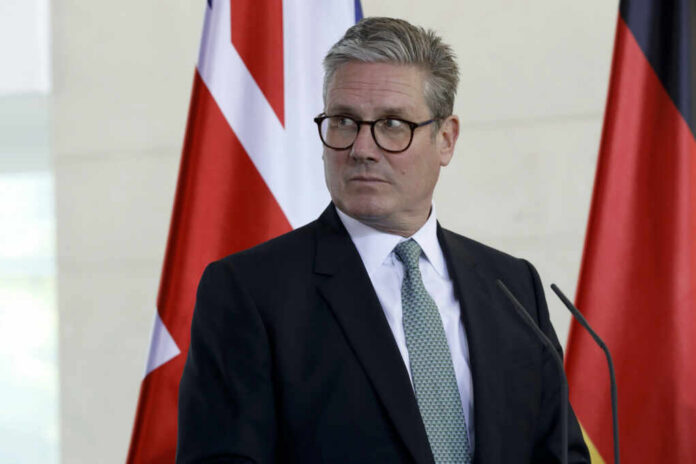
UK Prime Minister Keir Starmer’s government teeters on the brink of collapse as up to 80 of his own Labour MPs demand his resignation following a devastating local election drubbing that exposes the elite political class’s growing disconnect from ordinary citizens on both sides of the Atlantic.
Story Snapshot
- Labour rebels reach critical mass with 70-80 MPs calling for Starmer’s departure after catastrophic local election losses across England, Scotland, and Wales
- High-stakes Cabinet meeting unfolds at 10 Downing Street amid protests, with four junior ministers already resigned and speculation of a ministerial coup
- UK markets react nervously to political chaos, with gilt yields spiking to multi-decade highs as investors flee amid government instability
- Starmer defiantly announces British Steel nationalization and deeper EU ties in make-or-break speech, but rebels remain unmoved by policy pivots
Electoral Disaster Triggers Unprecedented Rebellion
Labour suffered a brutal drubbing in Thursday’s local and regional elections, losing council seats to Reform UK and Liberal Democrats across England, Scotland, and Wales. The electoral catastrophe triggered an immediate backlash within Labour’s parliamentary ranks. By the weekend, backbench MP Catherine West had circulated a letter demanding Starmer announce a departure timetable by September, securing approximately 80 signatures. The rebellion represents roughly 17 percent of Labour MPs, a threshold that historically signals terminal damage to party leadership. The scale of defection mirrors past political collapses that forced prime ministerial resignations, raising questions about whether Labour’s 2024 landslide mandate has already evaporated.
Cabinet Meeting Becomes Survival Test
Tuesday morning brought intense scrutiny as Cabinet ministers arrived at 10 Downing Street for a crunch meeting widely viewed as Starmer’s last chance to salvage his premiership. Live footage captured Treasury Chief Secretary Darren Jones, Deputy PM David Lammy, and other senior officials navigating media scrums and protesters chanting “Is it time to go?” Four junior ministers and parliamentary private secretaries had already resigned by Monday, signaling fractures within government ranks. Reports emerged that the Home Secretary privately urged Starmer to quit, though this remains unconfirmed. The Cabinet’s verdict would determine whether Starmer receives a “stay of execution” or faces immediate calls for resignation, with analysts warning that mass ministerial departures could force his hand within hours.
Defiant Starmer Announces Policy Blitz
Starmer delivered a defiant Monday speech pledging to “prove doubters wrong” while announcing aggressive policy resets designed to shift momentum. He confirmed full nationalization of British Steel to stabilize the struggling industry, banned far-right agitators from UK travel, and committed to deepening ties with the European Union. These moves target core Labour constituencies—steelworkers, anti-extremism advocates, and pro-EU voters—but rebels dismissed them as insufficient. Critics argue the policies reflect elite globalist priorities rather than addressing working-class concerns over economic stagnation and migration that fueled electoral losses. Loyalists like Steve Reed and Lord Hermer urged Starmer to fight on, yet rebel statements declared the “public does not believe you can lead,” underscoring the chasm between leadership confidence and grassroots discontent.
The unfolding crisis illustrates a pattern familiar to American conservatives frustrated with establishment politicians clinging to power despite voter rejection. Starmer’s 2024 landslide, achieved by promising competent governance after 14 years of Conservative rule, has devolved into internal warfare over left-wing policy priorities and disconnection from economic realities. Markets responded with alarm, as UK gilt yields surged to levels unseen in decades, reflecting investor fears that political paralysis will deepen fiscal mismanagement. The rebellion echoes past UK political meltdowns—Gordon Brown’s 2010 post-election pressure and Boris Johnson’s 2022 Partygate revolt—but occurs barely two years into Labour’s term, raising fundamental questions about democratic accountability when elected leaders lose public trust yet refuse to step aside.
Sources:
Sir Keir Starmer is fighting to stay on as prime minister …
Time to go, Cabinet ministers tell Starmer
than 70 Labour MPs and Senior cabinet ministers urge UK …