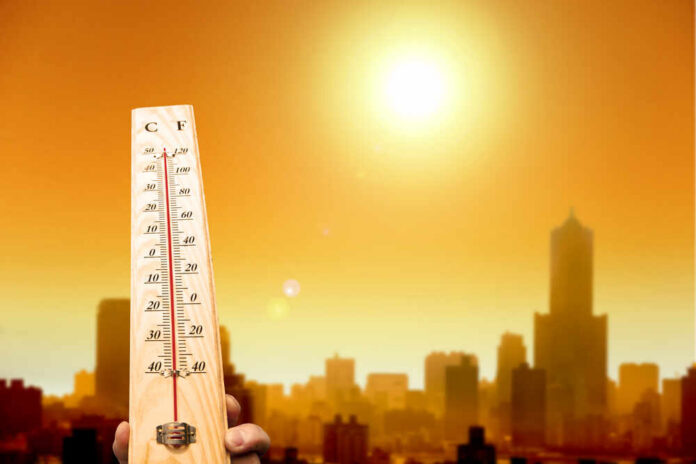
A brutal heat dome has put nearly a third of the country under extreme alerts just as Americans gear up for the July 4th holiday, raising hard questions about who stays safe when the temperature — and the system — both seem ready to break.
Story Snapshot
- Extreme heat warnings, watches, and advisories now cover 31 states, affecting about 90 million people, with up to 230 million likely to feel the worst of the heat.
- Heat index values are forecast to reach around 115 degrees Fahrenheit, with muggy nights staying in the 70s and offering little relief.
- Scientists say dangerous heat waves like this are becoming more frequent and longer lasting across the United States.
- Many vulnerable Americans still lack easy access to cooling centers or safe indoor spaces, despite repeated federal safety advice.
Extreme alerts blanket the eastern United States
The National Weather Service has issued extreme heat warnings, watches, and advisories for parts of 31 states across the central and eastern United States, starting June 29, 2026. About 90 million people are under these alerts, and forecasts suggest up to 230 million, or roughly two-thirds of the country, will feel some level of impact as the heat dome expands. This surge in alerts shows how large and intense this event is compared with more typical summer heat.
National Weather Service forecasters warn that heat index values, which combine temperature and humidity, could reach around 115 degrees Fahrenheit in some areas, especially from the Midwest into the Mid-Atlantic and Northeast. In central Pennsylvania, official briefings project actual temperatures near or above 100 degrees, with humidity making it feel closer to 110. The agency describes the pattern as “dangerous to record setting heat” spreading across the eastern two-thirds of the country.
Little relief after sunset and what that means for health
Forecasts show overnight lows only falling into the 70s Fahrenheit for many affected communities, which means bodies and buildings never really cool down. For older adults, people with health problems, and those without air conditioning, warm nights can be as dangerous as hot afternoons because the body needs cooler conditions to recover. Federal guidance notes that multi-day heat waves with high daytime heat index values and warm nights can sharply raise the risk of heat-related deaths and illnesses.
Research into past events shows how deadly this combination can be. A major Chicago heat wave in 1995 caused about 739 heat-related deaths in just five days, many among people living alone in apartments without proper cooling. National Weather Service summaries of earlier disasters, including a 1980 event with more than 1,250 deaths, highlight that extreme heat is one of the most lethal weather threats in the country, often surpassing hurricanes or tornadoes in total fatalities. When alerts warn of several days above 105 degrees heat index, that history underlines why officials stress caution.
Why these heat waves keep coming back stronger
Scientists studying United States heat trends find that the number of heat wave days has risen across most regions since about 1979, with especially strong increases in the Southeast and Great Plains. Other analyses show that from the 1960s to the 2010s, the average rate of extreme heat events in many cities climbed from about two per year to ten per year. This means communities are not only facing higher peaks, but also longer seasons when dangerous heat can strike.
Reports from climate researchers and groups such as the World Meteorological Organization link these trends to a warming climate that loads the dice toward more frequent and intense heat waves. The Environmental Protection Agency warns that multi-day heat waves are expected to become longer, cover more of the country, and grow more severe as the century progresses. For families on the ground, the cause may feel abstract, but the impact is simple and concrete: more days when it is not just uncomfortable to be outside, but truly unsafe without shade, water, and cooling.
Safety advice vs. real-world limits for ordinary people
National Weather Service guidance urges people to slow down outdoor activities, stay indoors in air-conditioned spaces, drink plenty of water, and avoid alcohol during extreme heat. It also says residents should seek out public buildings or cooling shelters if they do not have air conditioning at home. On paper, this advice is clear and direct. In practice, many Americans know these options are easier said than done, especially for those working outside, living in older housing, or relying on crowded public transit.
Heat Watches in Effect Across Central, Eastern US
A dangerous heat wave is settling over much of the central and eastern United States, with heat indices expected to climb above 100 degrees in many communities.
The most extreme conditions are expected to spread from the Midwest… pic.twitter.com/IyLvlONxtY
— NTD (@NTD_Live) June 30, 2026
Local governments sometimes open cooling centers, but there is no nationwide rule that guarantees free, safe, and nearby cold spaces for every vulnerable person. People in low-income neighborhoods may face long bus rides, limited hours, or fears of crime that make them hesitant to use these centers. At the same time, running air conditioners adds to power demand and greenhouse gas emissions, which critics argue deepens the long-term problem even as it solves the immediate crisis. This tension feeds a broader feeling on both left and right that ordinary people are being told to “adapt” while deeper fixes are delayed.
Growing distrust, partisan fights, and a shared sense of risk
As this heat dome settles over the East ahead of the July 4 weekend, many media outlets link it to climate change, while some voices online push unproven theories about engineered weather or government overreach. There is currently no serious evidence-based challenge to the basic National Weather Service data or warnings, but the lack of clear counter-arguments leaves space for conspiracy narratives to grow. That confusion can make it harder for families to know whom to trust when deciding whether to cancel outdoor plans or check on older neighbors.
For conservatives, this event can look like another strain on the power grid and the wallet, coming after years of frustration over energy policy, inflation, and perceived elite neglect of everyday concerns. For liberals, it can highlight fears about growing gaps between rich and poor and the vulnerability of people in crowded cities or informal jobs. Both groups can see the same facts: a federal system that warns of deadly heat, yet still leaves many without guaranteed safe shelter. The heat dome becomes not only a weather story, but a symbol of a government struggling to match words with action.
Sources:
insiderpaper.com, washingtontimes.com, npr.org, weather.gov, climatecheck.com, sydney.edu.au, pmc.ncbi.nlm.nih.gov, nature.com, c2es.org