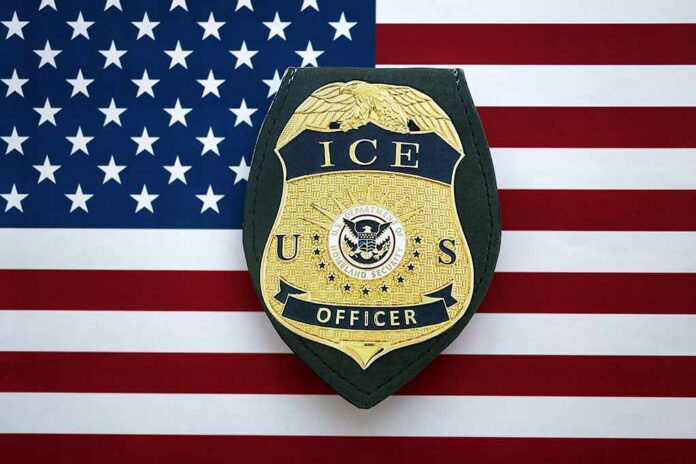
City leaders confirmed a federal immigration officer shot a man in North Austin, and the rush for answers is now colliding with street protests and rising public anger.
Story Highlights
- Officials said an Immigration and Customs Enforcement officer shot a man in North Austin; Austin police did not fire.
- The man was taken to a trauma center in serious but stable condition, officials said.
- Protesters gathered near the scene, blocking roads and demanding an independent investigation.
- The mayor and police chief pushed for a third-party review as early facts remained limited.
What Officials Confirmed About the Shooting
Austin Mayor Kirk Watson and Police Chief Lisa Davis said a federal Immigration and Customs Enforcement officer shot a man Sunday in North Austin. They said Austin police officers were on scene but did not fire their weapons. The shooting happened near U.S. 183 and Anderson Square. City leaders said they were working to verify what led to the stop and the gunfire. Local officials stated that information remained preliminary at the first briefings.
Emergency medical crews took the wounded man to a local trauma center. City officials described his condition as serious but stable. They said he suffered a gunshot wound to the torso. Authorities did not release his identity. They also did not discuss his immigration status or whether he was a target of a federal operation. Reporters noted that these gaps made it hard to map the full chain of events from stop to shot at this early stage.
Protests and Public Response Near the Scene
By evening, a large crowd formed near the shooting site. Demonstrators chanted against the federal agency and demanded answers. Some protesters blocked parts of nearby roads, which slowed traffic. Police worked to move people off the roadway. Reporters on scene counted crowds from dozens to hundreds at different times as the night went on. The protest underscored how fast a use-of-force event can trigger street action in a tense political climate.
City leaders called for calm but also backed a fuller review. The Travis County District Attorney’s Office urged a probe that included both the Austin Police Department and prosecutors as co-equal partners. The office said all facts must come to light and that an independent investigation is critical. That request tracked with the mayor’s public push for a “clear-eyed, third-party look” aligned with standard steps after serious force incidents.
The Push for Transparency and What Is Still Unknown
Mayor Watson and Chief Davis told residents they “deserve answers” and said they would seek them through an outside review. Officials had not said what prompted the stop, what commands were given, or why lethal force was used. Some public claims, including where the bullet struck and how the encounter unfolded, were flagged by reporters as unconfirmed at the time. Leaders warned that early details could change as investigators gather evidence.
Several outlets reported that federal agencies did not issue detailed public statements immediately after the shooting. That silence left city leaders to shape the first round of facts. In past incidents, uneven control of evidence and delayed statements have fueled calls for video, dispatch audio, and reports to be shared promptly. The current push mirrors that pattern: release the record, let the facts speak, and rebuild trust through clear steps and timelines.
Why This Moment Matters Beyond Austin
This clash touches shared worries across the political spectrum. Many Americans see powerful institutions acting with little accountability. When a federal officer fires a gun in a city street, people expect fast, clear proof of what happened. Research on protest coverage shows attention can swing from the original act to crowd control and traffic. That shift can crowd out the core question: was the use of force lawful and necessary under policy and law?
Some info is being released.
The shooting occurred at about 12:56 p.m. local time on Sept. 20, 2026, in North Austin.
Wilber Rafael Garces Perez, 28, a Venezuelan national, was injured with a gunshot wound to the torso/upper torso.
ICE officials placed Garces Perez in…
— Lone Star Legionaries (@TexanLoyal) September 21, 2026
Local leaders now face two urgent tasks. First, protect public safety and speech as protests continue. Second, secure and release records that can settle basic facts. That means video from every camera angle, dispatch logs, and a timeline that shows who decided what and when. If investigators deliver a thorough, public report, they can help the city cool tensions, test claims on all sides, and model the kind of transparency many say Washington rarely shows.
Sources:
redstate.com, statesman.com, latimes.com, kxan.com, goodmorningamerica.com, texastribune.org, tpr.org, cbsaustin.com, thegatewaypundit.com