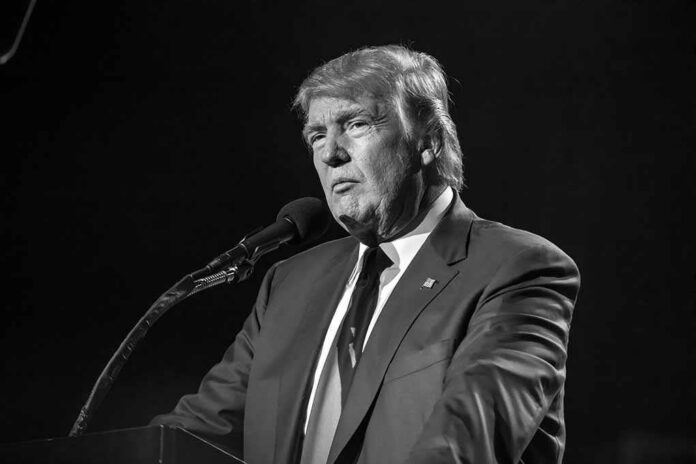
President Trump signed an executive order to let dyed off-road diesel be used on highways and to defer the federal diesel tax through year-end, a fast-track bid to cut fuel costs for truckers and farmers.
Story Snapshot
- Trump signed the order on stage in Nebraska to open access to tax-exempt dyed diesel.
- The White House says federal diesel excise taxes will be deferred through year-end.
- Officials frame the move as relief for truckers, farmers, and supply chains.
- Experts agree dyed diesel is chemically the same as regular diesel, but taxed differently.
What The Order Does Right Now
President Trump signed the order during a rally in Grand Island, Nebraska. The White House says it temporarily allows off-road “dyed” diesel to be used on highways and directs the Treasury Department to defer the federal excise tax on dyed diesel used on-road for the rest of the year without interest or penalties. The action shifts how and when tax is collected while opening supply to a cheaper, tax-exempt stream of fuel that has been limited to off-road uses.
The administration describes the order as immediate relief for the people who move food and goods. The White House said the goal is to lower fuel bills for truckers and to ease costs for farmers at harvest and for ranchers moving feed and equipment. Treasury is instructed to explore ways to remove the deferred tax burden entirely, signaling a push to turn short-term deferral into longer relief if agencies can legally support it. The order’s time window runs through the end of the year.
How Dyed Diesel Works And Why It Matters
Dyed diesel is the same fuel as regular diesel, but it is marked red to identify that it is for off-road machines like tractors and construction equipment. Because it is not supposed to be used on public roads, it is exempt from highway fuel taxes. The federal tax on diesel funds road work and is built into on-road fuel prices. By opening dyed diesel to highway use and pausing tax collection, the order aims to cut pump costs quickly.
Reporters quoted Trump saying the change would save the typical trucker over one hundred dollars per fill-up and help bring down prices for goods and groceries. Those claims highlight the link between diesel costs and the price of moving freight. The United States Department of Agriculture estimated about six hundred forty million dollars in combined federal and state savings across more than two hundred million harvested acres, underscoring the farm impact during harvest season. The exact savings per driver will vary by tank size, miles, and how states respond.
What We Know About Limits And Next Steps
The policy description differs slightly across sources. Reuters summarized the rally remark as allowing “anyone” to buy tax-free dyed diesel. The White House fact sheet focuses on a temporary allowance for highway use and a deferral of the federal excise tax while Treasury studies ways to remove those taxes on deferred gallons. The formal executive order text and agency guidance will set the exact limits, enforcement rules, and how any back taxes, if any, are handled after year-end.
Trump signed an executive order ON STAGE at his Nebraska rally: tax-free red-dye diesel allowed on highways through Dec 31. Trump: the typical trucker "will save over $100 every time they fill up." Biden gave you lectures. Trump gave you cheaper diesel 🚜🇺🇸 Who's mad? pic.twitter.com/Z6LogkHSuB
— Tyler Dean (@TylerDeanPro) October 6, 2026
State rules and road enforcement practices may shape how the order feels at the pump. States help enforce fuel-tax rules and many rely on diesel taxes to fund roads. The order signals federal enforcement discretion, but how state agencies align will influence access, inspections, and compliance on highways. Until the Treasury Department and the Internal Revenue Service publish guidance, truck stops, fleets, and farmers will look to agency bulletins for clear instructions on sales, recordkeeping, and proof of lawful highway use.
Why This Taps A Shared Frustration
People across the political spectrum are tired of high costs and a system that seems to work for insiders. Diesel is a backbone cost for moving food, lumber, and goods. When fuel spikes, small carriers and family farms get squeezed first, and those costs ripple to checkout lines. This order aims to cut a government-imposed cost, at least for now, by freeing access to a cheaper fuel stream and pausing a tax. That is a direct lever government controls.
The move also fits a long-running fight over who pays for roads and how to police fuel taxes. For decades, regulators dyed off-road diesel to stop untaxed gallons from leaking onto highways. Opening that system, even for a few months, is a notable shift. The administration argues the relief to drivers and growers justifies it during a stretch of high prices. Agencies will now have to square relief with fair funding for roads and clear, even-handed enforcement going forward.
Sources:
nypost.com, whitehouse.gov, reuters.com, nytimes.com, cnn.com, usatoday.com, whio.com, thehill.com, 1011now.com